
Your eyes communicate discomfort in specific ways during contact lens wear. Recognizing these signals early and acting on them right away is the most important thing you can do to protect your corneal health.
Mild redness at the end of a long day can happen with dry air or screen use. Deep or spreading redness, especially when it appears in only one eye, is a different situation entirely.
Remove your lenses right away and switch to glasses. Do not wait to see if the redness fades on its own. A same-day call to your eye doctor is the safest next step.
Pain is never a normal part of wearing contact lenses. Some wearers notice mild lens awareness on windy days, but sharp pain, throbbing, or a constant ache is a clear warning sign.
Wash your hands thoroughly, remove the lens, and switch to glasses. If pain continues for more than an hour after removal, contact your eye doctor the same day. Corneal infections and abrasions can cause significant discomfort before visible signs appear.
Vision that blurs during lens wear and does not clear after blinking or adding a drop of saline is a signal to remove your lenses. Halos around lights, a cloudy area in your vision, or a sudden drop in sharpness all count as warning signs.
After removing the lenses, check whether your vision returns to normal within a few minutes. If vision stays blurred or worsens, call your eye doctor that day.
Bright light that feels painful during lens wear is not something to push through. Heavy tearing, even in a low-light environment, is another signal that something is wrong.
These two signs together often mean the cornea (the clear front surface of the eye) has been stressed or is showing signs of infection. Remove the lens, move to a dim area, and arrange for same-day care. Wearing sunglasses indoors can help with comfort while you wait, but it is not a substitute for treatment.
Thick discharge or pus is a classic sign of infection. Even thin, watery discharge alongside redness can point to infection or a torn lens. A gritty feeling, as though a grain of sand is caught under the lid, is another red flag.
Remove the lens immediately. If possible, save the lens in its case with fresh solution. Your eye doctor may want to examine the lens as part of your evaluation.
Fast action is about more than comfort. Leaving contact lenses in during an eye problem can rapidly worsen an infection or injury that might otherwise resolve quickly with proper care.
Contact lens wear is the leading risk factor for a serious corneal infection called microbial keratitis. This is an infection of the cornea, the clear dome at the front of the eye, that can progress quickly when lenses are left in place.
The warning signs of microbial keratitis are the same ones listed above. Removing lenses at the first sign of trouble and seeking care promptly leads to better outcomes than waiting.
Bacterial keratitis, if left untreated, can lead to corneal scarring, irregular astigmatism (uneven curvature of the cornea that distorts vision), corneal perforation, and permanent vision loss. Fungal and Acanthamoeba (a type of organism found in water) infections can be even harder to treat and may require months of medication.
Early removal and same-day care often means a short course of antibiotic eye drops. Delays can mean far more complex and lengthy treatment.
Continuing to wear a lens when your eye is red or painful adds to the damage. The lens holds bacteria against the cornea, reduces the oxygen supply to the eye, and traps discharge in place.
An infection that might have stayed small can grow significantly with just another hour of lens wear. Switch to glasses and stay in glasses until your eye doctor gives you the all-clear to resume lens wear.
Not every lens emergency involves infection. Some situations require quick removal even if symptoms seem mild at first.
The steps you take after noticing a warning sign can make a real difference in how quickly your eye recovers. Acting calmly and in the right order protects the cornea during removal and reduces the risk of additional irritation.
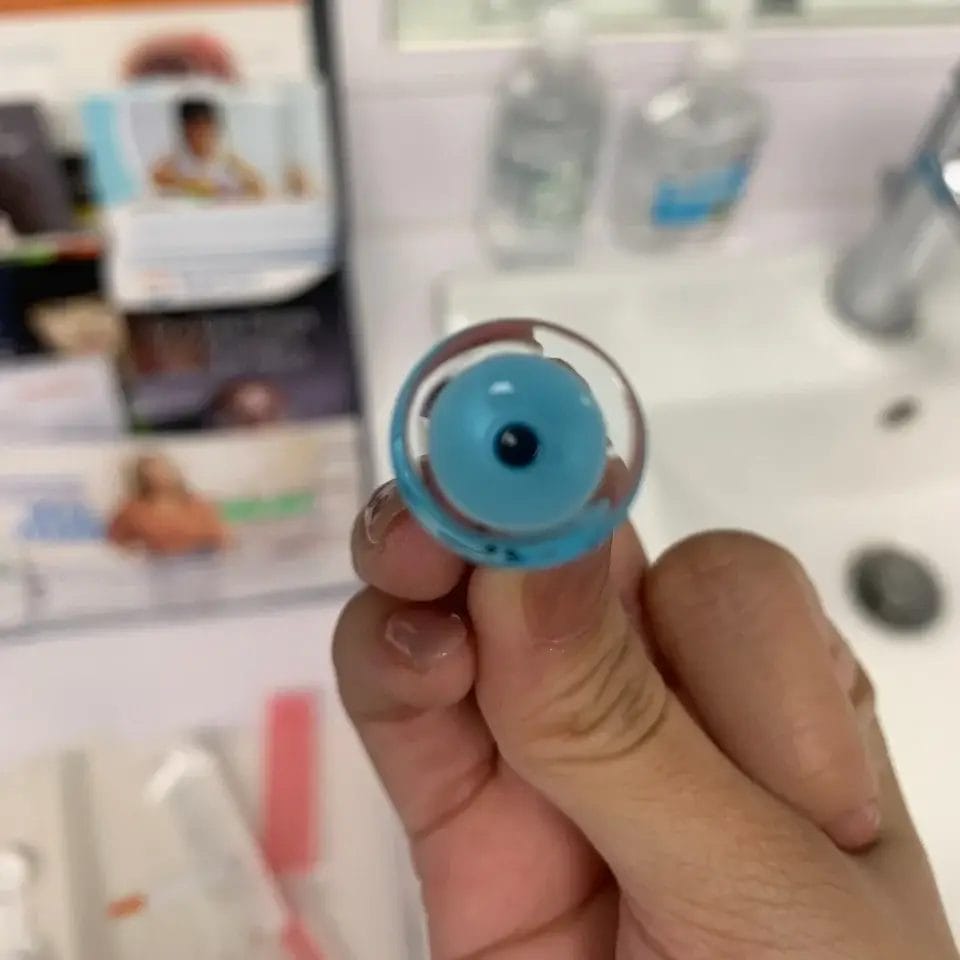
Wash and dry your hands with a clean, lint-free towel before touching the eye. Work in front of a mirror in a well-lit area. Pull your lower eyelid down gently, look up, and slide the lens onto the lower white of the eye. Pinch the lens lightly between your thumb and index finger and lift it free.
Do not rush, and do not dig at the eye. If the lens does not come out easily, pause before trying again.
Lenses sometimes feel adhered to the eye, especially when the eye is dry or tired. Forcing removal can scratch the cornea, so take a few steps to loosen the lens before trying again.
After removing the lens, switch to your glasses for the rest of the day. Do not put in a fresh lens, even from a new sealed package. Placing a new lens on an irritated cornea repeats the same problem.
Keep the lens and its case in a safe place in case your eye doctor wants to examine them during your visit.
A gentle rinse can help clear debris or dilute a chemical splash, but the type of fluid you use matters. Use only preservative-free sterile saline designed for eye use.
Do not use tap water, bottled water, or hydrogen peroxide solution directly in a bare eye. Tilt your head to the side and let the saline run from the inner corner of the eye outward. For debris or a chemical splash, rinse gently for about 30 seconds.
Some situations should not wait for a routine appointment. Seek an urgent evaluation with your eye doctor the same day if you notice any of the following after lens removal.
These are some of the questions our patients ask most often after a contact lens scare. Each answer is meant to help you make confident decisions in the moment.
One clear warning sign is enough to justify removing your lenses. You do not need to wait for a second symptom before acting. Pain, deep redness, sudden vision change, or unusual discharge are each reason enough on their own. The guidance to remove lenses immediately is intentionally simple because hesitation is what allows small problems to become serious ones.
It is important to wait for clearance from your eye doctor before resuming lens wear, even if the eye feels better. A corneal irritation or minor scratch can leave the surface vulnerable for several days even when you have no symptoms. Resuming lens wear too soon can reopen the problem. A quick call or short visit to confirm your eye has healed fully is well worth it before going back into lenses.
Whether you need time away depends on what your eye doctor finds at your visit. A simple corneal abrasion may call for one day of rest away from screens and bright environments. An active infection being treated with drops may require longer, depending on the severity and your work setting. Until you have been seen, avoid prolonged screen use, dusty or bright environments, and anything that strains the affected eye.
Keeping a small kit in your bathroom or on your nightstand takes just a few minutes to put together and can make a big difference when something goes wrong. Stock it with an up-to-date pair of glasses in your current prescription, preservative-free sterile saline drops, rewetting drops labeled safe for contact lens use, a spare lens case, a small sealed bottle of disinfecting solution, and a written copy of your lens prescription. Having glasses available is especially important since lens wear must stop until your eye doctor evaluates the situation.
Recurring symptoms in the same eye suggest a pattern that deserves a thorough investigation, not just repeated treatment of each episode. Common causes include a lens material that is not a good fit for your tear film, chronic dry eye that makes the eye more vulnerable, or sensitivity to a lens care product. Bring a full history of your episodes to your next appointment so our team can identify the underlying cause and find a lasting solution, which might include a different lens material, daily disposables, or dry eye treatment.
Most medical insurance plans cover urgent visits for eye pain, redness, or vision changes because these are treated as medical problems rather than routine vision care. Coverage details including copays, prescription costs, and follow-up visit charges vary by plan. Contacting our office before your visit allows us to help verify your coverage. Even if some out-of-pocket cost applies, a same-day evaluation is a worthwhile investment when your vision is at stake.
At Insight Vision Optometry, Las Vegas, our team is equipped to evaluate and treat contact lens-related eye emergencies with the precision and experience that complex cases demand. Whether you need an urgent same-day appointment or are looking for a long-term partner in your contact lens care, we are here to help. Do not wait when your eyes are telling you something is wrong. Reach out to us so we can protect your vision and get you back to comfortable, clear sight as quickly as possible.


