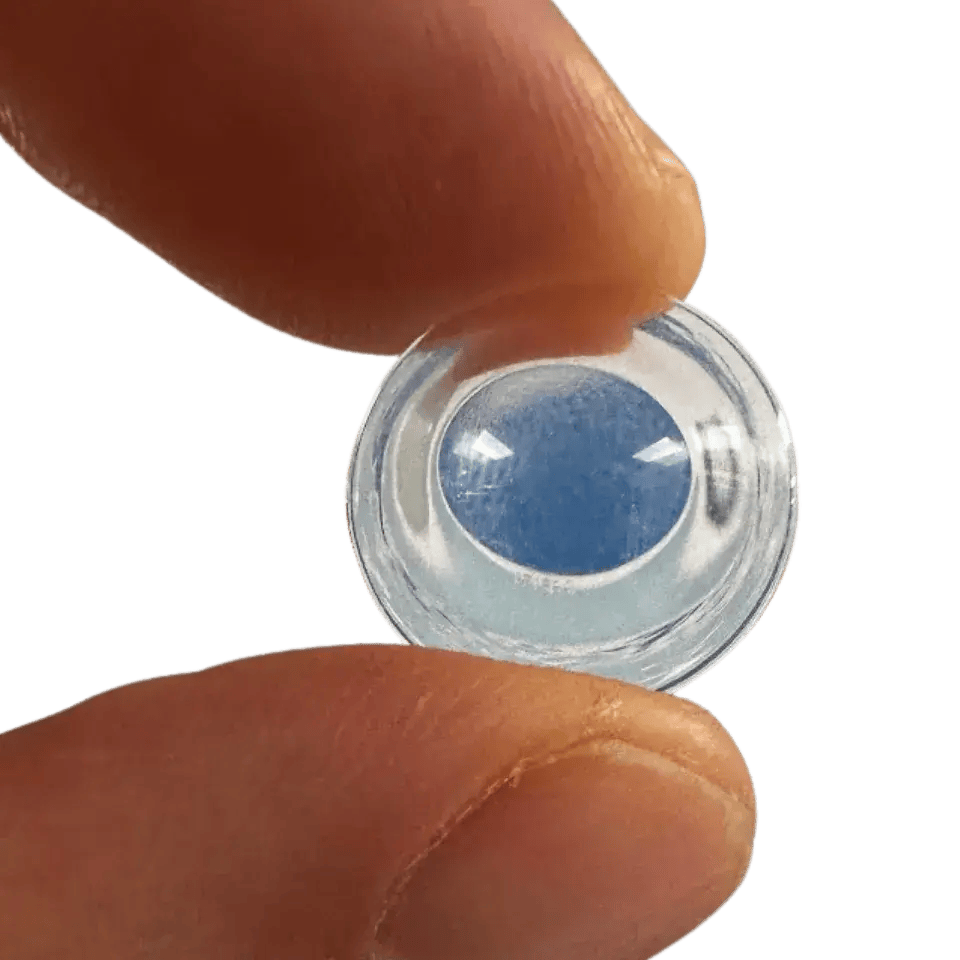
Many patients are surprised to learn that a glasses prescription and a contact lens prescription are not the same thing. A contact lens exam goes further than a standard vision check because a lens sits directly on the surface of your eye, and that requires its own set of measurements and tests.
A standard eye exam checks your vision and screens for eye disease. A contact lens exam adds steps that measure the curve of your cornea (the clear dome at the front of the eye), the size of your visible eye opening, and the quality of your tear film. These measurements do not appear on a glasses prescription, but they are essential for finding a lens that sits correctly and stays comfortable throughout the day.
Part of the exam involves placing a trial contact lens on each eye. Your doctor then uses a slit lamp microscope (a specialized eye microscope with high magnification and a focused beam of light) to check how the lens centers on the eye, how it moves with each blink, and where the edge rests on the cornea. This step turns a set of numbers into a lens that is confirmed to work on your specific eye.
The FDA classifies contact lenses as medical devices because they rest in direct contact with the cornea and carry a real risk of infection if fitted or used incorrectly. A contact lens exam is the required step to produce a valid, legal prescription for those devices. That is why it is billed separately from a routine eye exam.
A contact lens exam also includes the elements of a full eye health check. Your doctor looks at the back of the eye, screens for glaucoma, and looks carefully at the cornea for any quiet changes caused by previous contact lens wear. Long-term wearers can develop subtle corneal changes that produce no noticeable symptoms, and the contact lens exam is where those changes are caught before they become a larger problem.
A contact lens exam follows a logical sequence from start to finish. Each step builds on the last, so that by the end of the visit, the prescription reflects what actually works on your eyes rather than just what measures well on a chart.
The visit begins with a short intake review covering your eye health history, allergies, medications, and how you use or plan to use contact lenses during the day. If you currently wear contacts, bring your lens boxes so the team can see the current brand, power, and replacement schedule. If you are new to contacts, it helps to think about the activities you need the lens to support, such as desk work, sports, or long evening drives.
Your doctor measures your prescription using a refractor, the device with rotating lenses you look through to determine your clearest vision. Dilating drops (eye drops that widen the pupil temporarily) may be used so the doctor can examine the retina and the lens inside the eye. These drops wear off on their own over a few hours. Bringing sunglasses to your appointment is a good idea because your eyes may be more sensitive to light afterward.
A topographer or keratometer maps the curvature of your cornea. Your doctor also checks how quickly your tear film breaks up, often using a harmless fluorescein dye under a blue light. A stable tear film helps a contact lens feel comfortable for a full wearing day. If your tears are thin or evaporate quickly, that may influence which lens material is the best fit for your eyes.
A trial lens is placed on each eye and allowed to settle for a short time. Your doctor asks about clarity and comfort, then examines the lens on the eye under the microscope. If the fit looks right, you leave with a trial supply and a scheduled follow-up. If adjustments are needed, a different base curve, diameter, or lens brand can be tested in the same visit.
If this is your first time wearing contacts, you will practice inserting and removing the lens in the office before you go home. A team member watches your technique and offers guidance. You also receive instructions on solution use, case cleaning, and your recommended wearing schedule. Learning proper care habits from the start is one of the most effective ways to reduce the risk of eye infections.
A contact lens prescription contains more information than a glasses prescription. Each number on the prescription was confirmed on your actual eye during the exam, not just estimated from test measurements.
The prescription lists the lens power for each eye. A minus number corrects nearsightedness (difficulty seeing far away), and a plus number corrects farsightedness (difficulty seeing up close). If you have astigmatism (an irregularly shaped cornea or lens that causes blurred vision), the prescription also includes a cylinder power and an axis number that account for it.
The base curve (BC) describes how curved the inside surface of the lens is, and the diameter (DIA) describes how wide the lens is. These two numbers determine whether the lens fits the shape of your cornea correctly. The same power in two different base curves can feel completely different, and a glasses prescription does not contain either of these values.
A contact lens prescription specifies a brand and material because lenses vary in water content, oxygen transmission, and edge design. Those differences affect both daily comfort and long-term eye health. The brand listed on your prescription is the one that was confirmed to fit your eye during the exam. Switching to a different brand without a new fit check is not recommended.
Your prescription carries an expiration date, typically about one year from the exam. It also lists the replacement schedule for your lens type, whether daily, two-week, or monthly. Your doctor sets those timelines based on the lens material and the current health of your eyes. Following the replacement schedule protects the cornea from buildup that accumulates over time.

Ongoing contact lens care does not stop at the initial exam. Scheduled follow-up visits and knowing when to come in early are both important parts of wearing contacts safely over the long term.
Most contact lens wearers are seen about once per year. This visit renews the prescription, confirms the current lens is still the right fit, and gives your doctor a chance to monitor the cornea for gradual changes. Major eye care organizations support this schedule as the standard baseline for continuing contact lens wear.
New wearers typically have a short follow-up visit one to two weeks after the initial exam. Your doctor checks how the lens is performing after regular daily use rather than the brief wear time at the fitting appointment. Small adjustments to lens parameters are often made at this visit, and it is considered part of the initial fitting service.
Some symptoms should prompt a call within a day or two rather than a wait until the next scheduled visit. These include worsening vision while wearing the lens, increasing redness, new or worsening dryness, a shorter comfortable wearing time, eye pain, light sensitivity, or any discharge. These signs can indicate an infection or a corneal problem that needs prompt attention.
Wearing contacts over many years can lead to gradual changes that produce no noticeable symptoms on their own. New blood vessels may slowly grow into the outer cornea, or the eye may retain fluid under the lens overnight. These changes are visible under the slit lamp well before you would feel them. The yearly exam is the safety net that catches small problems before they become significant ones.
Here are answers to questions patients commonly have when preparing for a contact lens exam or managing their lens care between visits.
If you currently wear contacts, wearing them for at least an hour before the visit is helpful. That gives your doctor a real-world view of how the lens sits and moves after a period of normal use. However, if your doctor's office specifically asks you to arrive without them, follow that guidance instead. Bring your current lens boxes regardless so the team can review what you have been wearing.
Most contact lens exams do not prevent you from driving afterward. If dilating drops are used, close-up vision can become temporarily blurred and bright light may feel uncomfortable for a few hours. If you know drops are part of your exam or you are unsure, arranging a ride home in advance is the safest option. You can always confirm with the office when you schedule whether dilation is planned for your visit.
A contact lens exam can absolutely include a discussion of part-time or activity-specific wear. Daily disposable lenses work well for patients who only need contacts a few days per week or for a specific sport. If water sports are involved, your doctor can advise on safe options and what to avoid, since wearing contacts in pools, lakes, or the ocean carries its own set of precautions. Bring a clear list of activities so the exam covers your actual lifestyle.
It is fairly common for a previously well-fitting lens to no longer be the best option, especially after several years or a change in your corneal health or tear film. Your doctor will walk through the alternatives with you, which might include a different brand, a different material, a revised replacement schedule, or a different lens type altogether. You leave the visit with a clear plan, not just a problem identified.
Many vision plans include a yearly contact lens exam benefit, though specifics vary widely. Most plans separate the basic eye exam fee from the contact lens fitting fee, and each may have different coverage or copay amounts. Checking with your plan before the visit or asking the front desk to verify benefits in advance helps you avoid unexpected costs. Flexible spending accounts and health savings accounts can often be used toward contact lens exams and fitting fees as well.
A long gap between exams is not a reason to delay scheduling. It is actually a reason to prioritize the visit, since the cornea can develop slow changes that accumulate over time without causing obvious symptoms. Your doctor will check for any existing changes, update your prescription if it has shifted, and help you build a safe wearing and follow-up schedule going forward. There is no judgment involved, only care.
Whether you are new to contacts or ready for your yearly check, Insight Vision Optometry, Las Vegas is here to help you find a lens that fits well, feels comfortable, and protects your long-term eye health. Our team brings advanced contact lens expertise and genuine one-on-one care to every appointment. We make it easy for patients across the Las Vegas area to book online, walk in, or request a same-day visit when your schedule calls for it.


