
A vision screening is a brief, pass-or-fail check designed to flag people who may have obvious vision problems. It is not a diagnostic tool, and it is not performed by an eye doctor in most settings.
During a screening, you cover one eye and read progressively smaller letters or shapes on a chart. The goal is to determine whether your distance vision meets a minimum standard, typically 20/40 or better. If you meet that threshold, you pass. If you do not, you are referred for further evaluation.
Passing a screening does not mean your eyes are healthy. It simply means your distance vision reached the minimum cutoff on that particular test.
Schools, pediatrician offices, motor vehicle departments, and workplace health fairs are the most common settings. A nurse, technician, or trained volunteer usually runs the test. In most cases, no eye doctor is present.
Some pediatric settings use photoscreening devices, which can detect early risk factors for amblyopia (commonly called lazy eye) in children as young as six months old. These devices can flag potential problems but cannot make a diagnosis. Any abnormal result still requires a full evaluation by an eye doctor to understand what is actually going on.
Vision screenings are not designed to detect eye disease. They do not measure eye pressure, examine the retina, or look at the optic nerve. Conditions like glaucoma, diabetic retinopathy, macular degeneration, and cataracts can all be present even when your distance vision reads perfectly normal on a chart.
Screenings also miss binocular vision problems, meaning issues with how your two eyes work together. These problems can cause headaches, reading difficulty, and eye strain in both children and adults, yet they produce no obvious failure on a standard screening test.
A comprehensive eye exam is a thorough medical evaluation of both your vision and the health of every structure inside your eye. It is performed by a licensed optometrist or ophthalmologist using specialized equipment. The appointment typically takes between 30 and 90 minutes.
Your doctor reviews your health and medication history, then evaluates your eye muscle movement, pupil response, peripheral vision, and the front surface of your eye using a slit-lamp, which is a high-magnification microscope. These steps alone go far beyond anything a screening can offer.
Your doctor also measures your exact prescription using a phoropter and an auto-refractor. These tools produce precise values for sphere, cylinder, axis, and add power, the numbers needed to order glasses or contact lenses that actually correct your vision. Screenings cannot produce a usable prescription.
Dilating drops widen your pupils so your doctor can clearly see the retina, optic nerve, and blood vessels at the back of your eye. This step is what truly separates a comprehensive exam from any kind of screening.
Dilation allows your doctor to detect diabetic retinopathy, early macular degeneration, retinal tears, and changes to the optic nerve caused by glaucoma. It can also reveal signs of systemic conditions like high blood pressure and diabetes, which leave visible marks on the blood vessels of the retina. Dilation causes temporary blurry near vision and light sensitivity for a few hours after the exam, which is completely normal.
A comprehensive exam tests not just what each eye sees individually but how your two eyes coordinate as a team. Difficulty with focusing, eye teaming, or convergence (pointing both eyes accurately at close targets) can cause real symptoms like headaches, double vision, and reading fatigue.
These problems may never show up as a failed screening because each eye, tested alone, may see 20/20. Only a full evaluation identifies these functional issues and helps determine the right treatment approach.
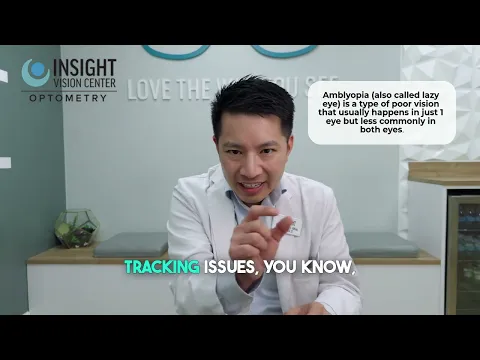
Both screenings and comprehensive exams have their place, but they serve very different purposes. Knowing when each is appropriate helps you make better decisions about your eye health.
School screenings serve as a useful safety net for catching children with obvious vision problems who need a referral. They are a starting point, not a finish line. A child who passes a school screening can still have amblyopia, eye teaming problems, or refractive errors that interfere with reading and learning.
If your child struggles in school, squints, holds books very close, or has a family history of eye disease, schedule a comprehensive pediatric eye exam regardless of what the screening showed. Early detection of conditions like amblyopia and strabismus (eye misalignment) is critical because treatment is most effective when started young.
A workplace screening confirms that your vision meets the safety requirements for your job. A DMV screening confirms that your distance vision meets the legal minimum for driving. Passing either test does not tell you whether your eyes are healthy or whether your prescription is still accurate.
Glaucoma and macular degeneration, two of the leading causes of vision loss in adults, often develop with no noticeable changes to distance acuity. You can pass a DMV check and have either condition progressing without any awareness. A comprehensive exam is the only way to screen for these diseases reliably.
Some people should go directly to a comprehensive eye exam rather than relying on any screening. This includes people with diabetes, a personal or family history of eye disease, existing eye conditions, or anyone who wears contact lenses. Contact lens wearers need annual comprehensive evaluations to monitor the health of the cornea (the clear front surface of the eye).
Anyone over 40 who has never had a baseline comprehensive eye exam should schedule one as soon as possible. Adults who notice blurry vision, headaches, difficulty driving at night, or changes in how they see colors or contrast need a full exam, not a screening, to find the cause.

These answers address common points of confusion about vision screenings and comprehensive eye exams to help you decide what your next step should be.
Yes, and this is one of the most important points to understand. A passed screening only confirms that your basic distance vision met the minimum cutoff on that day. It says nothing about eye pressure, retinal health, optic nerve condition, or any developing disease. Many people with early glaucoma, diabetic retinopathy, or macular degeneration see 20/20 or better on a distance chart. A comprehensive dilated exam is the only way to check what a screening cannot see.
General guidance from major eye health organizations recommends exams every five to ten years for healthy adults under 40, every two to four years for ages 40 to 54, every one to three years for ages 55 to 64, and every one to two years for adults 65 and older. People with diabetes, a history of eye disease, or other risk factors typically need annual exams regardless of age. Your doctor can give you a personalized schedule based on your specific health history.
A pediatrician's vision check is a screening, not a comprehensive exam. It is an important part of well-child visits and can catch obvious problems, but it is not designed to detect all the conditions that can affect a child's vision and development. If your pediatrician raises any concern or your child shows signs of eye trouble, the right next step is a full evaluation with an eye doctor who uses age-appropriate testing designed specifically for children.
No. Screenings do not produce the specific measurements needed for a prescription. Even if a screening estimates that you need correction, the values are not precise enough to fill an eyeglass or contact lens order. A comprehensive exam with refraction testing produces the exact sphere, cylinder, and axis values that an optical lab or contact lens manufacturer needs to make lenses that actually work for your eyes.
Sudden vision changes, new floaters, flashing lights, a shadow or curtain in your vision, severe eye pain, or a red eye with discharge are all reasons to seek same-day care from an eye doctor rather than waiting for any scheduled screening. These symptoms can indicate conditions like retinal detachment, acute glaucoma, or infection that need prompt evaluation. A screening is never the right response to sudden or worsening symptoms.
Coverage varies depending on your plan. Vision insurance plans like VSP and EyeMed typically cover routine comprehensive eye exams. Medical insurance may cover exams when they are related to a medical diagnosis such as diabetes or glaucoma. FSA and HSA funds can generally be applied toward eye exam costs. Our team can help you understand your benefits before your appointment so there are no surprises.
A vision screening can be a helpful first step, but it cannot replace the thorough evaluation that a comprehensive eye exam provides. At Insight Vision Optometry, Las Vegas, our doctors are equipped with advanced diagnostic technology and the clinical expertise to detect problems early, protect your vision, and give you answers that no screening ever could. We welcome patients from across the region and are ready to help you take the next step toward genuinely healthy eyes.


