Task lighting, which is focused light directed at the area where you are working or reading, is one of the simplest tools for reducing visual fatigue. When lighting is too dim, too bright, or poorly positioned, your visual system has to work harder than it should, and that extra effort adds up over the course of a day.
When a space is too dim, the small muscles inside and around your eyes work overtime to maintain focus and process details. This sustained effort leads to tired, achy eyes, difficulty concentrating, and a slower reading pace. When light is too bright or creates glare, your pupils must constantly adjust, which is equally exhausting for your visual system.
Your eyes and body often give clear signals that your task lighting is not working well for you. Paying attention to these patterns can help you make changes before strain becomes a daily problem.
While good lighting helps everyone, certain people see the most dramatic improvements when they optimize their workspace illumination.
If you fall into any of these groups and experience regular eye discomfort, reviewing your lighting setup is a strong first step before assuming you need a new prescription.
Ambient lighting illuminates a room in general so you can move around safely. Task lighting focuses brighter light directly on your work surface, book, or project. Your overhead ceiling fixture may provide fine ambient light but still leave your desk or reading chair in relative shadow.
Layering both types together is the most effective approach. Ambient light prevents the high contrast between a brightly lit page and a completely dark surrounding room, while task lighting ensures your work area has the intensity you need.
Choosing the right bulb means understanding two simple measurements: lumens, which tell you how bright a bulb is, and Kelvin temperature, which describes the color of the light it produces. Getting both right makes a noticeable difference in how your eyes feel during close work.
Lumens measure the total amount of light a bulb produces. Unlike watts, which measure energy consumption, lumens directly reflect the brightness you experience. For most reading and close work, a task light delivering 400 to 800 lumens focused on your work area provides comfortable illumination without overwhelming glare.
The distance between the bulb and your work surface affects how much light actually reaches the page, so adjustable lamps give you flexibility to fine-tune brightness by moving the light source closer or farther away. Individual needs also vary based on age and existing vision conditions.
Kelvin temperature describes the color appearance of light. Lower numbers, around 2700 to 3000K, produce warm amber tones similar to traditional incandescent bulbs. Higher numbers, from 5000 to 6500K, create a cooler, bluish-white light that resembles daylight.
Neither warm nor cool light is automatically better for every person or every task. Your choice should reflect both your personal comfort and the type of work you are doing.
Cooler temperatures in the 4000 to 5000K range generally enhance contrast and make small details stand out more clearly, which is helpful for precise work like reading fine print, drafting, or crafting. Many people find this range reduces the visual effort needed to distinguish small text. However, some individuals find very cool light harsh, particularly in the evenings.
Warmer temperatures around 2700 to 3000K feel more relaxing and are often preferred for leisure reading or winding down at night. The tradeoff is slightly reduced contrast, which may matter more for people with conditions like cataracts that already reduce clarity. A range of 3000K to 4500K works well for most everyday reading tasks.

The type of bulb you choose and where you place your lamp matter just as much as the numbers on the packaging. Getting both right eliminates most lighting-related eye strain during reading and detail work.
LED bulbs are the current standard for task lighting and the option our team most commonly recommends. They produce consistent, flicker-free light across a wide range of color temperatures, last for many years, generate minimal heat during extended use, and are available at nearly every lumen and Kelvin level you might need.
Incandescent bulbs produce warm, natural-feeling light but are increasingly difficult to find and consume significantly more energy. CFL bulbs may flicker during warm-up and require careful disposal due to mercury content. For comfortable, reliable reading light, a quality LED bulb that meets your lumen and Kelvin requirements is the practical choice.
Even the best bulb can cause strain if your lamp is placed poorly. Light should come from behind your shoulder on the side opposite your writing hand, so your hand does not cast shadows across the page as you work.
After age 40, the natural lens inside the eye becomes less flexible, making close focusing harder. This condition is called presbyopia, and it also affects how much light reaches the retina because the pupil tends to be smaller in older adults. As a result, older adults often need two to three times more light than younger people to achieve the same visual clarity for close tasks.
If you have presbyopia or other age-related changes, increasing your task light lumens toward the higher end of the recommended range, around 700 to 800 lumens or more, often provides meaningful relief. Adjustable lamps allow you to customize brightness as your needs change over time.

Kitchen tasks involve moving hands, sharp tools, and the need to judge food color and texture accurately, all of which demand reliable, consistent light. Getting kitchen lighting right is as much a safety issue as a comfort one.
Counter and food prep areas need brighter light than a reading chair. Under-cabinet fixtures should deliver approximately 300 to 500 lumens per linear foot of counter space, while overhead lighting should provide at least 100 lumens per square foot of kitchen area. This level of brightness allows you to distinguish food colors accurately, spot textures, and work safely with cutting tools.
Dim kitchen lighting increases the risk of cuts, missed ingredients, and difficulty judging whether food is properly cooked. Adequate brightness makes meal preparation both safer and less fatiguing.
Color temperatures in the 3500 to 5000K range are generally well suited for cooking because cooler light makes colors appear more accurate and increases contrast. You can better judge the color of cooked meat, assess the freshness of produce, and monitor the consistency of sauces. This color accuracy supports both food safety and the quality of your cooking.
Cooler kitchen light also supports alertness during meal preparation, which is particularly helpful for early morning or late evening cooking sessions.
The most effective kitchen lighting combines two types of sources working together. Overhead fixtures handle general room illumination and light the stovetop and sink. Under-cabinet LED strips or puck lights direct focused brightness onto the countertops where the actual prep work happens.
Improving your lighting resolves many cases of eye discomfort, but not all strain is caused by the environment around you. Knowing when to see an eye care provider is an important part of taking care of your vision.
If you experience ongoing discomfort even after making thoughtful lighting improvements, that is a clear sign your eyes need professional attention. Eye strain that lingers for hours after you finish close work, frequent headaches centered around your eyes or temples, and blurred vision that takes time to clear may all indicate you need corrective lenses or an updated prescription.
Sudden changes in your vision, such as new difficulty reading even in well-lit conditions, should be evaluated promptly. While lighting plays a real role in visual comfort, underlying eye conditions can cause or worsen the same symptoms.
Lighting-related strain typically improves right away when you move to a better-lit area or take a short break. If symptoms ease noticeably with good illumination and worsen in dim or harsh light, the environment is likely the main factor. Vision-based problems tend to persist regardless of lighting conditions, though poor light can intensify them.
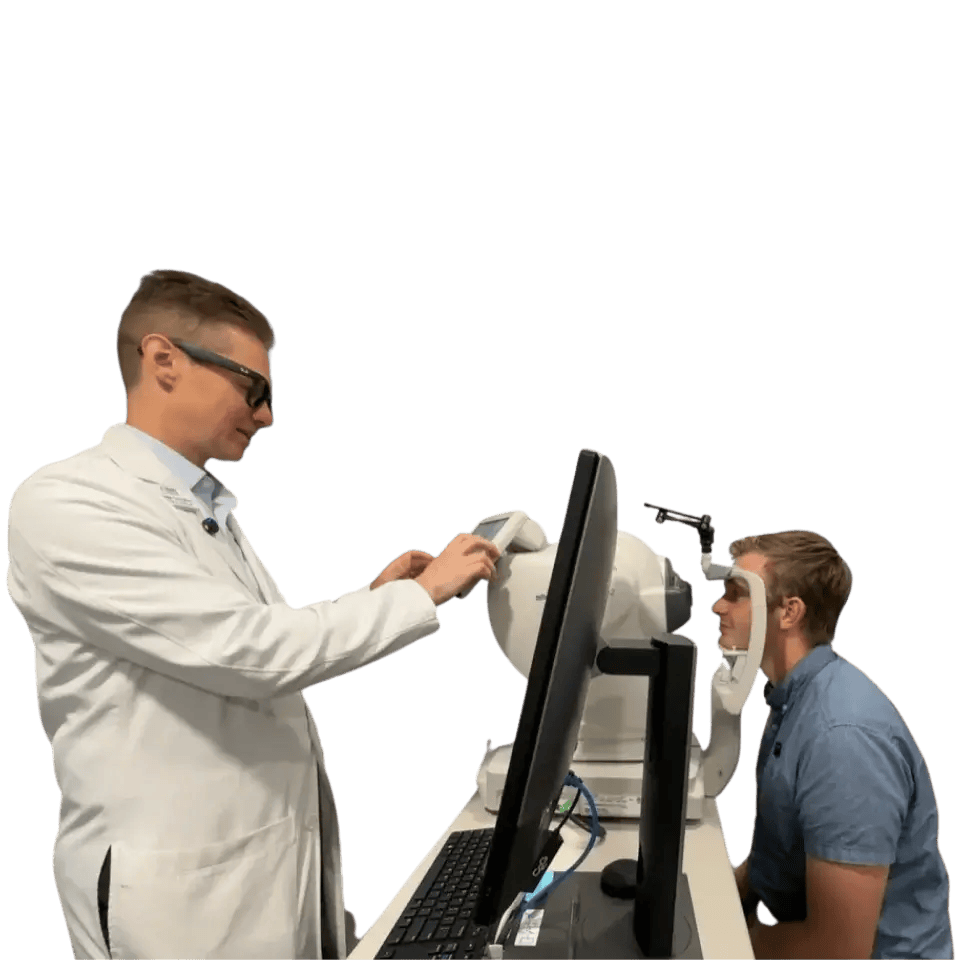
When you come in with concerns about eye strain, our team will ask detailed questions about when your symptoms occur, what activities trigger them, and what your workspace environment looks like. We will measure your visual acuity, assess how well your eyes focus at different distances, and test how your eyes work together during close tasks.
We will also examine the internal and external structures of your eyes using specialized instruments. This comprehensive approach helps us determine whether you need corrective lenses, treatment for an eye condition, or a combination of clinical care and lighting improvements to feel your best.
For many patients, dedicated computer glasses or reading glasses with specific lens designs reduce strain more effectively than lighting adjustments alone. Anti-reflective coatings on lenses minimize glare from overhead lights and screens. Blue-light-filtering lenses may also improve comfort for people who spend long hours on digital devices.
Our team will discuss your daily visual demands and recommend lens options that work alongside good lighting habits to provide the most practical, lasting relief.
These are some of the questions our patients most commonly ask about task lighting and eye strain. If you have a situation not addressed here, our team is happy to provide guidance specific to your needs.
Working in dim or poor lighting causes discomfort and temporary strain but does not cause permanent eye damage in otherwise healthy eyes. It will not lead to conditions like cataracts or macular degeneration. That said, chronic strain from inadequate lighting can affect your productivity and quality of life significantly over time, so addressing it is still worthwhile even if the stakes are not permanent harm.
Screens produce their own light, so they require less supplemental task lighting than printed pages do. For screens, the more important goal is positioning ambient light to prevent reflections on the display rather than boosting the brightness in the room. For printed materials, focused task lighting directed at the page is the priority. If you alternate between screens and paper throughout the day, an adjustable lamp gives you the flexibility to shift between the two needs.
People with cataracts often benefit from higher lumen levels because the clouded lens reduces how much light reaches the retina, making already-dim conditions feel even darker. Increasing to the upper range of recommended lumens can restore a meaningful amount of visual clarity. People with macular degeneration may find very intense light uncomfortable and often do better with adjustable fixtures that let them dial in their personal comfort level. Because these conditions vary widely in severity, the most useful lighting guidance comes from discussing your specific situation with our team during an exam.
Natural daylight offers excellent full-spectrum illumination and supports your body's natural rhythms, but it changes unpredictably throughout the day and can produce strong glare or harsh shadows depending on window placement and time of year. Artificial task lighting gives you consistent, controllable brightness regardless of weather or the hour. The most practical approach for most people is to take advantage of natural light when it is available and supplement with a quality task lamp when it is not, or when natural light creates glare on your work surface.
If your strain, headaches, or blurred vision continue despite meaningful improvements to your lighting and work habits, that is the point to schedule an eye exam. Symptoms that appear quickly and intensely, persist well after you stop close work, or include sudden changes in how clearly you see should be evaluated without delay. Eye discomfort that responds to lighting changes is usually manageable at home, but discomfort that persists in spite of those changes is telling you something different needs attention.
If eye strain, headaches, or vision changes are affecting your daily life, Insight Vision Optometry, Las Vegas is here to help. Our experienced team will evaluate your vision, review your visual demands, and provide recommendations that are specific to your eyes and your lifestyle. We look forward to helping you see and feel your best throughout every part of your day.


