
Understanding what is actually happening in your eye can ease a lot of worry. This condition is essentially a bruise on the surface of your eye, and it follows the same healing path as a bruise anywhere else on your body.
You will notice a sharply defined, bright red area on the sclera, which is the white part of your eye. The patch may be small or cover a large portion of the visible white surface. Unlike an eye infection, the redness is vivid and has clean edges rather than a diffuse pink flush.
Most people feel nothing at all. In some cases there is a mild awareness or slight scratchiness, but there is no pain, no discharge, and no change in vision. If you are experiencing pain or any blurring, that is an important signal to see an eye doctor right away rather than waiting it out.
The blood becomes trapped between the clear conjunctiva (the thin membrane covering the white of your eye) and the underlying sclera. Your body gradually reabsorbs it over time. The patch often shifts from bright red to a brownish or yellowish tone before fading completely, which usually takes one to three weeks depending on the size of the bleed.
A subconjunctival hemorrhage can happen to anyone, but certain situations and health factors make it more likely. Knowing the causes can help you understand why it happened and reduce the chance of it recurring.
A sharp spike in pressure inside the veins of your head is one of the most frequent triggers. This includes forceful coughing, hard sneezing, vomiting, or straining heavily during physical exertion. The brief surge of pressure is enough to rupture a fragile surface vessel.
You do not need to experience a significant injury for a vessel to break. Vigorous eye rubbing, a minor bump near the eye, or even irritation from a contact lens can be enough to cause a bleed. This is why we always advise handling your lenses gently and avoiding rubbing your eyes.
Conditions that affect blood vessel strength or integrity can make hemorrhages more likely. High blood pressure (hypertension), diabetes, and certain blood vessel disorders are among the most relevant. If you experience hemorrhages repeatedly without an obvious cause, checking in with your primary care provider about these conditions is worthwhile.
Medications that reduce the blood's clotting ability lower the threshold for a bleed to occur. Common examples include aspirin, warfarin, clopidogrel, and other anticoagulants or antiplatelet drugs. These medications are often medically necessary, so do not stop or adjust them without guidance from the prescribing provider.
In a large number of cases, no trigger can be identified at all. These are called idiopathic hemorrhages, meaning they occur on their own without a clear reason. In otherwise healthy individuals, a single spontaneous episode is generally not a cause for concern.
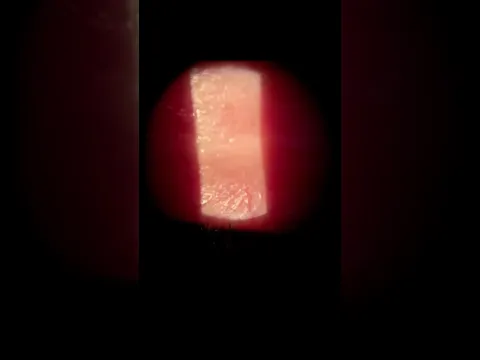
A subconjunctival hemorrhage has a very recognizable appearance, and most cases can be safely monitored at home. That said, certain signs should prompt a visit to our office without delay.
The hallmark symptom is a painless, flat, bright red patch that appears suddenly on the white of the eye. There is no discharge, no swelling of the eyelid, and no change in how clearly you see. Some patients notice a mild feeling of fullness in the eye area.
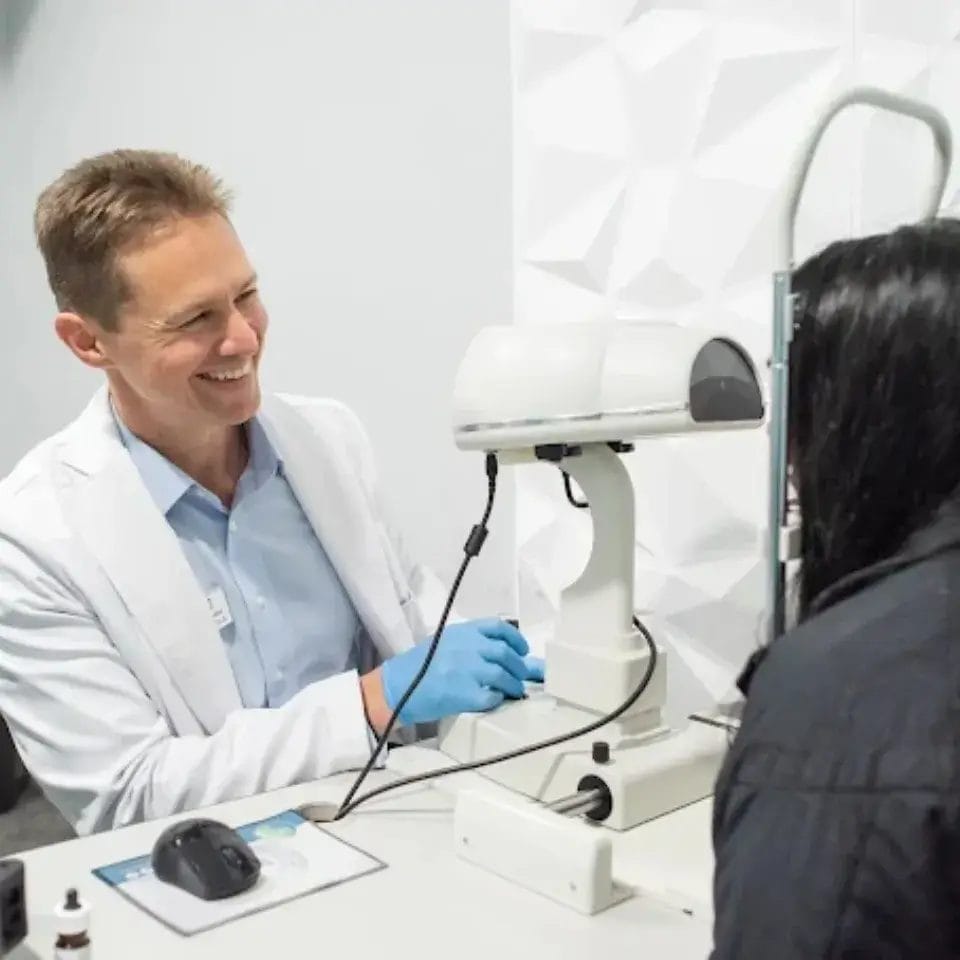
Our doctors can diagnose a subconjunctival hemorrhage with a straightforward examination. Using a slit-lamp microscope, a specialized instrument with magnification and bright illumination, we confirm that the blood is on the eye's surface and rule out any deeper injury or other cause of redness that may require different treatment.
Most hemorrhages heal without intervention, but the following situations call for a professional evaluation rather than a wait-and-see approach.
Any of these signs may point to something beyond a simple surface bleed and deserve a thorough evaluation.
There is no specific medical treatment to clear a subconjunctival hemorrhage faster, but there are steps you can take at home to stay comfortable while your eye heals, and habits that can lower your risk of future episodes.
While the hemorrhage resolves on its own, these steps can ease any mild irritation you may notice.
If you take blood thinners or aspirin-based medications, do not stop or reduce your dose on your own. Let your prescribing provider know about the hemorrhage, since they may want to review your current levels or timing. In most cases, these medications are far more important to continue than the hemorrhage warrants stopping them.
Reducing your risk of future hemorrhages often comes down to protecting your eyes and managing your overall health.
These answers address the practical questions and decisions patients often face when they first notice a subconjunctival hemorrhage.
We generally recommend taking a break from contact lenses until the hemorrhage has fully resolved. The lens sits directly on the eye's surface and can cause added friction or irritation to an area that is already healing. Switching to glasses temporarily is the safest approach, and it avoids any risk of extending the healing time.
Eye makeup can be used with care, but the key is avoiding any pressure or rubbing around the eye. Use a gentle touch when applying and an equally careful approach when removing makeup. Any product that requires rubbing near the eye is best avoided until the hemorrhage has cleared completely.
The color shift from red to brown to yellow reflects the same breakdown of hemoglobin (the pigment in red blood cells) that happens when a bruise fades on your skin. This progression is a normal and healthy sign that your body is actively clearing the trapped blood. It does not mean the condition is worsening.
A single episode is usually nothing more than a minor vascular event, but recurring hemorrhages deserve a closer look. Recurrent bleeds can be associated with uncontrolled high blood pressure, a bleeding disorder, or medication levels that need adjustment. Seeing both our eye doctors and your primary care provider for a thorough evaluation is the right course of action.
Not necessarily for a first, spontaneous episode in an otherwise healthy person with no pain and no vision change. However, if you are over 40, on blood thinners, or have any existing cardiovascular or systemic health conditions, a brief check-in with our team gives you peace of mind and confirms there is nothing else contributing to the bleed.
Go to an emergency eye care provider immediately if the hemorrhage followed a significant impact to the eye or head, or if it is accompanied by sudden vision loss, severe eye pain, or double vision. These symptoms suggest a deeper injury that goes well beyond a surface vessel rupture and must be evaluated without delay.
If you have noticed a red patch on your eye or have any questions about your eye health, our team at Insight Vision Optometry, Las Vegas is here to help. We offer same-day appointments and bring years of advanced clinical experience to every visit, whether you need a quick reassuring exam or a more thorough evaluation. We would be glad to give you clear answers and the expert care you deserve.


