
Both nearsightedness and farsightedness are called refractive errors, which means the eye does not focus light the way it should. Understanding how each one works makes it easier to recognize what you are experiencing and why treatment helps.
Nearsightedness, known clinically as myopia, occurs when the eyeball is slightly too long from front to back, or when the cornea curves too steeply. As a result, light entering the eye focuses in front of the retina rather than directly on it. This makes distant objects appear blurry while close objects remain clear.
Farsightedness, or hyperopia, is the opposite situation. The eyeball is shorter than average, or the cornea is too flat, so light focuses behind the retina instead of on it. Near objects tend to blur first, though in mild cases the eye's internal lens can compensate and keep distance vision relatively clear, at least for a while.
The simplest way to remember the difference is this: myopia blurs what is far away, and hyperopia blurs what is up close. Both are refractive errors rather than diseases, and neither is caused by straining your eyes or spending too much time on screens. Both conditions are correctable with glasses, contact lenses, or refractive surgery.
The root cause of both conditions is the physical shape of the eye, which is largely determined by genetics. That said, certain environmental and developmental factors may also play a role, especially with myopia.
Genetics are the strongest risk factor for myopia. If one or both parents are nearsighted, a child has a significantly higher chance of developing the condition. Myopia typically begins between ages 6 and 14 during childhood eye development and usually stabilizes by the early to mid-twenties. Research also suggests that limited outdoor time and extended close-up activities during childhood may contribute to myopia development and progression.
Most people with farsightedness are born with it. The eyeball is simply shorter than average, a characteristic that is largely inherited. In young people, the eye's flexible internal lens can flex enough to compensate for mild farsightedness, which is why some children with hyperopia pass basic vision screenings despite having the condition. As the lens becomes less flexible with age, that compensation decreases.
You cannot be both nearsighted and farsighted in the same eye simultaneously. However, it is possible to be nearsighted in one eye and farsighted in the other, a condition called anisometropia. It is also common for either condition to occur alongside astigmatism, which is an irregular curvature of the cornea or lens that causes blurring at all distances. Our team identifies all of these factors during a comprehensive eye exam.
The symptoms of nearsightedness and farsightedness overlap in some ways, which is one reason a professional exam is the only reliable way to know which condition you have. Knowing what to watch for, though, can help you recognize when a visit is overdue.
If you are nearsighted, you may find yourself squinting at road signs, classroom boards, or movie screens. Distant faces may look unclear until someone gets close. Children with myopia often move closer to the television, tilt their heads when viewing distant objects, or frequently ask to sit near the front of a classroom.
Farsightedness tends to show up as eyestrain or headaches after reading, close computer work, or using a phone. You may notice close objects looking fuzzy while distant ones remain sharp. Children with hyperopia sometimes avoid reading or close tasks because of the eye discomfort involved, which can sometimes be mistaken for a learning difficulty.
Both conditions can cause headaches, eye fatigue, difficulty concentrating, and general visual discomfort. The key distinction is which distances trigger those symptoms. A refraction test performed by our doctors measures exactly how your eyes are bending light and pinpoints which type of correction you need.

Diagnosing nearsightedness and farsightedness involves a series of straightforward, painless tests. Together, they give our team a complete picture of how your eyes are focusing and what prescription will bring your vision into sharpest clarity.
This is the core of any vision exam. Our doctor places a phoropter, which is a device containing rows of different lenses, in front of your eyes while you read a chart. By comparing lens options and asking which makes things clearer, your doctor identifies whether you need minus-power lenses for myopia or plus-power lenses for hyperopia, and determines the precise strength needed for each eye.
Instruments such as a keratometer or corneal topographer map the curvature of your cornea. These measurements help us understand how much of your refractive error is related to corneal shape and how much is related to overall eye length. Corneal measurements are also essential when fitting contact lenses or evaluating you for refractive surgery.
Dilating drops temporarily relax the focusing muscles inside the eye, preventing the lens from compensating during the exam. This is especially important for detecting hidden farsightedness in children and young adults, whose flexible lenses can mask the true degree of hyperopia. Dilation also allows our doctors to examine the retina and optic nerve for any signs of related complications.
Both nearsightedness and farsightedness respond well to treatment, and there are more options than ever to suit different lifestyles and visual demands. Our team will help you weigh the advantages of each based on your prescription, age, and everyday needs.
Glasses remain one of the most reliable and accessible ways to correct refractive errors. Myopia is corrected with concave lenses, which are thinner at the center and spread incoming light so it focuses directly on the retina. Hyperopia is corrected with convex lenses, which are thicker at the center and bend light inward so it reaches the retina rather than focusing behind it. Both provide clear vision immediately upon wearing.
Soft contact lenses correct both myopia and hyperopia for most patients. They rest on the surface of the cornea and adjust the way light enters the eye before it reaches your natural lens. Our doctors fit contacts carefully, check corneal health, and guide you through safe handling and care routines. If you also have astigmatism, toric contact lenses address all three refractive issues within a single lens design.
Procedures such as LASIK, PRK, and SMILE use a laser to reshape the cornea, correcting the way it bends light. These surgeries can significantly reduce or eliminate the need for glasses or contacts in eligible patients. Our team evaluates corneal thickness, prescription stability, and overall eye health to determine whether surgery is a suitable option and provides thorough co-management before and after the procedure.
Childhood myopia is a growing concern, and simply updating a glasses prescription each year does not address the underlying progression. Myopia management strategies aim to slow how quickly a child's nearsightedness worsens during the years when the eye is still developing. Options include low-dose atropine eye drops, orthokeratology lenses worn overnight to gently reshape the cornea, and specially designed multifocal contact lenses worn during the day. Our team can evaluate your child and recommend the most appropriate approach based on their age and rate of progression.
Here are answers to questions our patients commonly ask when trying to understand how nearsightedness and farsightedness affect their vision and long-term eye health.
No. The two conditions stem from different eye shapes, and one does not convert into the other. What often causes confusion is presbyopia, the gradual age-related stiffening of the internal lens that makes it harder to focus on close objects. Presbyopia affects nearly everyone after around age 40, including people who have been nearsighted their whole lives, so it can feel like something has changed fundamentally. In reality, you are dealing with a separate condition layered on top of your existing refractive error, and it can be addressed with reading glasses, bifocals, progressive lenses, or multifocal contacts.
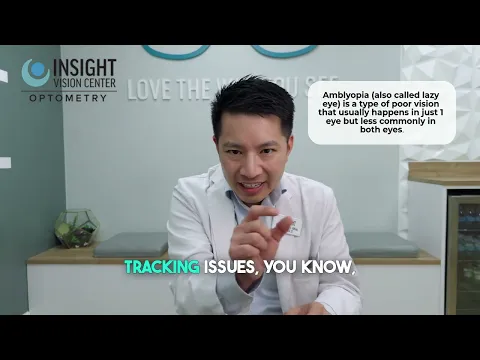
Yes, and this is especially important for farsightedness. Children with mild hyperopia often compensate so effectively with their flexible lenses that they never complain about blurry vision, yet the constant effort to compensate can cause headaches, eye fatigue, and avoidance of reading. For myopia, children frequently assume blurry distance vision is simply how the world looks. Routine eye exams, starting by school age, catch these issues before they interfere with learning and development or, in the case of hyperopia in young children, increase the risk of amblyopia, which is reduced vision in one eye due to unequal focusing.
High myopia, generally defined as a prescription beyond negative 6.00 diopters, is associated with a higher lifetime risk of retinal detachment, glaucoma, and a condition called myopic macular degeneration. These risks are one of the reasons myopia management in childhood is clinically meaningful: slowing progression reduces the likelihood of reaching a high prescription. Significant farsightedness can increase the risk of angle-closure glaucoma, in which fluid drainage in the eye becomes blocked. Our doctors monitor for these complications during routine exams regardless of which condition you have.
Yes, this is very common. Astigmatism is caused by an irregular curvature of the cornea or lens and blurs vision at all distances. It frequently coexists with myopia or hyperopia, and your prescription will include a separate measurement to account for it. Glasses, toric contact lenses, and most refractive surgeries can address astigmatism at the same time as your nearsightedness or farsightedness, so having both does not limit your correction options.
For most adults whose prescription has been stable, a comprehensive eye exam every one to two years is standard. Children and teenagers with myopia may need more frequent monitoring, sometimes every six to twelve months, especially if their prescription has been changing. Beyond prescription updates, annual or biennial exams allow our doctors to check for early signs of conditions like glaucoma, macular degeneration, and diabetic eye disease, which often develop without noticeable symptoms in the early stages.
Both conditions respond well to correction, but the approach may differ based on the degree of the error and your individual needs. Mild farsightedness in young patients sometimes requires no treatment at all if the eye's natural lens compensates comfortably. For myopia in children, treatment goes beyond simple correction to include active management of progression. The best path forward depends on your specific prescription, your age, and how the condition is affecting your daily life, all of which our team evaluates during a comprehensive exam.
Whether you have been living with blurry distance vision or struggling with close-up tasks, the right correction can make a meaningful difference in your daily comfort and quality of life. Our team at Insight Vision Optometry, Las Vegas brings deep expertise in refractive care, contact lens fitting, and myopia management to help patients of all ages see their best. We welcome you to schedule a comprehensive eye exam and let us help you find the clearest, most comfortable solution for your vision.


