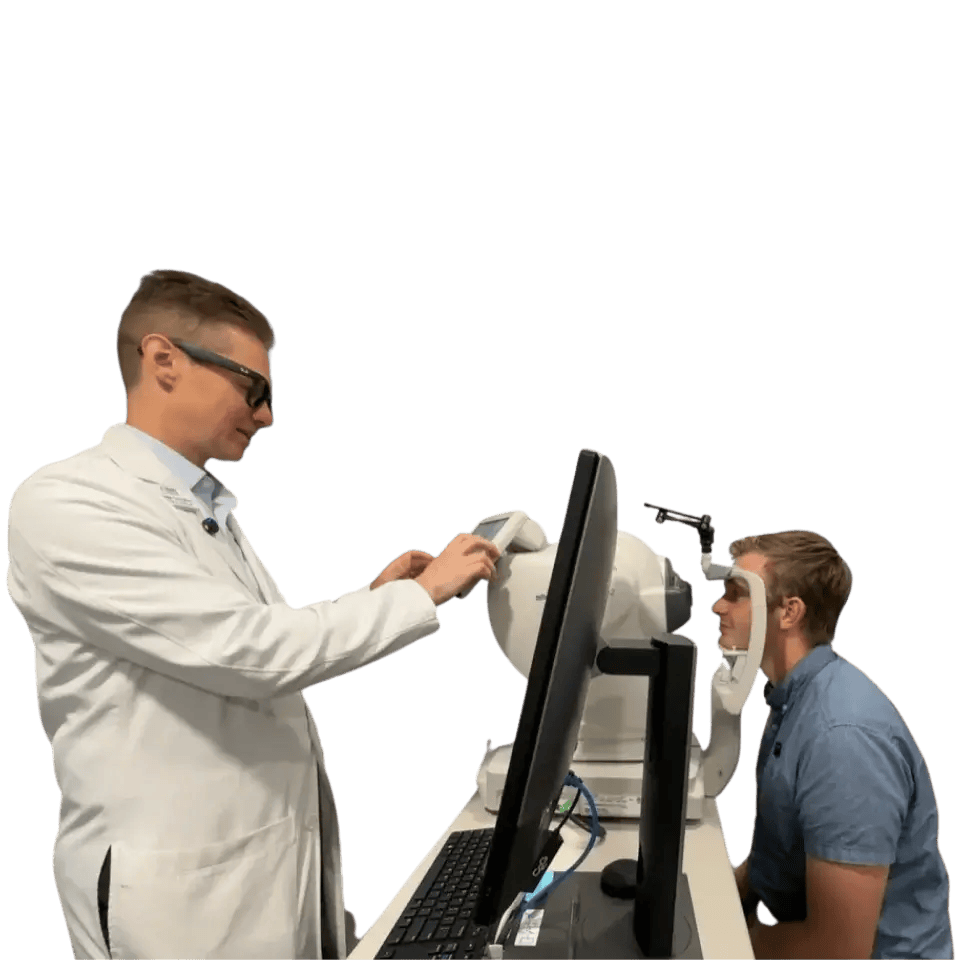
Different agencies and laws use different standards to define disability. Understanding which framework applies to your situation is the first step in knowing your rights and options.
The Social Security Administration (SSA) does not list keratoconus as an automatic disability. To qualify under the SSA's vision listing, your best-corrected visual acuity must be 20/200 or worse in your better eye. Best-corrected visual acuity refers to your sharpest vision achievable with glasses, contacts, or other correction.
Most people with keratoconus do not reach this level of vision loss, particularly when they have access to specialty contact lenses or surgical treatment. However, reaching this threshold is possible in advanced, untreated cases.
If your vision does not meet the formal SSA listing, you may still qualify for benefits through what is called the medical-vocational allowance pathway. This route evaluates whether your vision loss prevents you from performing your past work or any other type of work.
The SSA considers your age, education level, work history, and remaining functional abilities alongside your medical records. This pathway is actually the most common way vision-related disability claims are approved.
The Americans with Disabilities Act (ADA) uses a broader definition of disability than the SSA. Under the ADA, a disability is any physical impairment that substantially limits one or more major life activities, such as seeing, reading, driving, or working.
Advanced keratoconus may qualify under the ADA even when SSA thresholds are not met. This means you could be entitled to workplace accommodations or legal protections without formally receiving disability benefits.
Modern treatment has changed the outlook for keratoconus significantly. With the right care, most patients are able to maintain vision that supports daily life and work.
Rigid gas permeable lenses and scleral lenses vault over the irregular cornea and create a smooth optical surface, which can dramatically improve visual clarity. For many patients, these lenses restore vision to a level that supports everyday activities and employment.
It is important to understand that the SSA and ADA both evaluate your best-corrected vision. If specialty lenses bring your acuity above the disability threshold, you are unlikely to qualify for SSA benefits through the standard listing, though other pathways may still apply.
Corneal cross-linking is a procedure that uses ultraviolet light and riboflavin eye drops to strengthen and stabilize the corneal tissue. In most patients treated before advanced thinning occurs, it effectively halts progression of the disease.
Patients who stabilize their corneas early are far less likely to experience the severe vision loss that would qualify them for disability. Early treatment is one of the most important factors in preserving long-term visual function.
When contact lenses no longer provide adequate vision and the cornea has become severely thinned or scarred, corneal transplant surgery may be recommended. Most patients who undergo a transplant achieve usable vision with glasses or contact lenses after recovery.
A successful transplant can change your disability status. If your vision improves above the 20/200 threshold after surgery, you may no longer meet SSA listing requirements, though ADA workplace protections can still apply as long as your condition continues to limit a major life activity.
Even if your vision does not reach the SSA disability threshold, keratoconus may still entitle you to accommodations at work. These protections exist to help you perform your job effectively.
Under the ADA, employees with qualifying conditions can ask for reasonable accommodations, meaning adjustments to the work environment or job duties that allow them to perform their role. You do not need a formal disability determination to request these changes.
Your employer is required to engage in a cooperative process when you submit a reasonable accommodation request. They may ask for supporting documentation from your eye doctor.
Start by asking your eye doctor for a letter that describes your condition and the specific accommodations that would help you perform your job. The letter should focus on your functional limitations and the recommended adjustments, not your complete diagnostic history.
Your employer's human resources department can walk you through the formal request process. You are not required to share more medical detail than is necessary to support your request.
Every state operates a vocational rehabilitation office that provides support to people with disabilities who want to find or keep employment. Services can include job training, assistive technology, and career counseling, often at no cost to eligible individuals.
If keratoconus is affecting your ability to work, contacting your state vocational rehabilitation office for an evaluation is a practical step, even if you do not meet the SSA's disability criteria.

Building a strong disability case requires thorough documentation and the right professional support. Taking these steps early can make a meaningful difference in the outcome of a claim.
Keep records of your visual acuity measurements at every appointment, both with and without correction. Serial corneal topography maps that show progression over time strengthen your case considerably. Your eye doctor can compile these into a formal report.
In addition to acuity numbers, document how your vision affects specific daily tasks such as reading, driving, using a computer, or recognizing faces. Functional descriptions often carry as much weight as measured acuity in a disability evaluation, particularly because keratoconus can cause glare, halos, and contrast sensitivity loss that do not always appear in standard acuity testing.
A disability attorney who is familiar with vision-related claims can evaluate your situation before you file. Most disability attorneys work on a contingency basis, meaning you pay nothing unless your claim is approved.
An attorney can advise you on whether the standard listing pathway or the medical-vocational allowance route is more appropriate for your specific circumstances, and help you avoid common documentation mistakes.
Your eye doctor is one of your most valuable partners throughout the disability process. Ask them to document your best-corrected visual acuity, the current state of your corneas, and their professional assessment of how your condition affects your functional vision.
Specialists who treat keratoconus regularly understand the gap between measured acuity and real-world visual performance. Glare sensitivity, halos, and poor contrast can impair daily function even when an acuity number looks acceptable on paper. Having this gap clearly documented by your doctor can be essential to a successful claim.
These answers address practical decisions and situations that come up when keratoconus begins affecting your daily life or career.
The SSA evaluates your vision with your best correction in place, which includes specialty contact lenses. If your scleral or gas permeable lenses bring your vision above 20/200 in your better eye, you are unlikely to qualify under the standard SSA listing. That said, if your corrected vision still limits your ability to work, the medical-vocational allowance pathway may apply. It is worth consulting a disability attorney to assess your specific situation before assuming you do not qualify.
Some patients cannot wear specialty lenses due to persistent discomfort, severe dry eye, or other ocular surface complications. If you cannot achieve functional vision with lenses and cannot wear them, this is an important detail to document with your eye doctor. In this case, your uncorrected or inadequately corrected acuity may become the relevant measure for disability evaluation, which could significantly change your eligibility.
Parking permit criteria vary by state and are separate from federal disability standards. Some states issue permits based on visual acuity falling below a specific level, while others focus on mobility limitations. Contact your state's DMV or motor vehicle agency and ask your eye doctor whether your measured acuity and driving restrictions would support an application in your state.
Students at schools and universities can request accommodations through the institution's disability services or student accessibility office. You typically need documentation from your eye doctor describing your condition and its functional impact. Common accommodations include extended test time, enlarged print materials, preferential seating closer to the board, and permission to use screen magnification software. These accommodations do not require meeting SSA disability standards.
Yes, it can. If cross-linking stabilizes your condition or a corneal transplant significantly improves your vision, the SSA may reassess your status during a continuing disability review. ADA protections, however, remain in place as long as your condition substantially limits a major life activity, even if that limitation has partially improved. Keeping thorough records of your condition both before and after treatment helps support any ongoing claims or accommodation requests.
The Family and Medical Leave Act (FMLA) may protect your job if keratoconus treatment, recovery, or acute complications require you to miss work. To qualify, you generally need to have worked for your employer for at least 12 months and meet minimum hours requirements. Your eye doctor can complete the medical certification form required by your employer, which should describe the nature and expected duration of your condition and treatment.
At Insight Vision Optometry, Las Vegas, our specialists in keratoconus and specialty contact lenses are here to help you understand your condition, preserve your vision, and document your functional needs clearly. Whether you are exploring treatment options or need records to support a disability or accommodation request, our team is ready to partner with you every step of the way. We invite you to schedule a consultation and experience the personalized, expert care we are known for.


