Pool water contains a mix of disinfectants, byproducts, and contaminants that can disrupt the delicate surface of your eye. Knowing what causes irritation helps you make smarter choices before you get in the water.
Pools use chlorine and similar chemicals to kill bacteria and keep the water safe for swimmers. While these disinfectants do an important job, they can break down the tear film, which is the protective moisture layer on the surface of your eye. When chlorine mixes with sweat, body oils, and other substances, it forms compounds called chloramines that cause even more stinging and irritation than chlorine alone.
Healthy eyes have a natural pH of around 7.4, and properly maintained pool water should be close to that level. When a pool's chemistry is off, the water can be either too acidic or too alkaline, and both conditions irritate your eyes almost immediately.
Even well-maintained pools contain traces of sweat, cosmetics, sunscreen, and other substances brought in by swimmers. Outdoor pools can also collect pollen, dirt, and debris. These materials combine with disinfectants to create irritating byproducts, and bacteria that survive in improperly treated water can lead to infection.
Anyone can develop eye irritation from pool water, but some people are more vulnerable than others. People with dry eyes, seasonal allergies, or pre-existing eye conditions often react more strongly to pool chemicals, and contact lens wearers face a significantly higher risk of serious infection if they swim without removing their lenses.
Pool-related eye problems range from mild, short-lived irritation to more serious conditions that require professional care. Recognizing the difference helps you decide when to treat symptoms at home and when to seek help.
Redness and burning are the most frequent complaints after swimming. The tiny blood vessels on the white part of your eye become inflamed, giving your eyes a pink or bloodshot appearance. Your eyes may also water more than usual as your body tries to flush out the irritants. This reaction is usually temporary and fades within a few hours with rinsing and rest.
Hazy or cloudy vision after a swim is common and usually happens because pool chemicals have temporarily disrupted your tear film, making it harder for your eye to focus clearly. Swelling and chemical residue on the cornea, which is the clear front surface of your eye, can also contribute. In most cases, blurry vision clears up within an hour or two. If it lasts longer or gets worse, contact our team so we can rule out corneal damage.
Chemical conjunctivitis is an inflammation of the conjunctiva, which is the thin, clear tissue covering the white of the eye and the inside of the eyelids. Pool chemicals are a common trigger. Symptoms include grittiness, heavy redness, and a watery discharge.
Keratitis means inflammation of the cornea. Pool chemicals can damage the outer layer of corneal cells, causing pain, sensitivity to light, and tearing. This is more serious than ordinary post-swim redness. We most often see chlorine keratitis in swimmers who spend extended time underwater without goggles. If you notice sharp pain, worsening vision, or extreme light sensitivity after swimming, seek care the same day.
Bacterial infections can occur when poorly treated pool water introduces harmful organisms to the eye surface. A more serious but rare threat is Acanthamoeba, a microscopic organism found in water that can cause a severe corneal infection. Contact lens wearers are at the highest risk for this type of infection. Signs include persistent redness, pain that does not ease with rinsing, colored or thick discharge, and vision changes that develop over several days.
Most pool-related eye symptoms are mild and resolve on their own, but certain warning signs point to a more serious problem that needs professional evaluation right away. Do not wait to contact our team if you notice any of the following.

A few simple habits can dramatically reduce your risk of eye irritation and infection in the pool. The most effective protections are easy to adopt and available to swimmers of all ages and skill levels.
Wearing well-fitted swim goggles is the single most effective way to keep pool water away from your eyes. Goggles create a watertight seal around your eye sockets, blocking chemicals, bacteria, and debris from reaching the cornea. We recommend goggles for every swimmer, whether you swim for recreation or serious training.
Finding goggles that fit your face makes a real difference in comfort and protection. Look for a pair with soft silicone gaskets and adjustable straps. The seal should feel snug around your eye sockets without pinching.
If you normally wear glasses or contact lenses, prescription swim goggles let you see clearly underwater without the risks that come with swimming in contacts. These goggles are available in custom prescriptions or standard power increments for nearsightedness, farsightedness, and in some styles, astigmatism. Our doctors can help you determine the right prescription so you can see comfortably and safely in the pool.
Some swimmers find goggles uncomfortable or difficult to keep sealed during certain activities. If wearing goggles is not possible, the next best options involve reducing how much pool water reaches your eyes directly.

Acting quickly after pool exposure can limit how much irritation you experience and help your eyes recover faster. A few simple steps at poolside can make a meaningful difference.
Rinsing with clean, fresh water is the first and most important step after any pool exposure. This washes away chlorine, chloramines, and other residue before they cause further irritation. Splash your open eyes several times or use a gentle stream of water until they feel more comfortable. If your pool facility has an eyewash station or shower, use it before you even dry off.
After rinsing, preservative-free artificial tears can help restore moisture to the eye surface and relieve lingering discomfort. Keeping a small bottle in your swim bag makes it easy to apply drops right after you get out of the water.
If your eyes feel hot, puffy, or especially uncomfortable after swimming, a cold compress can help reduce inflammation and ease burning. Soak a clean washcloth in cold water, wring it out, and rest it gently over your closed eyelids for five to ten minutes. Use a freshly rinsed cloth each time to avoid introducing new bacteria to already irritated eyes.
When your eyes are irritated, it is tempting to rub them for relief, but rubbing can worsen inflammation and may scratch your cornea if any debris is on the surface. A few other habits to avoid during recovery are just as important.
Mild irritation usually improves within a few hours to a day with basic home care. You should schedule an appointment if your symptoms last longer than 24 hours, if they worsen over time, or if they include significant pain, vision changes, or unusual discharge. For sudden, severe pain or vision loss after swimming, seek care the same day. Early evaluation helps prevent complications and protects your long-term eye health.
When pool-related symptoms do not resolve on their own, a thorough eye exam helps us identify what is happening and start the right treatment. Our approach is thorough but straightforward, and most exams are quick and completely comfortable.
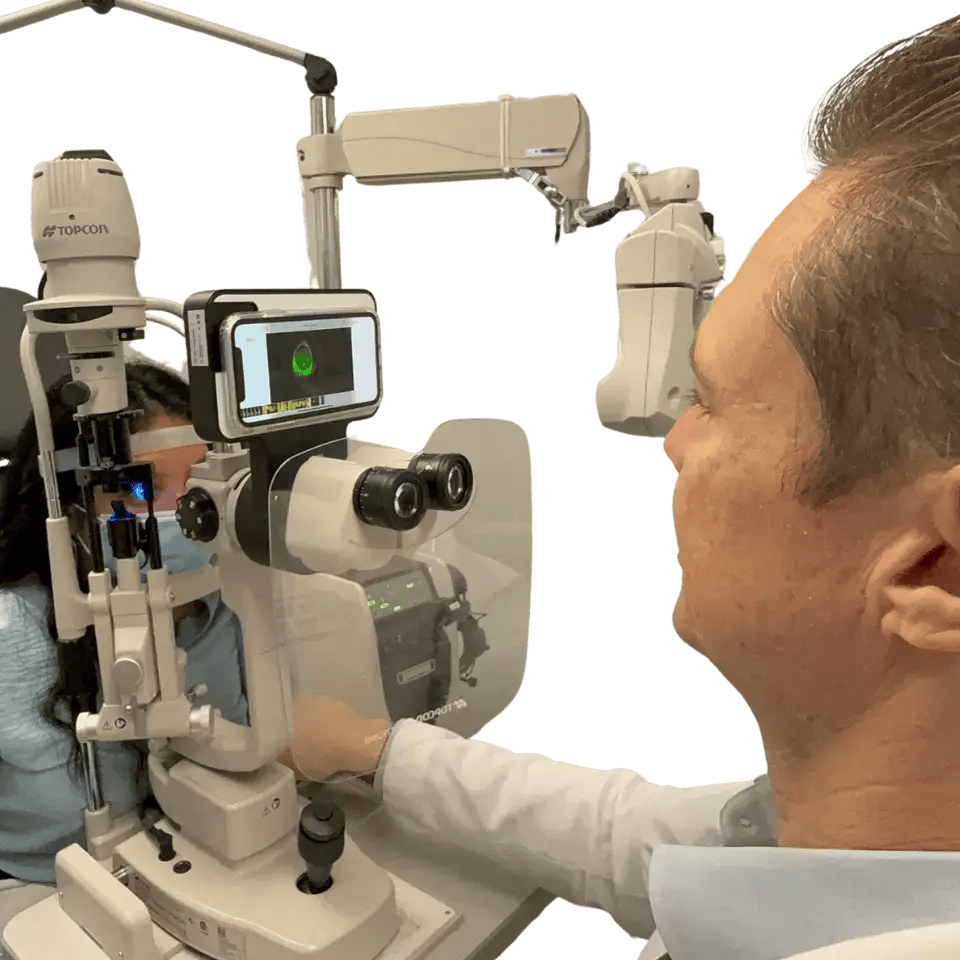
We begin by asking about your swimming routine, when your symptoms started, and what you have already tried at home. We then examine the surface of your eyes using a slit lamp, which is a specialized microscope that lets us see your cornea and conjunctiva in fine detail. We may also check your vision and evaluate your tear film to assess how pool exposure has affected the eye surface.
If we suspect corneal damage, we may apply a safe orange dye called fluorescein to highlight scratches or erosions on the eye surface. Under a blue light, injured areas appear bright green, helping us detect even very small injuries. This test is painless and the dye clears naturally with your tears within minutes.
For suspected infections, we may gently collect a small sample from the eye surface or any discharge and send it to a lab. Identifying the specific organism allows us to choose the most effective treatment rather than guessing.
Significant inflammation or chemical irritation sometimes requires prescription eye drops to speed healing and reduce discomfort. We will give you clear instructions on how often to use them and what improvements to expect.
If we diagnose a bacterial infection, antibiotic eye drops or ointment are usually very effective. More complex infections, such as those caused by Acanthamoeba, require specialized medications and close monitoring over a longer period. We will schedule follow-up visits to confirm the infection is clearing and watch for any complications. Completing the full course of treatment is essential, even if your symptoms improve before the medication runs out.
After treatment begins, we typically ask you to return within a few days to a week so we can confirm your eyes are healing properly and adjust the treatment plan if needed. During this visit, we will also discuss when it is safe to get back in the pool and what precautions to take going forward. Most patients can resume swimming once their eyes have fully healed, provided they use appropriate eye protection.
Building consistent habits before and after you swim is the most reliable way to keep your eyes healthy season after season. These steps are simple, inexpensive, and effective for swimmers of all ages.
Removing your contact lenses before entering the pool is one of the most important things you can do for your eye health. Contact lenses can trap bacteria and pool chemicals against the cornea, creating conditions that lead to serious infection. Even daily disposable lenses carry this risk and should be removed before swimming. If you accidentally swim with contacts in, remove them immediately, rinse your eyes with clean water, discard the lenses, and monitor your eyes for signs of infection over the following days.
A quick pre-swim shower rinses off sweat, cosmetics, sunscreen, and oils from your skin before they enter the pool. This reduces the formation of chloramines, which are the irritating byproducts that form when chlorine reacts with these substances.
Opening your eyes underwater without goggles exposes your cornea directly to everything in the pool. Every unprotected opening of your eyes increases the risk of irritation and infection. Training yourself to keep your eyes closed, or investing in goggles that allow clear vision, is one of the most protective habits you can develop. This is especially important for children, who may not appreciate how repeated exposure affects their developing eyes.
Even with goggles on, small amounts of pool water can reach your eyes. Making a post-swim rinse part of your regular routine helps clear away any residual chemicals or irritants before they cause symptoms. Keep a water bottle in your swim bag, or use the pool facility's shower as soon as you finish your session.
If you swim for an hour or more at a time, stepping out of the pool briefly every 20 to 30 minutes gives your eyes a chance to rest and recover. Use these breaks to rinse your eyes, blink freely to spread fresh tears, and check your goggles for a proper seal.
These answers address the questions our patients ask most often about swimming and eye health, with guidance to help you make informed decisions.
Properly maintained pools are much safer, but no pool eliminates all risk. Some organisms can tolerate standard chlorine levels, and even brief lapses in chemical balance can allow bacteria to grow. Your best protection is consistent goggle use and the post-swim rinsing habits described above, regardless of how clean the pool appears to be.
Saltwater pools still rely on chlorine to disinfect the water, but they generate it from dissolved salt rather than adding it directly. Many swimmers find the water more comfortable because chlorine concentrations tend to be more stable and pH balance is easier to maintain. That said, goggles are still recommended in saltwater pools because salt itself can be irritating and contaminants are still present in the water.
Mild redness from pool chemicals typically fades within one to three hours after you finish swimming and rinse your eyes. If redness is still present after 24 hours, is getting worse rather than better, or is accompanied by pain or changes in vision, those are signs that something more than simple irritation may be involved. Contacting our team at that point is the right call rather than continuing to wait.
Children need the same level of eye protection as adults, but their goggles must be sized specifically for smaller faces to create a reliable seal. Look for goggles designed and labeled for children, with soft gaskets and easily adjustable straps. Because children often spend more time with their faces in the water and may not notice or report discomfort, starting the goggle habit early is especially valuable for their long-term eye health.
Swimming with chronic dry eye is generally possible, but pool chemicals can intensify symptoms by stripping away what remains of your natural tear film. Wearing goggles is particularly important in your case. Applying preservative-free lubricating drops before and after swimming and limiting session length can also help. It is worth discussing your dry eye management with our doctors before the swimming season so we can tailor recommendations to your specific situation.
Remove your contact lenses as soon as you can safely get out of the water. Rinse your eyes thoroughly with fresh water or saline solution, then discard the lenses completely rather than rinsing and reinserting them. Monitor your eyes carefully over the next several days for redness, pain, light sensitivity, or discharge. If any of those symptoms develop, contact our office promptly, as early treatment of a contact lens-related infection significantly improves outcomes.


