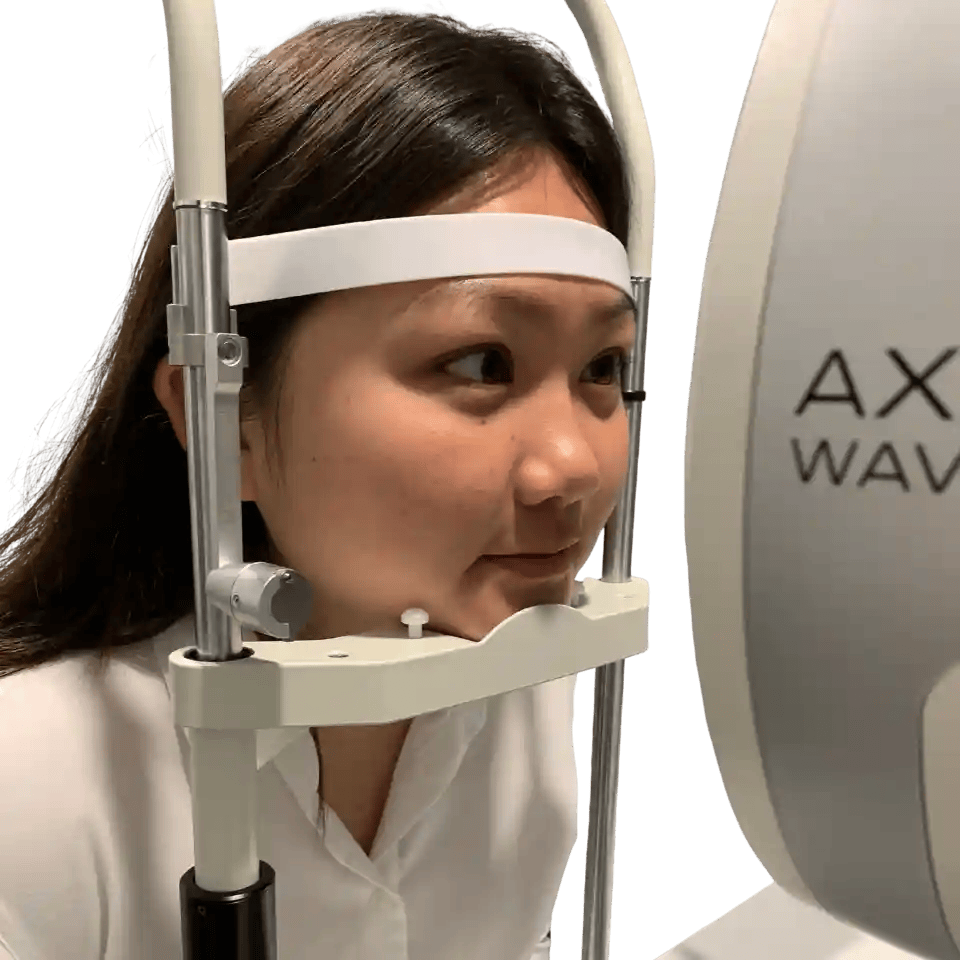
How often you need a comprehensive eye exam depends on your age and overall health. Guidelines from the American Academy of Ophthalmology and the American Optometric Association give a general framework, but your doctor will tailor the schedule to fit your individual needs.
Healthy adults under 40 who have no known eye disease or significant risk factors may be able to go longer between exams, though annual exams are recommended for all adults 18 and older by the American Optometric Association. Even without symptoms, eye problems can quietly develop during this stage of life. Our doctors use these early visits to establish your baseline eye health and catch any changes before they progress.
The American Academy of Ophthalmology recommends that every adult receive a comprehensive baseline eye exam at age 40. This is the decade when early signs of eye disease and age-related vision changes most commonly begin to appear. Your doctor uses this exam as a reference point for every future visit, making it easier to detect changes over time.
At your baseline exam, our doctors check your visual acuity, eye pressure, retinal health, and optic nerve to assess your current status and your risk for developing conditions like glaucoma or macular degeneration. If concerns are found, you move to a more frequent monitoring schedule right away.
As you move into your mid-50s and beyond, the risk of cataracts, glaucoma, and age-related macular degeneration increases significantly with each passing decade. Adults between 55 and 64 are generally advised to schedule exams every one to three years, while those 65 and older typically need exams every one to two years.
Frequent exams in this age group also help with keeping your prescription accurate, which reduces fall risk and supports safe driving. Dry eye, reduced contrast sensitivity, and medication-related eye changes also become more common with age, and regular visits allow our team to catch and manage these issues early.
Certain health conditions, medications, and personal histories mean your eyes need closer monitoring than the standard schedule provides. Our doctors evaluate your full health profile to decide how often you should be seen and what to look for at each visit.
People with diabetes need a dilated eye exam at least once a year, regardless of their age or how well their blood sugar is controlled. Diabetic retinopathy, which is damage to the blood vessels inside the retina (the light-sensitive layer at the back of the eye), causes no symptoms in its earliest and most treatable stages. Only a dilated exam can detect it before vision is affected.
Other conditions that may call for more frequent eye exams include high blood pressure, lupus, rheumatoid arthritis, and thyroid disorders. These can damage blood vessels in the eye, cause internal inflammation, or lead to progressively worsening dry eye. Our doctors work alongside your other healthcare providers to monitor your eye health as part of your overall care.
If a parent or sibling has been diagnosed with glaucoma, macular degeneration, or retinal detachment, your personal risk of developing the same condition is meaningfully higher. Family history is one of the most significant factors in determining how early and how often you should begin comprehensive exams.
Certain populations, including Black and Latino or Hispanic adults, face a statistically higher risk of primary open-angle glaucoma. Because early glaucoma produces no pain or noticeable symptoms, regular exams are the only reliable way to detect it before permanent optic nerve damage occurs. Our doctors ask about your family eye health history at every visit and adjust your schedule accordingly.
Some common medications can affect your eye health over time. Long-term use of corticosteroids, for example, can raise eye pressure and speed up cataract development. Hydroxychloroquine, used to treat lupus and rheumatoid arthritis, can cause retinal damage with extended use and requires regular monitoring. It is important to share a complete list of your current medications with our team at every appointment.
Certain antidepressants, antihistamines, and blood pressure medications can also cause dry eye or blurry vision. If you start a new medication and notice changes in your vision, schedule an exam rather than waiting for your next routine visit. Our doctors check for drug-related changes and update your monitoring schedule if a new medication increases your risk.

Many people assume that passing a vision screening at school, work, or the DMV means their eyes are healthy. Vision screenings check only basic distance sharpness and miss most serious eye conditions entirely. A comprehensive eye exam is a thorough evaluation of both how well you see and the health of every structure inside your eye.
A comprehensive eye exam includes visual acuity testing, refraction (determining your prescription), eye pressure measurement, a slit-lamp examination (a magnified look at the front structures of the eye), and a dilated fundus exam (a detailed look at the retina and optic nerve). This full evaluation cannot be replaced by any brief screening or online vision test.
During this exam, our doctors can also detect signs of more than 20 systemic health conditions, including diabetes, high blood pressure, and thyroid disease. The retina is the only place in the body where blood vessels and nerve tissue can be examined directly without surgery, making the eye exam a uniquely valuable window into your overall health.
The three leading causes of vision loss in the United States, glaucoma, diabetic retinopathy, and age-related macular degeneration, all develop without producing noticeable symptoms in their early stages. By the time blurry vision, blind spots, or difficulty seeing at night appear, some degree of irreversible damage may have already occurred.
Treatment for these conditions works best when started early, often before any symptoms exist. Skipping regular exams means relying on the assumption that you would notice a problem that, by definition, gives you no warning signs until it is much harder to treat.
You should not wait for your next scheduled visit if you develop any new eye symptoms. Sudden blurry vision, flashes of light, a sudden increase in floaters, eye pain, or any unexplained vision change all warrant a prompt evaluation. Our team is available for urgent and same-day appointments when symptoms arise unexpectedly.
Other reasons to come in sooner include a prescription that no longer seems to be working, frequent headaches related to visual tasks, or a significant change in your health such as a new diagnosis of diabetes. Changes in your health are often changes in your eye health risk, and our doctors want to know about them right away.

These are some of the most common questions our patients ask about scheduling and managing their eye exams.
For most patients with well-managed diabetes and no signs of retinal damage, an annual dilated exam meets the recommended standard. However, if our doctors detect diabetic retinopathy or other changes, the schedule often moves to every three to six months until the condition is stable. Your exam frequency is always guided by what we find, not just your diagnosis.
A stable prescription is not the same as healthy eyes. Glaucoma, macular degeneration, and many retinal conditions can develop and progress for years without ever changing your prescription. Age-based exam guidelines apply even when your glasses or contacts continue to feel comfortable, because prescription accuracy and internal eye health are two separate things.
Annual exams are recommended for all contact lens wearers. Contact lenses sit directly on your cornea and can cause infections, changes to the corneal surface, and dry eye that require ongoing monitoring. Your annual visit with us includes a contact lens-specific evaluation in addition to a full eye health check, ensuring that your lenses continue to fit safely and comfortably.
The most important step is to schedule a comprehensive exam as soon as possible. Our doctors will run a thorough evaluation and look carefully for any changes that may have developed during the gap. If conditions are found, you may be placed on a more frequent schedule in the short term to monitor anything that needs attention and to reestablish a clear baseline for your future care.
If your prescribing doctor or pharmacist has mentioned that a medication carries ocular side effects, getting a baseline eye exam before or shortly after starting it is a smart step. This gives our doctors a documented record of your current eye health so that any drug-related changes can be caught early and clearly connected to the medication. Let our team know which medications you are taking, including vitamins and supplements, at every visit.
Most guidelines agree that adults 65 and older benefit from annual or near-annual comprehensive eye exams, even without any diagnosed conditions. At this stage of life, the cumulative risk of glaucoma, cataracts, macular degeneration, and other conditions is high enough that waiting two or more years between visits increases the chance of missing early disease. If you are in this age group and have not been seen recently, it is a good time to come in.
Your eyes deserve expert, attentive care at every stage of life, and our team is here to provide exactly that. At Insight Vision Optometry, Las Vegas, we combine advanced diagnostic technology with one-on-one attention from our doctors to give you a thorough, personalized evaluation you can count on. Contact us today to schedule your next comprehensive eye exam and take a confident step toward protecting your vision for years to come.


