
Understanding what is happening inside your eye can help you make sense of your symptoms and follow your treatment plan with confidence. When your eye sustains a blunt impact, the body triggers an inflammatory response that affects the iris and nearby structures.
When your eye takes a direct hit, the iris and surrounding tissues become inflamed. This is your body's natural response to injury, but inside the eye it causes swelling, redness, and pain that can interfere with your daily life. Inflammatory cells and proteins leak into the normally clear fluid at the front of the eye, creating cloudiness and discomfort.
The inflammatory cells floating in your eye fluid scatter light, which is why your vision may appear blurry or hazy during active inflammation. Your iris may also have difficulty responding to changes in light, and you may notice your pupil looks different in size or shape compared to the unaffected eye. These changes are typically temporary and improve as treatment takes effect.
Blunt trauma to the eye can cause additional injuries at the same time as traumatic iritis. These may include bleeding inside the eye (hyphema), elevated eye pressure, damage to the drainage angle of the eye (angle recession), or retinal injury. When these complications are present, recovery may take longer and require additional management steps alongside treatment for the iritis itself.
Healing time varies depending on how severe the injury was and how quickly treatment was started. Most patients see clear improvement within the first week or two, though some cases take considerably longer to fully resolve.
With mild traumatic iritis, most patients begin to feel noticeably better within the first several days of starting treatment. Pain and light sensitivity typically decrease first, followed by a gradual clearing of vision as the inflammation settles.
Severe cases may require 6 to 12 weeks to heal, and sometimes longer if complications develop. When the injury is more extensive, inflammation affects deeper structures of the eye and typically requires more aggressive treatment. Medications may need to be adjusted several times before the inflammation is fully under control.
Some patients with severe traumatic iritis develop complications such as elevated eye pressure, adhesions forming between the iris and the lens (called synechiae), or persistent inflammation that is slow to respond. When this happens, recovery requires closer monitoring and sometimes additional interventions beyond standard eye drops.
Several things influence how fast your eye recovers from traumatic iritis. Early treatment is one of the most important factors, since starting medication promptly limits the damage the inflammation can cause to your eye tissues.

Knowing what to expect and what to watch out for helps you recognize whether your eye is healing on track or whether something requires urgent attention. Some symptoms are a normal part of recovery, while others are warning signs that need prompt care.
Symptoms of traumatic iritis usually appear within hours to a couple of days after your eye injury. The pain tends to feel deep inside the eye rather than on the surface, and it often worsens when you are exposed to bright light or try to focus on objects nearby.
As traumatic iritis heals, you should notice gradual, steady improvements. Pain typically decreases first, becoming less intense and less frequent. Within the first one to two weeks of treatment, most patients find they can tolerate normal indoor lighting without significant discomfort, and vision begins to clear as the inflammation settles and inflammatory cells leave the eye fluid.
The redness around your iris will fade progressively, and your eye will begin to look more normal. Vision improvement often feels most noticeable around the same time your light sensitivity decreases. Complete resolution of redness can take several weeks even as other symptoms improve earlier.
Certain symptoms during recovery mean you should contact our office right away or go to an emergency eye care provider without delay. These signs could indicate a serious complication that needs prompt treatment.
Sometimes traumatic iritis symptoms flare up again after a patient starts feeling better. This most commonly happens when eye drops are stopped too soon or the medication is tapered too quickly before the inflammation is fully controlled. The inflammation was not completely resolved, and reducing treatment allowed it to rebound.
In other situations, returning symptoms may signal a new problem such as elevated eye pressure or a delayed complication from the original injury. If your symptoms come back, contact our office promptly so we can evaluate your eye and determine what is happening. Do not restart old medications or change your drop schedule on your own, and avoid using leftover steroid or dilating drops without guidance, as doing so can mask an infection or raise eye pressure without you realizing it.
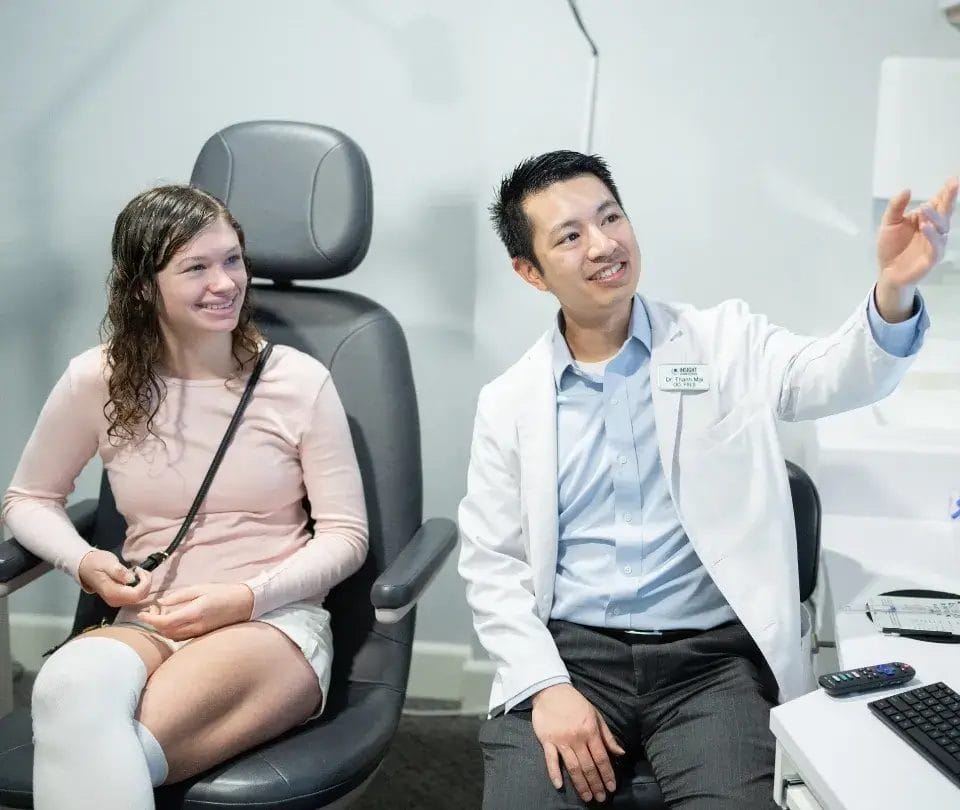
From your first visit through your final follow-up, we use specific examinations and measurements to understand exactly how your eye is responding to treatment. This careful monitoring allows us to adjust your care at every stage of recovery.
When you come in with a suspected eye injury, we perform a thorough examination to diagnose traumatic iritis and assess its severity. We start by asking detailed questions about how and when the injury occurred and what symptoms you have noticed. This history helps us anticipate which complications to look for based on the type of trauma involved.
We check your vision and examine your eye using specialized instruments with bright light and high magnification. The examination itself is not painful, though your eye may be sensitive to the light required. Importantly, we assess whether the eye is intact before checking internal pressure, to ensure the examination is performed safely.
Our primary diagnostic tool is a slit-lamp examination, which is a specialized microscope that allows us to view the detailed internal structures of your eye. We can see inflammatory cells floating in the eye fluid, evaluate the condition of your iris, and look for adhesions forming between the iris and the lens. We also check the corneal surface and eye pressure as part of a complete assessment.
For mild traumatic iritis, we typically schedule a follow-up visit within three to seven days after starting treatment to confirm the inflammation is responding. If things are improving, we may extend the interval between visits to every one to two weeks. Severe traumatic iritis requires much more frequent monitoring, sometimes every few days initially, until the condition stabilizes.
Most patients need at least three to five follow-up visits before we consider traumatic iritis fully resolved. After blunt trauma, we also typically perform a gonioscopy examination (a test to evaluate the drainage angle of the eye) around four to six weeks after the injury, and we advise ongoing eye pressure monitoring well into the future.
During each follow-up visit, we check specific markers that tell us how well your eye is recovering. The most important indicator is the number of inflammatory cells visible in the front chamber of the eye. As these decrease with each visit, it confirms the inflammation is subsiding and treatment is working.
The right medications, used correctly and consistently, make a significant difference in how quickly and safely your eye recovers. Our doctors tailor your treatment plan based on the severity of your condition and how your eye responds at each visit.
Steroid eye drops are the cornerstone of traumatic iritis treatment because they directly reduce the inflammation inside your eye. We typically prescribe these drops at a high frequency in the beginning, often every hour while you are awake for the first day or two, to ensure enough medication reaches the inflamed tissues. We begin steroid treatment only after confirming there is no active corneal surface defect or infection that could be worsened by steroids.
As your eye improves, we gradually reduce how often you use the steroid drops. This process, called tapering, is important because stopping steroids suddenly can cause inflammation to return. We base the tapering schedule on what we observe at each follow-up visit, specifically the number of inflammatory cells present, not just how you feel. We also monitor your eye pressure throughout steroid treatment, since some patients experience a rise in pressure as a side effect.
Dilating drops (called cycloplegics) are used alongside steroid drops to keep the iris relaxed and reduce the risk of adhesions forming between the iris and the lens. These drops also help relieve the deep, aching pain that comes from the iris muscle being in spasm during active inflammation. We typically taper and stop dilating drops before steroid drops, once we are confident adhesion formation is no longer a risk.
Mild traumatic iritis may require eye drops for two to four weeks, while severe cases can call for treatment lasting two to three months or longer. The timeline is determined entirely by what we find at your follow-up examinations, not by how you feel on any given day. Never stop using your medications on your own, even when your eye feels completely normal. Stopping treatment prematurely is one of the most common reasons traumatic iritis flares up again.
If your traumatic iritis does not respond to standard steroid and dilating eye drops, we have additional options available. Stronger steroid formulations, oral anti-inflammatory medications, or injections of medication around the eye may be considered for cases that are difficult to control. These are reserved for situations where standard treatment is not working and are only used after excluding infection as a cause.
When elevated eye pressure develops as a result of the inflammation or the steroid treatment itself, we add pressure-lowering eye drops to your regimen. We typically avoid a class of drops called miotics during active inflammation and instead use beta blockers, alpha agonists, or carbonic anhydrase inhibitors to manage pressure safely. In rare cases where complications cannot be controlled with medications alone, surgical intervention may be necessary.
What you do at home between appointments plays an important role in how well and how quickly your eye heals. Following a few key habits will help your medications work effectively and protect your eye throughout recovery.
Proper technique when instilling eye drops ensures the medication reaches the right place and reduces the risk of contamination or side effects. Wash your hands thoroughly before every application. Tilt your head back, gently pull down your lower eyelid, and place a single drop into the pocket formed. Close your eye gently for one to two minutes to allow the medication to absorb, and press lightly on the inner corner of your eyelid for about one minute to reduce how much medication enters your bloodstream.
If you are using more than one type of drop, wait at least five minutes between different medications. Never touch the tip of the dropper bottle to your eye, eyelashes, or any other surface, as this can contaminate the entire bottle. Keep a log of when you apply your drops so you do not miss doses during periods of frequent use.
Your healing eye is more vulnerable to damage than usual, which makes physical protection especially important during recovery. Wearing safety glasses or a protective shield in situations where accidental contact is possible can prevent setbacks. If your work environment involves any risk of eye contact or debris, discuss with our team whether you need time off or specialized protective wear.
At night, some patients accidentally rub or press on their injured eye during sleep without realizing it. Wearing a rigid protective shield at bedtime can prevent this. Be extra careful around children or pets, whose quick and unpredictable movements can accidentally contact your healing eye. Avoid rubbing or pressing on the eye at any time during recovery.
Light sensitivity is often one of the most disruptive symptoms of traumatic iritis and can make it difficult to function normally at home. Dark, wraparound sunglasses that block light from the sides can make a significant difference in your comfort, even when you are indoors. Dimming your home lighting, closing curtains during the brightest parts of the day, and reducing screen time on phones, tablets, and computers will also help reduce irritation and discomfort.
Driving is generally not safe during the acute phase of traumatic iritis. The dilating drops enlarge your pupil, making bright sunlight difficult to manage and increasing glare. Your vision may be too blurred to drive safely, and your reaction time and depth perception can be affected by both the inflammation and the medications. Do not drive or operate heavy machinery until our doctors confirm your vision has returned to a safe functional level and your dilating drops have been reduced or stopped.
Your ability to return to work depends on your specific job requirements and the severity of your symptoms. Jobs that require clear vision, precise depth perception, or involve exposure to dust, debris, or physical impact to the face may need to be paused during the early stages of recovery. We are happy to discuss your specific situation and advise accordingly.
Even after your symptoms are gone and treatment is complete, ongoing monitoring is an important part of your long-term eye health. Some complications from the original injury can develop weeks to months after the iritis itself has resolved.
We will schedule at least one final examination after your symptoms resolve to confirm that all inflammation has cleared and your eye structures have returned to normal. We check that eye pressure is stable and that your vision has fully recovered to its pre-injury baseline. This visit also gives us the opportunity to make sure no quiet, symptom-free inflammation has been left behind before we clear you to stop all medications.
If you wear contact lenses, we will advise you at this visit on when it is safe to resume wearing them. In some cases, we may ask you to return a few weeks after stopping all drops to confirm the inflammation does not return once treatment ends.
Certain complications from traumatic iritis and blunt eye trauma can appear long after the acute episode has resolved. Glaucoma (elevated eye pressure that damages the optic nerve) and early cataract formation can both develop months to years after the original injury. Because of this, we continue to monitor patients beyond the initial recovery period, with the length of follow-up depending on how severe the original injury was.
Most patients with mild traumatic iritis who receive prompt treatment recover fully with no lasting changes to their vision or eye health. When the inflammation is well-managed from the start, the eye returns to its normal state and vision returns to its pre-injury level. Severe traumatic iritis or cases complicated by adhesions, sustained elevated pressure, or significant structural injury can sometimes leave permanent changes, including an irregularly shaped pupil, ongoing pressure concerns, or early lens changes. Early treatment and consistent follow-up care give your eye the best chance of a complete and lasting recovery.
Traumatic iritis only develops when the eye sustains a physical injury, so your risk of a recurrence depends on your exposure to situations where eye trauma can occur. Wearing protective eyewear during sports and any activities involving potential impact to the face is your most effective prevention strategy. Having traumatic iritis in one eye does not make the other eye more susceptible, unless that eye is also injured.
If you have suffered an eye injury and are experiencing pain, light sensitivity, or any changes in your vision, please contact us right away for an urgent evaluation. At Insight Vision Optometry, Las Vegas, our experienced team is dedicated to providing thorough, attentive care at every stage of your recovery, from diagnosis through long-term follow-up. We will guide you through your treatment plan with clarity and compassion, helping you heal as safely and completely as possible. Visit us at www.insightvisionlv.com to learn more or to request an appointment.


