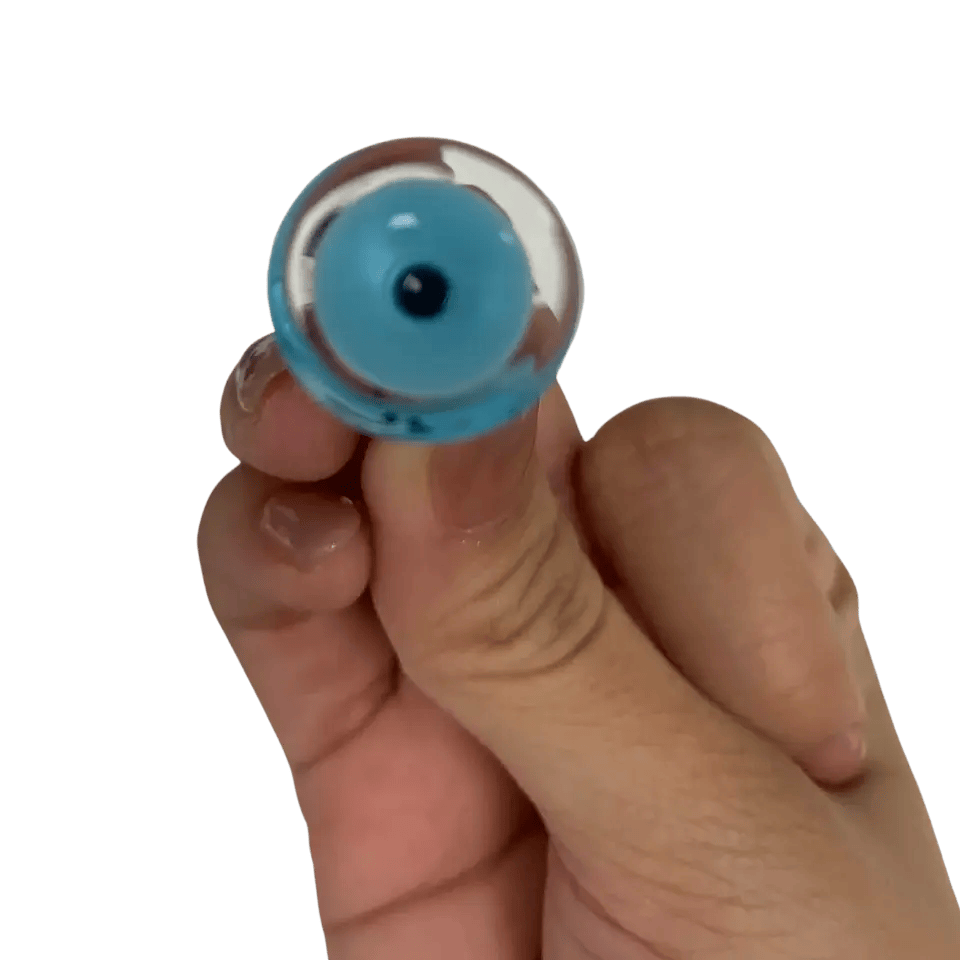
Scleral lenses are designed for people whose cornea, the clear front surface of the eye, has an irregular shape. Conditions like keratoconus, pellucid marginal degeneration, and corneal scarring can make standard contacts uncomfortable or ineffective. A scleral lens vaults over the entire cornea and rests on the sclera, the white part of the eye. This creates a smooth optical surface no matter what the cornea looks like underneath.
Many scleral lens patients in Las Vegas and Henderson have tried soft contacts, gas permeable lenses, or even hybrid lenses without success. If your lenses pop out, feel uncomfortable after a few hours, or just do not give you clear vision, scleral lenses fill that gap. They stay centered and stable on the eye, which means sharper vision and more predictable comfort throughout the day.
The fluid reservoir that sits between a scleral lens and your cornea acts like a constant layer of moisture. For patients with conditions that cause extreme dryness, this built-in hydration can be a turning point. It means fewer drops during the day and less of that gritty, burning feeling that makes other lenses hard to tolerate.
Think of scleral lens wear like breaking in a new pair of shoes. Your eyes and eyelids need time to adjust to the lens. During the first week, your eye doctor may recommend starting with just a few hours and adding time gradually. This adaptation period is normal and helps your eyes learn to work with the lens comfortably.
A prospective study published in the journal Eye and Contact Lens in 2019 found that average wearing time increased from 9.8 hours per day at one month to 11.1 hours at twelve months. That steady climb happens because your eyes adapt, your handling technique improves, and your doctor fine-tunes the fit.
Here is what makes scleral lens wearing time different from regular contacts. The saline solution you fill the lens with before insertion creates a liquid cushion over your cornea. Over several hours, this fluid can become stale as debris and proteins from your tears mix in. When you start to feel a bit of haze or mild discomfort after four to five hours, it is usually the fluid, not the lens itself, telling you it is time for a refresh.

Mini-scleral lenses are smaller in diameter and vault just over the cornea. They can be a good starting point for patients new to scleral lenses. Wearing times are similar to full-size sclerals, though some patients find the slightly smaller profile easier to handle during the learning phase.
Standard scleral lenses have a larger diameter and rest farther out on the sclera. They tend to offer more stability and a larger fluid reservoir. For patients with significant corneal irregularity or severe dry eye, the larger reservoir means the fluid stays cleaner and more comfortable for longer stretches.
For the most complex cases, lenses can be designed from a detailed three-dimensional impression of your eye's surface. These provide the most precise fit possible and can help maximize comfortable wearing time for patients who have not had success with standard designs. Our eye doctors at Insight Vision Optometry, Las Vegas are among the few practitioners in Nevada trained to fit these advanced lenses.

Traditional contact lens fitting relies on a few measurements of your cornea. Scleral lens fitting goes further. Advanced imaging captures thousands of data points across both the cornea and the sclera. This creates a detailed map of your eye's unique shape. The lens can then be designed to match your curves more precisely, leading to better comfort and longer wearing times.
After your lens is placed on the eye, cross-sectional imaging shows the exact space between the lens and your cornea. If the clearance is too high, the fluid reservoir becomes heavy and blurs vision. If it is too low, the lens may touch the cornea over time. Getting this measurement right is what allows comfortable wear from morning to evening.
The 2019 Eye and Contact Lens study tracked scleral lens wearers over a full year. It found a clear upward trend in daily wearing time, from just under 10 hours at one month to over 11 hours at twelve months. This confirms what most patients experience: the lenses get more comfortable as you and your doctor optimize the fit.
Research published in Contact Lens and Anterior Eye in 2022 found that patients who took brief breaks every four to five hours had a higher success rate across all diagnosis groups. Removing the lens, cleaning it, refilling with fresh saline, and reinserting takes just a few minutes. This simple reset can carry your comfort through the rest of the day.
Every eye is different. Factors like your specific corneal condition, tear quality, environment, and overall eye health all influence how many hours you can comfortably wear your lenses. The studies above reflect averages. Your eye doctor will create a personalized wearing schedule based on how your eyes respond during follow-up visits.
Insertion and removal will feel unfamiliar at first. The lens is larger than a standard contact, roughly the size of a nickel, and you fill it with saline before placing it on your eye. Most patients find that a small plunger tool makes the process much easier. Your eyes may water a bit and you might feel some awareness of the lens edges during the first few days. This is normal and fades quickly.
During the first month, you will have follow-up visits so your doctor can check the fit, measure the fluid clearance, and adjust if needed. You will likely start at a shorter wearing time, maybe six to eight hours, and build up as your comfort allows. By the end of the first month, most patients are wearing their lenses for close to ten hours a day.
After the initial adjustment period, many patients settle into a routine of twelve or more hours of wear per day. The key to long-term comfort is maintaining clean lenses, using preservative-free saline, and doing a mid-day removal and refill if you notice any haziness or dryness. Regular check-ups, typically every six months, help your doctor monitor your corneal health and keep the fit optimized.
Your journey begins with a detailed evaluation of your cornea, tear film, and overall eye health. Your doctor will use advanced imaging to map the shape of your eye and determine whether a scleral lens is the right option. You will also discuss your daily routine, visual goals, and any challenges with previous lenses.
Based on your eye measurements, a custom scleral lens is ordered and designed to match your unique anatomy. At your fitting appointment, the lens is placed on your eye and evaluated for proper clearance, centration, and comfort. Your doctor may make small adjustments or order a modified lens if needed.
Before you leave with your lenses, you will receive hands-on training for insertion, removal, and care. Your doctor will set a recommended wearing schedule that starts conservatively and builds over time. Patients across Spring Valley and the greater Las Vegas area appreciate the one-on-one time our team dedicates to this training step.
Follow-up visits during the first few months are essential. Your doctor will check how the lens sits after several hours of wear, verify that the cornea is healthy, and adjust the fit if needed. This ongoing partnership between you and your eye doctor is what turns a good scleral lens fit into a great one.


