Your genes influence nearly every aspect of how your eyes develop, function, and age. Understanding the genetic side of eye health helps us catch problems early and create a care plan that fits your unique risk profile.
Refractive errors are vision problems caused by the way your eyes focus light. If one or both of your parents wear glasses or contact lenses, your chances of needing vision correction are higher.
Several serious eye diseases have strong genetic links that increase your risk if a close relative has been affected. Having a parent or sibling with any of these conditions means more frequent monitoring is often appropriate.
Glaucoma damages the optic nerve and can lead to permanent vision loss if left untreated. Cataracts cause the lens of the eye to become cloudy, and while they often develop with age and environmental factors, they can also appear earlier in life due to genetic causes. Macular degeneration affects the central portion of the retina, reducing sharp, detailed vision. Age-related macular degeneration involves both genetic and environmental influences, while inherited macular dystrophies follow more direct genetic patterns and tend to begin earlier in life.
Color blindness makes it difficult to distinguish between certain colors, most commonly reds and greens. This condition is far more common in males because it is usually carried on the X chromosome.
Night blindness refers to difficulty seeing in dim or low light and can have several causes. Some forms are present from birth and are inherited, while others develop gradually as part of retinal diseases. Additional causes include vitamin A deficiency, advanced myopia, cataracts, and certain medications. If you or your child have trouble seeing in dark rooms or at dusk, let us know so we can identify the underlying reason.
Retinal dystrophies are a group of rare inherited diseases that progressively damage the light-sensitive cells inside the retina. Retinitis pigmentosa is one of the most well-known examples, often beginning with night blindness and gradual narrowing of side vision.
Understanding inheritance patterns helps explain why some conditions affect every generation while others seem to skip relatives entirely. Our team can walk you through what these patterns mean for you and your family.
You inherit half of your genes from your mother and half from your father. These genes act as biological instructions that guide how your eyes develop and function throughout your life.
When a gene carries a change, called a mutation, it may affect the normal development or health of your eyes. Whether that mutation causes a condition depends on the type of gene involved and how that mutation is inherited.
Autosomal dominant conditions require only one copy of a changed gene to potentially cause the condition. If one parent carries the mutation, each child has roughly a 50 percent chance of inheriting it. Even within the same family, the age at which symptoms appear and how severe they are can vary significantly. Some forms of cataracts and glaucoma follow this pattern.
Autosomal recessive conditions require two copies of a changed gene, one from each parent. Parents who each carry one copy typically have no symptoms themselves, but when both copies are passed to a child, the condition can develop. Many retinal dystrophies are inherited this way.
X-linked conditions are carried on the X chromosome. Males, who have only one X chromosome, are affected when that chromosome carries the mutation. Females, who have two X chromosomes, are usually carriers and are less commonly affected, though some X-linked conditions can affect females as well.
Knowing which eye conditions run in your family allows us to assess your individual risk, schedule appropriate exams, and watch for early warning signs before symptoms appear. This information shapes how we monitor you over time.
Sharing your family history also benefits your relatives. When we identify a hereditary condition in one family member, we may recommend that siblings, children, or parents be screened as well, even before any symptoms develop.
Hereditary eye conditions can show up at any age, and recognizing the signs early leads to better outcomes. Knowing what to watch for in yourself and your children makes a real difference.
Children do not always know that their vision is different from others, so parents need to watch for behavioral clues. Common signs that something may be affecting a child's vision include squinting, holding books very close, or sitting unusually near screens.
New vision problems can emerge or worsen during the adolescent years. Myopia often progresses through the school-age years and may stabilize in early adulthood, while some forms of inherited glaucoma begin showing signs in the late teens or twenties.
Teenagers should mention any difficulty seeing the board at school, trouble with night driving, or frequent changes in their glasses prescription. We can monitor these changes and determine whether they are typical or warrant further testing.
Many inherited eye diseases cause slow, progressive vision loss that is easy to miss at first. Conditions like macular degeneration and retinitis pigmentosa can develop over years or even decades before causing noticeable difficulty. Regular exams help us detect subtle changes before they become significant.
Some genetic conditions, however, cause rapid or sudden changes. Leber hereditary optic neuropathy can lead to severe vision loss in one or both eyes within weeks to months. Sudden vision loss, flashes of light, new floaters, or a shadow blocking part of your vision requires immediate medical attention and should not be ignored.
Always tell us if any blood relative has had glaucoma, macular degeneration, early cataracts, retinal detachment, or any serious eye disease. Include grandparents, parents, siblings, and children on both sides of your family.
Even if you do not recall the exact diagnosis, letting us know that a relative went blind or had eye surgery gives us important context. We will ask follow-up questions and may recommend specific tests to better understand which conditions could be relevant to your care.

Identifying a genetic eye condition involves a combination of careful examination, advanced imaging, and in some cases, DNA testing. Our diagnostic approach is tailored to your symptoms, family history, and individual findings.
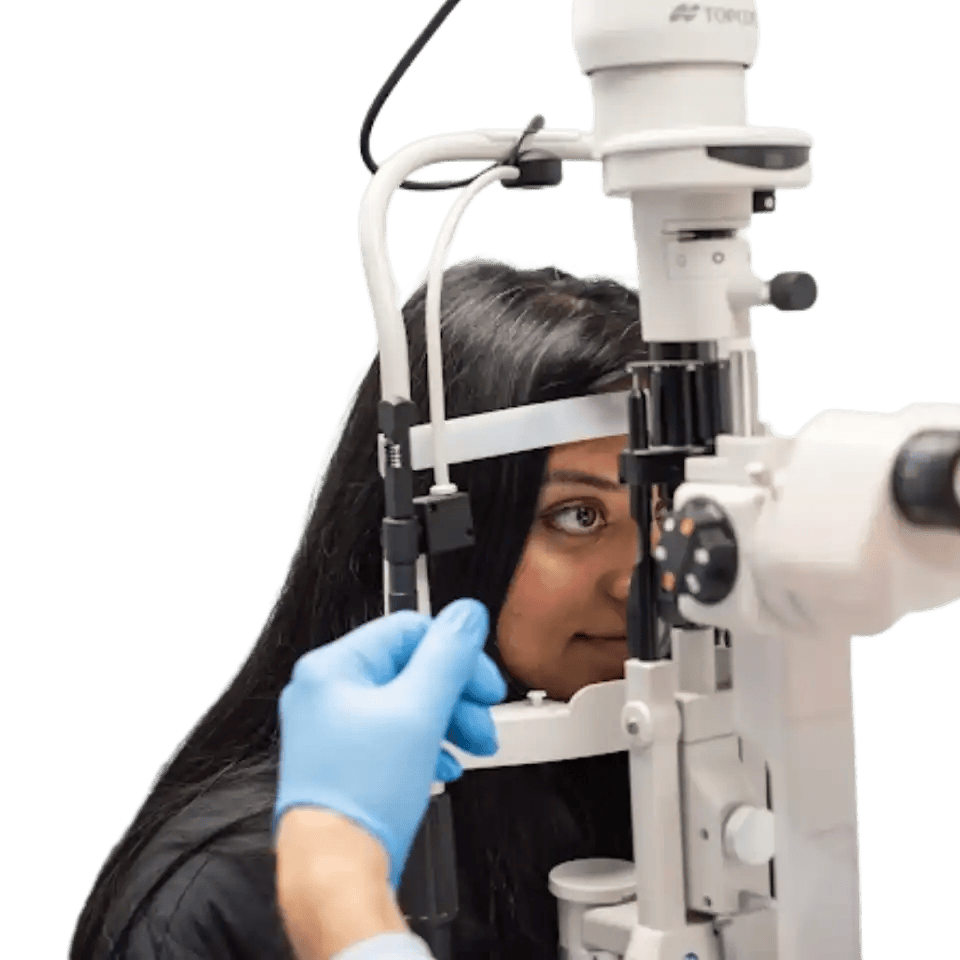
A thorough eye exam is the foundation of any evaluation. We test your vision, assess how your eyes work together, and examine both the front and back of your eyes for signs of inherited disease.
When a genetic condition is suspected, we may recommend additional testing to get a clearer picture of what is happening at a deeper level. These tools help us detect changes that are not visible during a standard exam.
Optical coherence tomography, or OCT, produces detailed cross-sectional images of the retina and allows us to identify very early tissue changes. Visual field testing maps your peripheral vision for areas of loss. Fundus photography and fundus autofluorescence imaging can reveal patterns characteristic of specific inherited retinal conditions.
Genetic testing analyzes your DNA to identify specific mutations associated with hereditary eye diseases. We may recommend this if you have symptoms of an inherited condition, a notable family history, or if you are considering having children and want to understand your risk.
Results can guide how frequently we monitor you, inform treatment decisions, and help predict how a condition may progress. Genetic counseling provides professional guidance on what the results mean for you and your relatives, including the likelihood that children could inherit the condition. This is an important step for families navigating complex diagnoses.
A detailed family eye health history is one of the most useful tools we have. Gathering this information before your visit, and updating it over time, helps us build a more complete picture of your risk.
Treatment depends on the specific condition, its stage, and how it affects your daily life. Our team works with you to create a plan that prioritizes preserving the vision you have and managing symptoms as effectively as possible.
Inherited refractive errors like myopia, hyperopia, and astigmatism are among the most manageable genetic eye conditions. Glasses and contact lenses correct how the eye focuses light and can be adjusted as your prescription changes over time.
For children and teenagers with progressing myopia, we may recommend myopia control strategies to slow the rate of nearsightedness worsening. Options include low-dose atropine eye drops, orthokeratology (specially designed overnight contact lenses that gently reshape the cornea while you sleep), and multifocal soft contact lenses. Spending more time outdoors has also been shown to support healthier eye development in children. Candidacy and outcomes vary based on age, prescription, and individual response.
For adults with stable prescriptions and no contraindications, refractive surgery such as LASIK or PRK may be an option. We evaluate whether any inherited corneal or retinal conditions might affect the safety or suitability of these procedures before making a recommendation.
Some genetic conditions require medication to slow progression or manage symptoms. Glaucoma is most commonly treated with daily prescription eye drops that lower the pressure inside the eye, reducing the risk of further optic nerve damage.
For many inherited retinal dystrophies, there are currently no disease-modifying medications widely available. Care focuses on monitoring, low vision support, lifestyle adjustments, and eligibility for clinical research.
When cataracts become advanced enough to interfere with daily life, surgery can remove the cloudy lens and replace it with a clear artificial one. Cataract surgery is generally safe and highly effective, even in cases of genetically caused cataracts that develop at a younger age, though all procedures carry risks that we will discuss with you in detail.
If eye drops are not controlling glaucoma adequately, laser procedures or surgery to improve fluid drainage from the eye may be recommended. These approaches help lower eye pressure and protect the remaining optic nerve function.
The right treatment for macular degeneration depends on the type and how far it has progressed. Age-related macular degeneration is classified as either dry or wet, and management differs between the two forms.
For certain stages of dry AMD, specific nutritional supplements containing vitamins C and E, zinc, copper, and lutein have been shown to help slow progression. For wet AMD, injections of anti-VEGF medications into the eye can stop abnormal blood vessel growth and help preserve vision. Inherited macular dystrophies are managed based on the specific diagnosis and may involve monitoring, genetic counseling, low vision support, and in some cases, dietary or medication guidance. We tailor all recommendations to your individual situation.
When inherited eye disease causes permanent vision loss, low vision aids help people make the most of their remaining sight. Magnifying devices, specialized lighting, large-print materials, and digital assistive tools can support reading, working, and daily independence.
Vision rehabilitation goes a step further by teaching practical strategies for adapting to vision loss. Trained specialists help patients learn to use assistive devices effectively, make their home environment safer, and develop new approaches to everyday tasks. These services make a meaningful difference in quality of life for people living with progressive inherited conditions.
Gene therapy is an innovative treatment that delivers functional copies of genes directly to cells in the retina. As of 2026, gene therapy is approved for a limited number of inherited retinal diseases with specific confirmed genetic mutations, and ongoing research is expanding the range of conditions being studied.
We can help you understand whether any emerging therapies or clinical trials may be worth exploring based on your diagnosis and overall eye health.
Managing a genetic risk is an ongoing process, not a one-time event. Regular monitoring, healthy habits, and early action when symptoms change are the most powerful tools available to protect your sight.
If you have a family history of hereditary eye disease, we generally recommend more frequent exams than standard guidelines suggest. Your specific exam schedule depends on which conditions are in your family, your current findings, and any symptoms you report.
While genes cannot be changed, healthy habits can support your overall eye health and may help slow the progression of some inherited conditions. A diet rich in leafy green vegetables, fish, and colorful produce provides antioxidants and nutrients that support retinal health.
Wearing sunglasses with UV protection helps reduce the risk of cataracts and macular degeneration over time. Not smoking is one of the most impactful choices you can make, as smoking is known to accelerate many eye diseases. Staying physically active and managing conditions like diabetes and high blood pressure also contribute to long-term visual health.
When one person in a family is diagnosed with a hereditary eye condition, other blood relatives may benefit from screening even before any symptoms appear. Siblings and children of someone with inherited glaucoma or a retinal disease are often the highest priority for early testing.
Finding a condition before it causes noticeable symptoms allows us to begin monitoring sooner and, in conditions where treatment is available, intervene earlier. We encourage you to share relevant information with family members and invite them to schedule their own exams.
Some vision changes cannot wait for a routine appointment. Seek immediate care if you experience sudden vision loss, flashes of light, a shadow or curtain blocking part of your vision, or severe eye pain. These symptoms can indicate serious problems such as retinal detachment, acute angle-closure glaucoma, or optic nerve or vascular emergencies that require prompt treatment to protect your sight.
Here are answers to some of the questions we hear most often about hereditary eye conditions and what they mean for patients and their families.
You cannot change the genes you were born with, but you have more control than you might think. Following through on regular exams allows us to identify changes while they are still manageable, and adhering to any prescribed treatment slows or stops progression in many conditions. Lifestyle choices like not smoking, protecting your eyes from UV light, and eating a nutritious diet contribute to better outcomes over the long term, even in people with a strong genetic risk.
Yes, and the earlier the better. If you have been diagnosed with an inherited eye disease, we recommend that your children begin eye exams in early childhood to establish a baseline and watch for signs that a condition may be developing. In cases where a specific gene mutation has been identified in your family, knowing this can guide how frequently we screen and what to watch for at each visit. Preventive treatment, where it exists, is always more effective when started before significant damage has occurred.
Genetics play a significant role, and children of nearsighted parents are more likely to develop myopia themselves. However, the environment also matters. Research consistently shows that spending more time outdoors during childhood, and limiting prolonged close-up screen time, can help reduce the risk or slow the progression of myopia even in children with a family history. If myopia runs in your family, discussing a myopia management plan with our team early is worth considering.
Genetic testing can confirm whether you carry a mutation associated with a particular eye condition, but it generally cannot predict the precise age when symptoms will appear or how severe they will become. Even people with the same confirmed mutation within the same family can experience the condition very differently. Testing is most valuable for confirming a diagnosis, guiding how often you need monitoring, and helping family members understand their own risk.
Yes, and this is more common than many people realize. In recessive inheritance patterns, a grandparent and grandchild may both be affected while the parent in between is an unaffected carrier. X-linked conditions can also appear to skip generations, for example when a trait passes from an affected grandfather through a carrier daughter to an affected grandson. If someone in your extended family had serious vision loss but your parents were unaffected, it is still worth sharing that history with us at your next visit.
Incomplete family history is very common, and it does not limit the care we can provide. We can still assess your individual risk based on your own exam findings, current symptoms, and any partial information you do have. In some situations, we may recommend baseline imaging or testing that can serve as a reference point regardless of what family information is available. Even a few details, like knowing that a grandparent lost their vision or had eye surgery, are helpful starting points.


