Knowing when to schedule your child's first dilated eye exam depends on the type of diabetes they have and when they were diagnosed. Starting at the right time is one of the most important steps in protecting their long-term vision.
Children with type 1 diabetes should have their first dilated eye exam five years after their diabetes diagnosis. For example, if a child was diagnosed at age three, their first eye screening would be around age eight. If the diagnosis came later in childhood, that five-year mark may fall during the teenage years.
The reasoning behind this timeline is that vision-threatening retinopathy is rare in the very early years after type 1 diabetes develops. However, meaningful changes in the retinal blood vessels can begin appearing as early as six to seven years after onset, which is why starting at the five-year mark matters.
Children and teens with type 2 diabetes should have their first dilated eye exam at the time of diagnosis or shortly afterward. Unlike type 1 diabetes, type 2 diabetes can go undetected for months or even years before a formal diagnosis is made. This means that by the time a young person is diagnosed, blood sugar may have been elevated for an unknown period of time, making early screening essential.
After the initial exam, annual dilated eye exams are recommended for young people with type 2 diabetes.
Puberty plays an important role in when diabetic eye disease may begin to develop. Hormonal changes during this period affect blood sugar control and can make diabetes harder to manage. Growth hormones released during puberty can also influence the blood vessels in the retina.
For children diagnosed with type 1 diabetes at a very young age, some guidelines suggest that a first eye exam should happen around the onset of puberty if the five-year mark has not yet been reached. This accounts for the increased metabolic stress that puberty places on the body and the potential for faster retinopathy development during this time.
After the initial screening, children and teens with diabetes should have dilated eye exams at least once a year. If the first exam shows no signs of retinopathy, annual visits are usually sufficient. If early retinopathy is detected, our doctors may recommend more frequent visits, such as every six months, to monitor for any progression.
The schedule can be adjusted as your child grows and their diabetes management evolves. Consistent annual screening is one of the most effective ways to catch changes early, when they are easiest to manage.
Diabetic retinopathy affects the small blood vessels inside the retina, the light-sensitive layer at the back of the eye. Understanding how and why it develops in children and teens helps families see why regular screening matters so much during these years.
Diabetic retinopathy can develop in young people, though the risk and timing differ between type 1 and type 2 diabetes. Research involving thousands of youth with diabetes has found that young people with type 1 diabetes tend to develop retinopathy at a faster rate than those with type 2 diabetes over similar follow-up periods.
While severe, vision-threatening retinopathy is uncommon in children, early changes in the retinal blood vessels can begin during the teenage years and lay the groundwork for more advanced disease in adulthood if left undetected.
The connection between blood sugar management and retinopathy risk is well established in young patients. Higher hemoglobin A1c levels, which reflect average blood sugar control over a two-to-three-month period, are directly associated with a greater chance of developing retinal changes. The longer blood sugar remains above target, the more cumulative damage occurs to the small blood vessels in the retina.
This is especially relevant for teenagers, who may struggle with consistent diabetes management due to the physical changes of puberty, increasing independence, social pressures, and shifting daily routines. Building strong blood sugar habits during childhood pays dividends for eye health over the decades ahead.
Young people with type 1 diabetes tend to develop retinopathy at a faster rate than those with type 2, a pattern that holds true even when followed over similar time periods. However, both types carry real risk. Type 2 diabetes in youth is increasingly common and is often associated with other risk factors like obesity and high blood pressure, which can compound the effects of elevated blood sugar on the retina.
Regardless of diabetes type, regular screening and blood sugar management remain the most effective tools for preventing or slowing retinopathy in young patients.
During a dilated eye exam, our doctors look carefully for the earliest signs of retinopathy in your child's retina. These early findings may include the following.
Your child may not notice any changes in their vision at this stage, which is exactly why regular exams are so important for catching these warning signs early.
Understanding what happens during your child's diabetic eye exam helps reduce anxiety and makes the visit go more smoothly for everyone. Our team is experienced with young patients and works to make each visit as comfortable as possible.
A dilated eye exam is the standard method for screening children and teens for diabetic retinopathy. Our doctors will place drops in your child's eyes that cause the pupils, the dark center of each eye, to widen. This allows a clear view of the retina, blood vessels, and optic nerve at the back of the eye.
The drops take about twenty to thirty minutes to take full effect. Afterward, your child's vision will be blurry and their eyes will be sensitive to bright light for a few hours. Bringing sunglasses for the ride home can help with comfort. The drops do not hurt, though your child may feel a brief stinging sensation when they are first applied.
Once the pupils are fully dilated, our doctors use a special light and magnifying lens to examine the retina in detail. They look closely at the blood vessels, the macula (the central part of the retina responsible for sharp, detailed vision), and the optic nerve.
In many cases, retinal photographs are taken using a digital camera that captures high-resolution images of the back of the eye. Optical coherence tomography, known as OCT, is a scanning technology that creates detailed cross-section images of the retinal layers and may also be used. These images create a permanent record that can be compared to future exams to track even subtle changes over time.
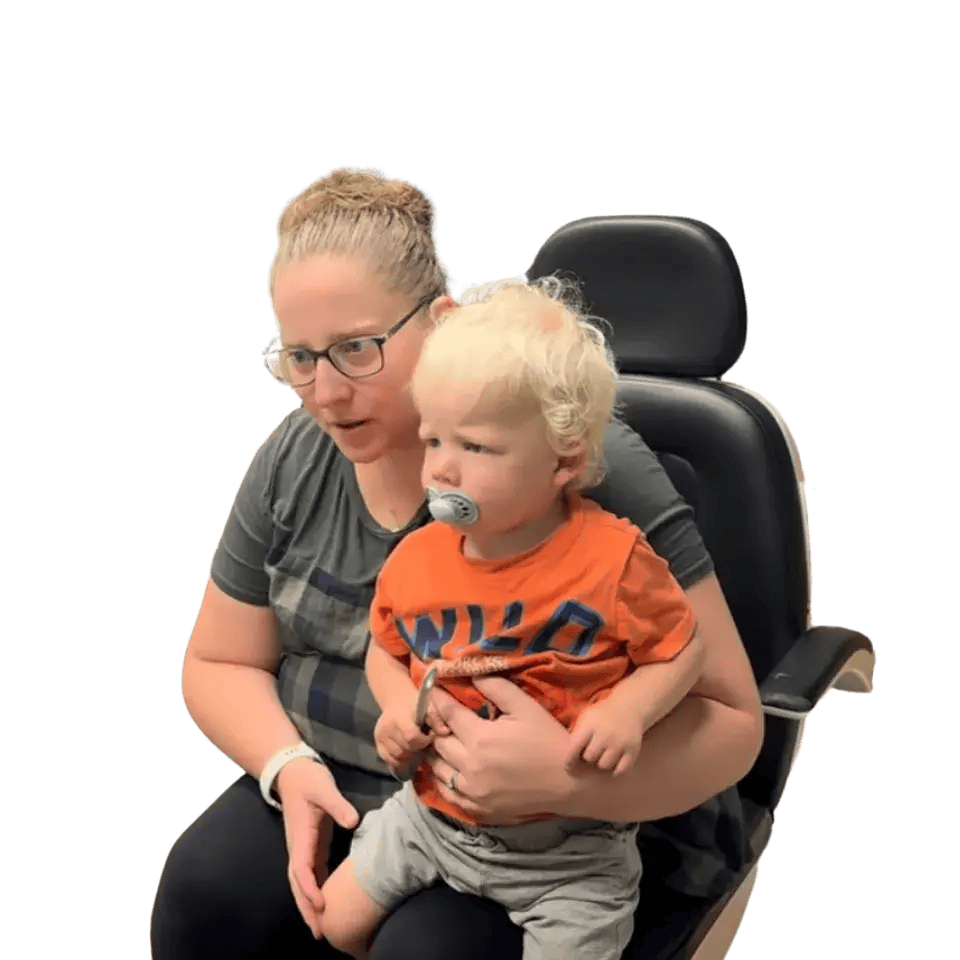
Eye exams for younger children follow the same principles as adult exams, but the approach is adapted for their comfort and cooperation. Younger children may have difficulty staying still at standard examination equipment for extended periods. In those cases, our doctors may use a handheld instrument to examine the retina rather than asking the child to lean into a larger stationary device.
Each step can be explained in age-appropriate language, and parents are welcome to stay in the exam room throughout the visit to help their child feel safe and supported.
It is very common for children to feel anxious about having drops placed in their eyes. Explaining what the drops do in simple terms helps reduce fear. Let your child know that the drops make the dark part of the eye bigger so our doctor can see inside, and that they may sting for just a moment before the feeling goes away.
Some children do well when they can focus on a toy or screen while the drops are being placed. Practicing at home with a few drops of over-the-counter artificial tears can help younger children get used to the sensation. Our team is experienced with nervous young patients and can offer additional strategies to make the process as smooth as possible.
Good blood sugar control is the most powerful tool for protecting your child's retinal health over time. A few key strategies make a meaningful difference in the years ahead.
Hemoglobin A1c reflects average blood sugar levels over the past two to three months and is one of the key measures of diabetes control. Your child's diabetes care team will set an A1c target based on their age, diabetes type, and overall health. For most children and teens, the goal is to keep A1c levels as close to target as possible without causing frequent low blood sugar episodes.
Every meaningful improvement in A1c reduces the long-term risk of retinopathy and other diabetes-related complications. These targets may shift as your child grows and their management needs change.
Continuous glucose monitors, commonly called CGMs, have become an important tool for managing diabetes in children and teens. A CGM uses a small sensor placed under the skin to measure blood sugar levels continuously throughout the day and night, sending readings to a receiver or smartphone in real time. This helps your child and family identify patterns, catch highs and lows early, and make better-informed decisions about insulin dosing and meals.
Insulin pumps are another technology that can improve blood sugar stability by delivering insulin in small, steady doses rather than through multiple daily injections. Your child's diabetes care team can guide you on whether these technologies are appropriate.
The teenage years bring unique challenges for diabetes management. Hormonal changes during puberty increase insulin resistance, making blood sugar harder to control. Teens are also developing greater independence and may take on more responsibility for their own care, sometimes inconsistently.
Social pressures, busy schedules, and the desire to fit in can lead to skipped blood sugar checks, missed insulin doses, or dietary choices that complicate management. Parents and care teams play an important role in providing support while keeping communication open about the importance of eye health and regular exams.
A balanced diet that includes whole grains, lean proteins, vegetables, and fruits helps keep blood sugar more stable throughout the day. Limiting sugary drinks and processed foods reduces the blood sugar spikes that stress retinal blood vessels over time.
Regular physical activity also helps the body use insulin more effectively. Activities like sports, swimming, biking, or simply walking regularly all contribute to better blood sugar control. Encouraging your child to find activities they enjoy makes it easier to stay consistent, and good habits established now become lifelong tools for protecting both overall health and vision.
Long-term vision protection for a child or teen with diabetes requires coordinated care, consistent follow-through, and plenty of family support. These strategies help keep your child on track from childhood into adulthood.
Managing diabetes and protecting your child's eyes works best with a team approach. Your child's primary diabetes provider, whether an endocrinologist or pediatrician, manages blood sugar and overall diabetes care. Our doctors monitor the retina and screen for retinopathy. A diabetes educator can teach practical daily management skills, and a nutritionist can help design meal plans that work for your child's age and schedule.
When these providers communicate with each other, your child receives coordinated care that addresses every aspect of their health. Do not hesitate to share observations and findings between providers.
With the many appointments that come with managing diabetes, eye exams can sometimes be overlooked. Setting annual reminders on your phone or calendar helps ensure that dilated eye exams are not missed. Keeping a record of each exam, including the date, any findings, and the recommended follow-up timeline, gives you a clear history to share with new providers if your family moves or changes doctors.
Consistent annual screening is one of the single most important steps families can take to catch retinopathy early in children and teens.
As teenagers with diabetes become young adults, they need to transition from pediatric to adult eye care. This shift can be challenging because it often coincides with other major life changes like going to college, starting a job, or moving away from home. Planning the transition in advance helps prevent gaps in screening.
Before your child turns eighteen or leaves home, help them understand why annual eye exams matter, how to schedule their own appointments, and what to tell a new eye doctor about their diabetes history. A smooth handoff from pediatric to adult care ensures that the monitoring your child received when they were young continues without interruption.
Living with diabetes during childhood and adolescence can be emotionally challenging, and worrying about potential complications like vision loss adds an additional layer of stress. Encouraging open conversations about feelings, connecting your child with peer support groups, and seeking professional counseling when needed can all help.
Reassuring your child that regular eye exams and good diabetes management give them the best possible chance of healthy vision can reduce anxiety. Framing eye exams as a routine part of health care rather than a test for a feared complication helps normalize the process, and your attitude toward these visits strongly influences how your child feels about them.
These answers address common questions families have about diabetic eye exams for children and teens, including some practical guidance on what to do and when to act.
For teenagers with type 1 diabetes, the first dilated eye exam should happen five years after their diagnosis. If your teenager was diagnosed at age ten, their first screening would be around age fifteen. For teenagers with type 2 diabetes, the first dilated eye exam should happen at the time of diagnosis or shortly after, since the disease may have been present for some time before it was detected. If your teen is approaching either of these milestones and has not yet had an eye exam, scheduling one promptly is the right next step.
Yes, early retinal changes can appear during the teenage years, especially in young people with higher A1c levels or a longer history of diabetes. While severe, vision-threatening retinopathy is uncommon in this age group, early findings such as microaneurysms and small hemorrhages have been documented in youth with both type 1 and type 2 diabetes. The key point is that these early changes typically cause no noticeable symptoms, meaning a child can have early retinopathy without any change in their everyday vision, which is precisely why routine screening cannot be skipped.
Our doctors are experienced at adapting the exam for younger patients. Rather than asking a small child to sit at a large stationary microscope, our doctors may use a handheld ophthalmoscope or portable retinal camera to examine the retina. The exam room can be set up to feel less clinical, with toys or screens available to help keep younger children calm and cooperative. Parents can hold their child during portions of the exam if it helps. The core clinical findings our doctors look for are the same as in an adult exam, and the dilation drops work the same way regardless of age.
Yes, sharing this information is genuinely helpful. Knowing your child's current A1c, how long they have had diabetes, and whether their blood sugar control has been stable or variable helps our doctors put any retinal findings in context and decide how frequently to schedule follow-up visits. If your child has recently had a period of poor blood sugar control or a significant jump in A1c, that is worth mentioning. The more complete the picture our doctors have, the better they can tailor their monitoring recommendations to your child's individual situation.
Finding early retinopathy in a child or teen is not an emergency, but it is a signal that closer monitoring and tighter blood sugar control are important priorities. Our doctors will discuss the specific findings with you, explain what stage the retinopathy is at, and recommend a follow-up schedule, which may be more frequent than once a year. In most cases at this early stage, the primary recommendation is working with your child's diabetes care team to improve blood sugar control. Intervention beyond monitoring is typically not needed at the earliest stages, but catching changes early means there is more time to act effectively.
Fear of eye drops is one of the most common concerns families bring to us, and it is completely understandable. The dilation drops may cause a brief stinging sensation that lasts only a second or two and then fades. Helping your child practice at home by placing a drop of over-the-counter artificial tears in their eye a few times before the appointment can make the real experience much less surprising. On the day of the exam, letting your child look at a fixed spot on the ceiling or count down from five before the drop is placed can also help. Our team works with nervous children regularly and will take the time to make your child as comfortable as possible before any drops are placed.
At Insight Vision Optometry, Las Vegas, our team provides thorough, compassionate diabetic eye care for children and teens throughout the Las Vegas area. We understand that managing diabetes as a family is a full-time effort, and we are here to be a reliable, supportive part of your child's care team. Contact us today to schedule a dilated eye exam and give your child the vision protection they deserve.


