Diabetes does not just affect blood sugar. Over time, it changes how the small glands and nerves around the eyes work, which directly affects your ability to make healthy, stable tears. Understanding these changes is the first step toward getting the right care.
Dry eye disease is a long-term condition where the eyes either do not make enough tears, the tears evaporate too quickly, or the tears do not have the right balance of water, oil, and mucus. The result is an eye surface that feels uncomfortable and does not work as smoothly as it should. People with diabetes are more likely to develop dry eye than people without diabetes, and their symptoms often last longer and respond more slowly to basic treatment.
Every blink spreads a thin layer of tears across the eye. This tear film has three layers: an oily outer layer that slows evaporation, a watery middle layer that hydrates and nourishes the surface, and a sticky inner layer that helps tears cling to the eye. When any layer is out of balance, the surface dries out, vision blurs, and discomfort sets in. Tears also wash away dust, fight bacteria, and keep vision clear and sharp between blinks.
Persistent high blood sugar changes how the glands that produce tears function. The glands responsible for both the watery and oily parts of the tear film become less active, so the tear film breaks down faster than it should. Sugar buildup can also cause low-grade inflammation on the eye surface, which adds to discomfort and long-term damage. Research consistently shows that the longer someone has had diabetes, the higher their chance of experiencing dry eye symptoms.
Diabetes can slowly damage the tiny nerves that supply the cornea (the clear front surface of the eye), a condition called diabetic corneal neuropathy. These nerves normally alert the brain when the eye needs more tears, and they help the cornea heal after minor stresses or scratches. When the nerves are dulled, the eye does not feel dryness as quickly, so the signal for more tears never fully fires, and the eye surface ends up under-protected even when it does not feel noticeably uncomfortable.
Diabetes raises the level of inflammation throughout the body, and the eye surface is no exception. Inflammatory chemicals can damage the cells that line the cornea and the inside of the eyelids, making the eye more sensitive and reactive. This creates a cycle where dryness causes more inflammation, and more inflammation causes more dryness. Breaking this cycle is one of the central goals of treatment for diabetic dry eye.
The symptoms of dry eye in diabetes overlap with regular dry eye but can be more unpredictable because nerve damage may affect how much discomfort you actually feel. Knowing what to look for helps you seek care at the right time.
The most common sensation is a burning or stinging feeling, often worse later in the day. Many people describe it as having sand or a loose eyelash in the eye even when nothing is there. The discomfort may build slowly over hours and ease briefly after blinking. Waking up with sore, sticky eyelids in the morning is another sign that dry eye may be disrupting your overnight tear film.
Vision can blur for a few seconds and then sharpen again after a blink. This happens because the tear film breaks apart between blinks, leaving dry patches on the cornea that scatter light. Reading, working at a computer, and driving at night often make this blur worse. People with diabetes sometimes assume this is caused by blood sugar swings, but dry eye is just as likely and worth ruling out at your next exam.
It may seem contradictory, but watery eyes can actually be a sign of dry eye. When the eye surface becomes too dry, it sends a distress signal that triggers a sudden flood of reflex tears. These tears are mostly water and lack the oil and mucus needed to stabilize the surface, so they spill over the eyelid rather than soothe the eye. The surface can dry out again within minutes, restarting the cycle.
A dry, irritated cornea scatters light rather than allowing it to pass through cleanly. This makes bright environments uncomfortable and can create halos or glare around headlights at night. Long hours of screen use tend to make symptoms worse, because people blink less when focusing on a display. Eye strain, heaviness in the eyelids, and tension headaches are all common companions of untreated dry eye.
In diabetes, the corneal nerves may not work normally, which means some people have significant dryness on examination but feel only mild discomfort. Others feel intense irritation with relatively mild findings. Because of this mismatch, the severity of diabetic dry eye should never be judged by symptoms alone. A thorough eye exam gives a far more accurate picture of what is actually happening on the surface of the eye.
Dry eye in people with diabetes is not simply an inconvenience. It carries real risks that standard dry eye does not, and those risks are worth understanding so you can take them seriously and get the care you need early.
Tears wash germs away and contain natural antimicrobial proteins. When the tear film is thin or unstable, more bacteria and other pathogens can stick to the eye surface. People with diabetes also have a slower immune response at the corneal level, so small infections can escalate faster than they would in someone without diabetes. This is one reason our doctors often treat diabetic dry eye more promptly and aggressively than routine dry eye.
The cornea must repair itself from minor stresses every day. In diabetes, the cells that cover the cornea do not adhere or regenerate as efficiently. A minor scratch that would clear up in a day for most people can take considerably longer to heal in someone with diabetes. This matters especially after eye surgery, contact lens wear, or any event that disturbs the eye surface.
Persistent dryness combined with reduced corneal sensation can lead to small open sores on the eye surface. If left untreated, these sores can deepen and become harder to heal. In serious cases, scarring can form on the cornea and reduce vision over time. Identifying and treating dry eye early is the most reliable way to prevent this progression.
An unstable tear film blurs the images used to examine the back of the eye, making it harder to detect early diabetic retinopathy or macular changes. Dry eye can also skew measurements needed before cataract surgery or laser eye treatment. Addressing dry eye before other procedures often improves accuracy and leads to better overall outcomes.

Several factors increase the likelihood of developing dry eye when you have diabetes. Some relate directly to the disease itself, while others involve medications, age, and lifestyle habits that layer on top of the underlying risk.
The longer you have lived with diabetes, the greater the chance of developing dry eye. A higher average blood sugar level, often reflected by a higher A1C, is also linked to more severe symptoms. Both type 1 and type 2 diabetes can cause dry eye, though the patterns can differ between them. Consistent blood sugar control over time can ease symptoms and slow further nerve and gland damage.
Several medications commonly used to manage diabetes and its complications can reduce tear production or disrupt the tear film. Mentioning any new medication at your eye visits helps our team connect symptoms to possible causes.
Tear production decreases naturally with age, which means older adults with diabetes face a compounded risk. Conditions such as thyroid disease, rheumatoid arthritis, and Sjogren syndrome (an autoimmune condition that affects tear and saliva production) can add significantly to the dryness. Hormonal changes, particularly around menopause, are another common contributor. When several risk factors overlap, a more active and individualized treatment plan is usually needed.
Dry, windy, or air-conditioned environments speed up tear evaporation and can worsen symptoms quickly. Long hours of screen use, extended contact lens wear, and sustained reading without breaks all reduce blinking and stress the tear film. Smoking and exposure to secondhand smoke irritate the eye surface directly. Small, consistent adjustments to your environment and daily routine can meaningfully reduce your overall dry eye burden.
Diagnosing dry eye in someone with diabetes involves more than a basic tear test. Our team looks at the full picture, from your symptoms to the health of your corneal nerves, to build an accurate and complete understanding of what is happening.
Every evaluation begins with a detailed conversation about how your eyes feel throughout the day, what activities make symptoms worse, and how dryness affects your work and daily life. A short questionnaire may be used to score your symptoms and provide a baseline for tracking progress over time. Being open about even minor changes helps our team choose the most effective treatment approach for you.
Several quick, painless tests measure how much you tear and how stable your tear film is. One common method uses a thin paper strip placed at the edge of the lower eyelid to measure how much wetness builds up over a set time. Another uses a special dye to check how long the tear film holds together between blinks. These tests take only a few minutes and give important information about where the breakdown in your tear film is occurring.
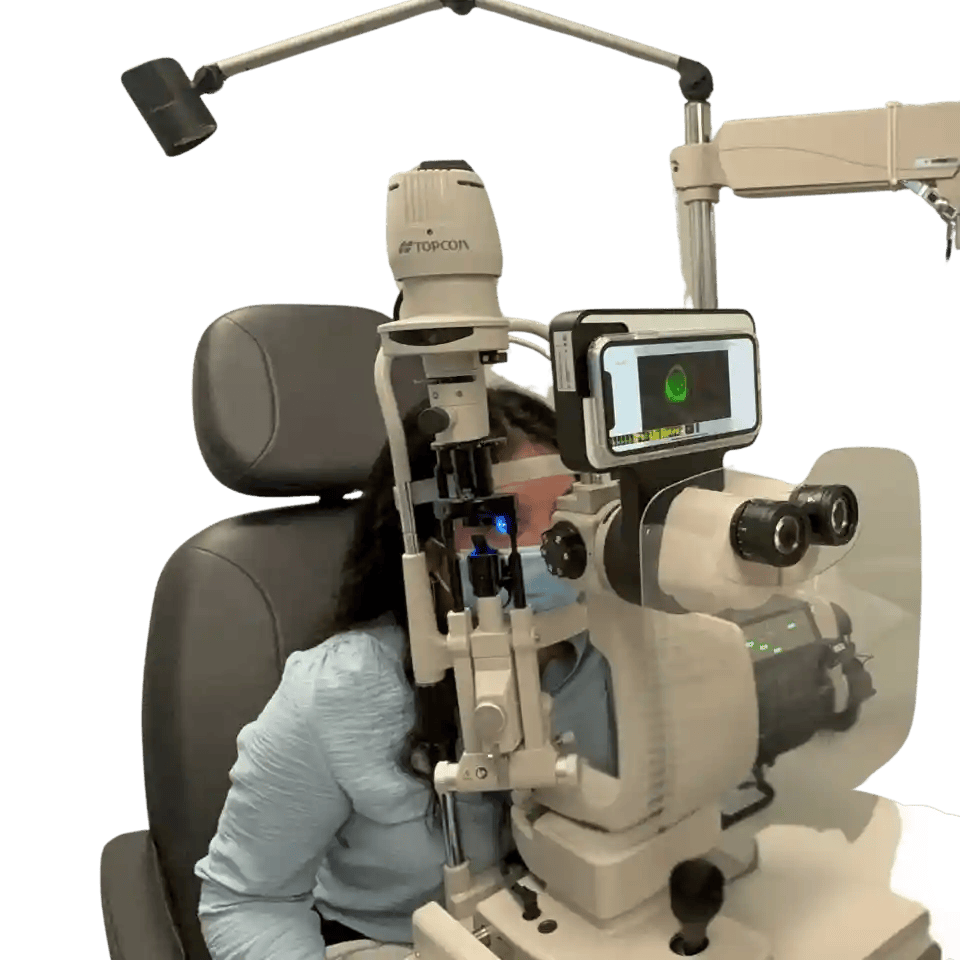
Our doctors use a slit lamp, which is a microscope with a bright light, to look closely at the cornea, the tear film, and the inside of the eyelids. Harmless dye drops stain dry or damaged areas so they show up clearly under the light. This exam can reveal blocked oil glands in the eyelids, surface redness, and small scratches on the cornea that point to the specific type and severity of dry eye present.
Because diabetes can dull the nerves of the cornea, our doctors may gently test how well you feel touch on the eye surface. This is done with a soft thread or a small purpose-built device and is not painful. Reduced sensation suggests diabetic corneal neuropathy and directly influences the treatment plan, often requiring closer monitoring and longer follow-up intervals to protect the corneal surface.
A comprehensive diabetic eye exam already evaluates the retina, the macula, the lens, and the optic nerve. Adding a dry eye assessment to this visit fits naturally and gives our team a full view of how diabetes is affecting your eyes as a whole. This integrated approach often leads to earlier detection and more coordinated long-term care than treating each issue separately.
Treatment for diabetic dry eye uses many of the same tools as standard dry eye care, but with extra attention to the cornea, the nerves, and the higher risk of infection. Our doctors often start treatment earlier and monitor more closely than would be needed for routine dry eye.
Artificial tears are typically the first step. They add moisture, support the tear film, and create a protective layer over the eye surface. Different formulas have different thicknesses and compositions, so finding the right fit may take a few tries. Thicker gels and ointments are especially useful at night, when blinking stops and the eyes are most vulnerable to overnight drying.
Most bottled eye drops contain preservatives that keep the solution sterile. These preservatives can sting or irritate a sensitive cornea, especially when drops are used four or more times a day, which is common in diabetic dry eye. Preservative-free drops packaged in single-use vials remove this concern and are generally gentler on the corneal surface over time. Our doctors can recommend specific formulations based on whether your main issue is low tear volume, rapid evaporation, or both.
When artificial tears alone are not enough, a prescription anti-inflammatory drop may be added to the plan. These medications target the cycle of swelling and surface damage that drives dry eye in diabetes rather than simply masking discomfort. They typically take several weeks to reach their full effect, so consistency is important. Mild stinging during the first few uses is common and usually fades as the eye surface heals.
Tears drain out of the eye through small openings at the inner corner of the eyelids. Tiny plugs can be inserted into these openings to slow drainage and keep more of your natural tears on the eye surface throughout the day. The procedure is quick, comfortable, and reversible. Many patients with moderate dry eye notice meaningful relief from burning and improved overall comfort within days of the plugs being placed.
The oil glands inside the eyelids (called meibomian glands) are often blocked or underactive in dry eye disease. When this happens, the oily layer of the tear film breaks down quickly and tears evaporate faster than they should. Warm compresses, gentle eyelid massage, and lid cleansers can clear these glands at home. Our team also offers in-office treatments that heat and express the glands more thoroughly, providing relief that home care alone may not achieve.
Consistent small changes in your daily routine can lower your overall dry eye burden and improve how well other treatments work.
Staying well hydrated and limiting alcohol and smoking also support the tear film and help the eye surface recover more effectively between treatments.
Blood sugar control is one of the most powerful tools available for protecting eye health in diabetes. Better glucose management helps the tear glands and corneal nerves work more effectively and reduces the inflammation that drives dry eye.
Stable blood sugar reduces the ongoing damage to the small glands that produce tears and to the nerves that trigger tear production. This is one of the few dry eye interventions that works on an underlying cause rather than just managing symptoms. Improved glucose control also lowers the risk of related diabetic eye problems, including diabetic retinopathy (damage to the blood vessels at the back of the eye) and macular swelling.
Dry eye care works best when your eye care and diabetes care teams are in communication. Bring your most recent A1C result and a current list of your medications to every eye visit. Let your eye doctor know about any new supplements or over-the-counter drops you are using. Coordinated care reduces the chance of something being missed and makes treatment safer and more effective overall.
Staying well hydrated throughout the day supports tear production and overall eye surface comfort. A diet that includes healthy sources of omega-3 fatty acids, such as fatty fish, walnuts, and flaxseed, may support the oily layer of the tear film. Reducing very salty foods is also helpful, since high sodium can pull water out of body tissues. These dietary habits are low risk, easy to start, and beneficial well beyond eye health alone.
People with diabetes should have a comprehensive eye exam at least once a year, or more often if recommended by their eye doctor. Regular visits allow problems to be found and addressed early, before they become harder to manage. Reporting any new changes in comfort, vision clarity, or daily function at each visit, even small ones, helps our team act quickly when it matters most.
These answers address specific questions we hear often from patients managing both diabetes and dry eye, including situations that call for practical decisions or prompt action.
Tear production naturally decreases over the course of the day, so symptoms tend to build as the day goes on. In diabetes, this normal decline is compounded by gland dysfunction and nerve changes that limit the eye's ability to compensate. Fatigue, increased screen time in the afternoon, and reduced blinking during focused tasks all add to the effect. Using lubricating drops proactively before activities that trigger symptoms, rather than waiting until discomfort peaks, often provides better relief throughout the day.
Yes, and this is an important distinction. When corneal nerves are significantly damaged, the reflex that triggers tear production is weakened at the source, and artificial tears can only supplement what is missing rather than restore the underlying signal. In these cases, our doctors may recommend prescription anti-inflammatory drops, punctal plugs to conserve existing tears, or lubricating gels for nighttime use. Closer monitoring is also typical, since reduced corneal sensation increases the risk of undetected surface damage.
Yes. While good glucose control significantly reduces the risk and slows progression, other factors, including age, medications, hormonal changes, and environmental conditions, can still contribute to dry eye even when diabetes is well managed. Some degree of gland and nerve change may already be present by the time blood sugar is brought under control. Regular eye exams remain important regardless of how well controlled your diabetes is, since dry eye can develop or progress independent of A1C levels.
This can be genuinely difficult to sort out because both causes often exist at the same time. A careful review of when symptoms began relative to any medication changes gives useful clues. Our doctors can also examine the tear film and eyelid glands to identify patterns associated with each cause. In most cases, both the disease and one or more medications are contributing, and addressing both together produces better outcomes than focusing on only one factor.
Many lubricating drops are compatible with contact lens wear, but the answer depends on the specific drop formulation and the type of lens you wear. Drops containing certain preservatives or ingredients that temporarily bind to the lens surface need to be used on a specific schedule around lens insertion and removal. Our team can review your current drops and lens type together and recommend a routine that supports comfort without compromising the lens or the corneal surface. If your eyes are significantly dry or the cornea shows surface damage, a break from lenses is sometimes the safest choice in the short term.
It often does. A stable, well-hydrated tear film produces clearer images during retinal photography and other diagnostic tests, making it easier to detect early changes in the back of the eye. Measurements taken before cataract surgery or refractive procedures are also more reliable when the eye surface is in good condition. Treating dry eye is not just about comfort. It directly supports the accuracy and quality of the full diabetic eye care that protects your long-term vision.
If you have diabetes and are experiencing eye discomfort, blurry vision, or other changes in your eye health, our team at Insight Vision Optometry, Las Vegas is here to help. We provide thorough dry eye evaluations alongside comprehensive diabetic eye care, and we take the time to understand how your overall health history shapes your eye care needs. We would be glad to partner with you in protecting your vision for the long term, and we welcome you to schedule a visit at our office in southwest Las Vegas.


