
Corneal neovascularization, often abbreviated as CoNV, is the abnormal growth of blood vessels into the cornea, the clear front surface of the eye. A healthy cornea contains no blood vessels, and this is part of what allows light to pass through cleanly and reach the back of the eye. When vessels invade this tissue, clarity can be lost and vision can be affected.
The cornea stays clear partly because it receives oxygen directly from the air rather than from blood. This vessel-free state is called corneal avascularity, and it is essential for good vision. When something disrupts this balance, the body can trigger vessel growth as a response, even though that growth causes harm.
Vessels begin at the limbus, the border between the clear cornea and the white of the eye, and creep inward when triggered by signals from the body. One of the key drivers is a protein called vascular endothelial growth factor, or VEGF. When the cornea is deprived of oxygen, injured, or inflamed, VEGF levels rise and instruct vessels to grow toward the stressed tissue.
Once inside the cornea, these vessels can carry scar tissue with them, reducing transparency and distorting how light reaches the eye.
In early stages, small vessel growth near the edge of the cornea may cause few noticeable symptoms. As vessels spread further inward, the cornea becomes cloudy, and vision becomes blurry or hazy. In more advanced cases, scarring can cause significant and sometimes permanent changes to sight.
CoNV also increases the risk of rejection if a corneal transplant is ever needed. Managing vessels before any transplant procedure is essential for giving the graft the best chance of success.
CoNV does not develop without a reason. It is always a response to something affecting the cornea, whether that is a lack of oxygen, an infection, injury, inflammation, or a combination of factors. Identifying the cause is the first step toward effective treatment.
One of the most common causes of CoNV is wearing contact lenses that limit how much oxygen reaches the cornea. This is called corneal hypoxia. When oxygen levels stay low over time, the cornea sends out distress signals that stimulate vessel growth.
Older, thicker lenses and soft lenses with low oxygen permeability carry a higher risk. Sleeping in lenses compounds the problem significantly. Our doctors can evaluate your current lens type and recommend a more breathable option if needed.
Bacterial, fungal, and viral eye infections can all trigger CoNV. Herpes simplex keratitis, a viral infection of the cornea, is a particularly common cause. The inflammation that comes with an infection sends signals for vessel growth, and if the infection persists or recurs, the vessels tend to become more established.
Treating infections promptly reduces the risk of lasting vessel growth. Any red, painful, or light-sensitive eye should be evaluated the same day.
Chemical burns to the eye are among the most serious causes of CoNV. Burns can destroy the limbal stem cells that normally keep the corneal surface healthy and clear. Without these cells, the cornea cannot regenerate properly, and vessels move in as the body attempts to repair the damage.
Heat burns and significant blunt or penetrating eye trauma can cause the same outcome. Anyone who works with chemicals, welding, or other high-risk environments should wear appropriate protective eyewear to reduce this risk.
Ongoing eye inflammation, whether from autoimmune disease, untreated dry eye, or severe allergies, can steadily drive vessel growth over time. Conditions such as atopic or vernal keratoconjunctivitis, two forms of severe eye allergy, are associated with significant CoNV in some patients.
Consistent management of inflammation and allergy is important not just for comfort, but for protecting the long-term health of the cornea. Rubbing the eyes during allergy flares worsens inflammation and should be avoided.
After a corneal transplant, the eye can sometimes respond by growing vessels toward or into the graft. This is more common following full-thickness transplants than with newer partial-thickness techniques. The presence of vessels significantly raises the risk of graft rejection, so our team monitors for this at every follow-up visit.
Long-term steroid drops are often used to suppress this response, particularly in patients considered higher risk for rejection.
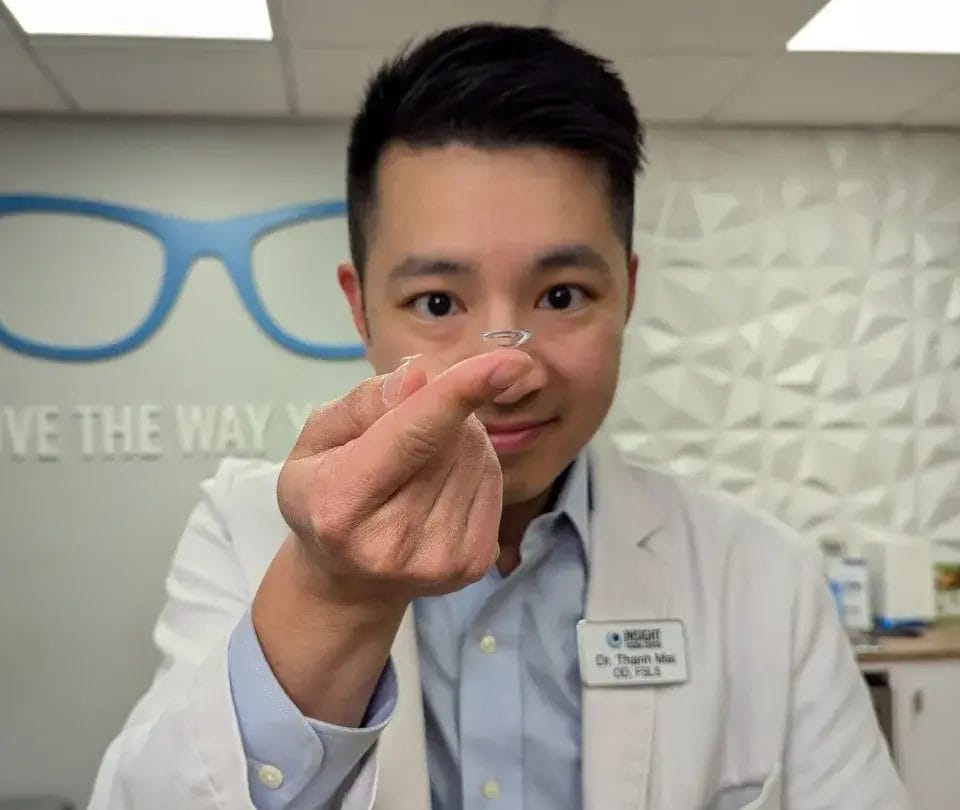
Treatment depends on the cause, the stage of vessel growth, and the overall health of the cornea. Our doctors, including Dr. Stephanie Woo, Dr. Thanh Mai, and Dr. Nathan Schramm, have extensive experience evaluating and managing corneal conditions and can create an individualized plan based on your specific situation. Dr. Woo is a specialist in specialty contact lenses and keratoconus and offers specialty services such as scleral lenses, EyePrintPRO prosthetic lenses, and dry eye care. Dr. Mai is a specialist in myopia management and scleral lenses and offers specialty services such as Ortho-K, custom scleral lenses for keratoconus, and dry eye care. Dr. Schramm is a specialist in scleral lenses and irregular corneas and offers specialty services such as custom scleral lens fittings for keratoconus and post-LASIK ectasia.
No treatment for CoNV works well unless the root cause is controlled first. If contact lens hypoxia is responsible, the lens is changed or use is paused. If infection is present, it must be treated with the appropriate medication. If allergy or inflammation is driving the growth, those conditions need targeted management.
In some cases, simply resolving the cause allows early vessels to fade on their own over time.
Steroid eye drops reduce the inflammation that drives vessel growth. They are often the first treatment recommended after the underlying cause is addressed. Your doctor will typically start with more frequent dosing and taper the drops over weeks to months as the eye responds.
Because steroids can raise eye pressure in some patients, regular monitoring is part of the treatment plan. Our team watches for this at every visit.
Medications that block the VEGF protein, such as bevacizumab and ranibizumab, can shrink active, newly formed vessels. These drugs are used off-label for corneal conditions and can be given as eye drops or as an injection just under the conjunctiva, the thin tissue covering the white of the eye.
Anti-VEGF therapy works best on vessels that are new and still growing. Older, more established vessels often require a different approach.
When vessels are mature and do not respond to drops or injections, procedural options may be considered. Argon laser photocoagulation uses a focused beam of light to close off abnormal vessels. Photodynamic therapy is another option that uses a light-activated medication to target vessel tissue selectively.
These procedures are performed in the office and are typically reserved for cases where less invasive treatments have not been sufficient. Your doctor will explain which option is most appropriate for your situation.
Keeping the surface of the eye healthy helps prevent new vessels from forming and supports recovery after treatment. Preservative-free lubricating drops, punctal plugs to retain natural tears, and consistent eyelid hygiene all play a role.
For patients with dry eye as a contributing factor, treating the dry eye directly is an important part of long-term corneal care.
Knowing what to watch for and how to reduce your risk can make a real difference in protecting your cornea. Many of the habits that help prevent CoNV are simple and part of good everyday eye care.
Visible pink or red vessels near the edge or across the cornea, a persistent pink haze, ongoing eye redness, and blurry or cloudy vision are all signs that should be evaluated without delay. In the early stages, CoNV may cause no discomfort, which is why visible changes to the eye are such an important signal.
Contact lens wearers who notice any of these changes should stop wearing lenses and schedule an appointment right away.
Choosing lenses with high oxygen permeability is one of the most effective ways to protect the cornea from hypoxia-related vessel growth. Daily disposable lenses are an excellent option for many patients. Sleeping in lenses, even those labeled for extended wear, increases the risk of oxygen deprivation and should be avoided when possible.
Taking breaks from lens wear during long days, wearing glasses for a few hours when the eyes feel tired, and avoiding lens use when sick all reduce cumulative stress on the cornea.
Patients with eye allergies should work with their doctor on a consistent management plan rather than treating flares reactively. Allergy-specific eye drops, cool compresses, and avoiding known environmental triggers all help keep inflammation low.
Avoiding eye rubbing during allergy season is particularly important. Even a few minutes of vigorous rubbing can spike inflammation and worsen the ocular surface.
Sharp or sudden eye pain, a significant change in vision, a white spot on the cornea, or any sign of active infection requires same-day evaluation. These can indicate a serious corneal problem that needs immediate treatment to prevent lasting damage.
Early care consistently leads to better outcomes. Do not wait to see if symptoms improve on their own when any of these warning signs are present.
These answers address practical questions our patients often have about living with and managing corneal neovascularization.
New vessels that are still actively growing respond best to treatment and may shrink significantly with anti-VEGF therapy or steroid drops. Older, mature vessels are more resistant and may leave a faint, ghost-like trace even after they close. This trace does not always affect vision, but your doctor will monitor it to ensure the area remains stable.
Not necessarily, but it depends on the cause and how much vessel growth has occurred. In mild cases related to lens hypoxia, switching to a high-oxygen or daily disposable lens may allow safe continued wear. In more advanced cases, a period of rest from lenses is needed, and some patients may be better suited to scleral lenses, which vault over the cornea and provide excellent oxygen delivery without touching the corneal surface. Our specialty contact lens team can evaluate your specific situation.
The frequency of follow-up depends on how stable or active the vessel growth is and what treatment is underway. During active treatment, visits may be scheduled every few weeks. Once the condition is well controlled, longer intervals between appointments may be appropriate. Your doctor will establish a monitoring schedule that reflects your individual risk level and treatment response.
Permanent vision loss is not inevitable. Many patients maintain good functional vision with appropriate and timely treatment. The risk of lasting damage increases with the extent of vessel growth, the amount of associated scarring, and how long the condition goes unmanaged. This is why early diagnosis and consistent follow-up are so important.
Advanced CoNV with significant scarring can eventually make a transplant necessary, but this represents a minority of patients. More immediately relevant is that existing vessel growth raises the risk of rejection if a transplant is ever performed. For this reason, any vessels present must be treated and ideally suppressed before transplant surgery is considered. Our team coordinates closely with corneal surgeons when co-management is needed.
Yes, children can develop CoNV, most often in association with severe eye allergies or contact lens wear. Because children may not reliably report subtle vision changes, any visible redness, persistent eye irritation, or complaints of blurry vision in a child should be evaluated promptly. Routine eye exams help catch these changes before they progress.
Corneal neovascularization is a serious condition, but with the right care it can be managed effectively and vision can be preserved. Our team at Insight Vision Optometry, Las Vegas brings deep specialty expertise in corneal health, contact lens management, and ocular surface disease to every patient encounter. If you are experiencing redness, a pink haze over your vision, or any other change in your eye health, we encourage you to schedule a visit so we can evaluate what is happening and put a clear plan in place for you.


