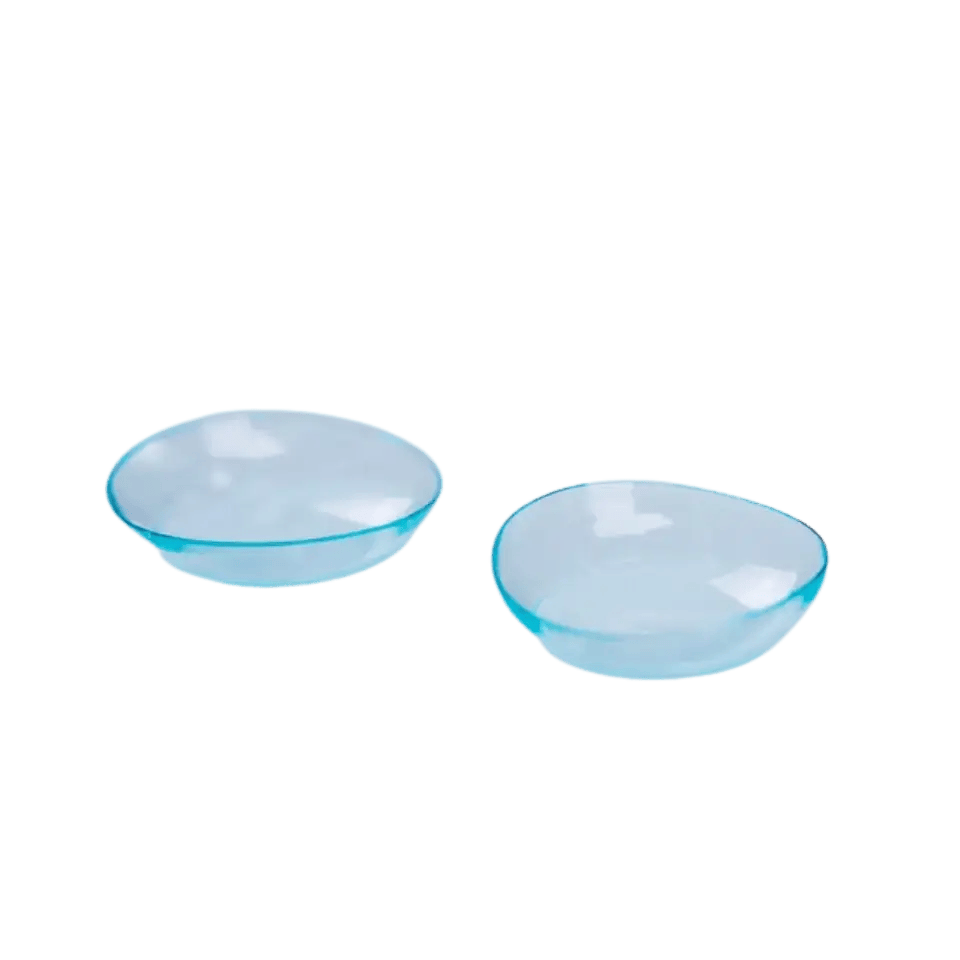
Not all lenses perform equally on a dry eye, but the features that matter most are not always the ones advertised. Understanding the basics can help you ask better questions and make smarter decisions at your next fitting.
The most common pitch for dry-eye lenses is that a higher water content will keep your eyes moister. It sounds logical on the surface, but this is the claim that most often misleads contact lens wearers. A lens does not simply add water to your eye. It has to hold its own water throughout the day, and where that water comes from is the real issue.
Research points in the opposite direction from the marketing. Higher water content in a contact lens has been linked to more dry-eye symptoms, not fewer. A high-water lens can lose moisture to the air as the day goes on, and to compensate, it draws on your natural tear film to stay hydrated. The result is often that your eyes feel drier by the afternoon or evening, not better.
Comfort in a dry eye depends less on any single number on the box and more on the full picture of your situation. How well the lens fits your eye, how fresh it is, the overall health of your tear film, and how many hours you wear it all play a role. Your cornea and tear film need to be in good condition for lens wear to be comfortable, which is why addressing the underlying dryness often matters just as much as choosing the right lens material.
The contact lens market is full of dry-eye claims, and it can be hard to know which ones to trust. The following breakdown lines up the most common pitches against what research and clinical guidance actually support.
This claim does not hold up. Studies consistently link higher water content to more contact lens dryness, not less. The logic behind the marketing sounds appealing, but the mechanism works against comfort in practice. The water number on the packaging is a poor guide to how a lens will feel on your eye by the end of the day.
No lens cures dry eye. Dry eye is a condition affecting your tear film and ocular surface, and a contact lens sits on top of that surface for every hour it is worn. A lens can be more or less compatible with a dry eye, but it cannot correct the underlying problem. Fit, replacement schedule, and treating the dryness itself matter far more than any brand claim.
The change with the strongest research support is not a special material or coating. It is simply starting each day with a fresh lens. In a randomized, controlled clinical trial, contact lens wearers with dryness symptoms who were refitted into daily disposable lenses saw meaningful improvement on discomfort questionnaires, and a large share became symptom-free within a month. A fresh, clean lens surface each day removes the protein and lipid buildup that accumulates on reused lenses and contributes significantly to end-of-day dryness.
It is worth noting that part of the benefit in that trial came from simply starting over with a new lens rather than from a specific material. The daily-disposable habit is doing much of the heavy lifting, which means consistency with your replacement schedule matters as much as the brand you choose.
These are the steps that get skipped in most marketing because they are habits, not products you buy once. Reviews of contact lens discomfort consistently find that rewetting drops improve dryness symptoms, and that regular lid hygiene improves comfort in contact lens wearers. These are unglamorous recommendations, but they are among the most supported.
If you use drops while wearing lenses, the type matters. Preservative-free lubricating drops labeled safe for contact lens wear are the right choice. If your drops are not labeled for use with lenses, remove your lenses, wait several minutes before applying the drop, and wait at least ten minutes after before putting your lenses back in. Not every eye drop is designed to go in over a contact lens.
Managing dry eyes in contact lenses works best when you approach it as a combination of strategies rather than a search for a single solution. Setting honest expectations from the start saves a lot of frustration.
Switching to a daily disposable lens or trying a better-fitting material can make a real difference for many wearers, but it is not a guarantee of full relief. A meaningful share of people who make a lens change still experience some symptoms. Expect improvement with the right changes, not a perfect result, and give any new lens a fair trial period with guidance from your doctor.
Often the lens is not the root problem. A contact lens interacts with your tear film every hour it is worn, and if your eye is already dry without lenses, adding a lens to that surface will make things worse regardless of which lens you choose. Persistent dryness that is present even on days you skip your lenses usually means the dryness itself needs to be evaluated and treated, not just the lens selection changed.
Sometimes the most effective change is wearing lenses fewer hours rather than finding a new pair. Reducing screen time in lenses, taking breaks, blinking fully, and keeping some glasses days can all meaningfully lower the burden on a dry ocular surface. Blinking less while focusing on screens is a well-recognized contributor to lens dryness. None of these strategies require buying anything, but for many people they are what finally makes wearing lenses comfortable.

Most contact lens dryness is a comfort issue that responds to lens changes, better habits, and tear film care. But some symptoms are a signal that something more is going on and needs professional attention.
Remove your lenses and contact your eye doctor right away if you experience eye redness, pain, unusual watering, sensitivity to light, blurry vision, or discharge. These symptoms can be signs of a contact lens-related eye infection rather than simple dryness, and infections need prompt treatment to protect your vision. If symptoms are severe or you cannot reach your doctor, seek same-day care. Most irritated eyes settle quickly once evaluated and treated, but acting early matters.
Persistent dryness deserves a proper assessment rather than another product swap. Ongoing burning, discomfort that does not improve with lens changes, or fluctuating vision are all worth discussing with your eye doctor. An exam can identify whether the issue is the lens fit, the replacement schedule, an underlying condition like dry eye disease, meibomian gland dysfunction, or some combination. Treating the cause is more effective than continuing to switch brands.
A few consistent habits do more for long-term comfort and eye health than any premium lens label. Following your prescribed replacement schedule, cleaning lenses only with the solution your doctor recommends, not overwearing lenses, and removing them before sleep all reduce the risk of both dryness and infection. These basics apply regardless of which lens you wear and are the foundation that other improvements build on.
Here are answers to questions our patients often ask when dealing with contact lens dryness. If your situation is not covered here, our team can help you work through the specifics at your next visit.
Despite how common this advice is, the answer is usually no. High-water lenses tend to lose moisture throughout the day and draw on your natural tears to stay hydrated, which can actually worsen dryness by the afternoon or evening. If a previous doctor recommended a high-water lens and it is not working for you, this is worth revisiting at your next fitting. The water percentage on the packaging is not a reliable guide to how comfortable a lens will feel on your particular eye.
For many wearers, yes, and this switch has more clinical support than most. The main advantage is a fresh, deposit-free surface every single day, which avoids the protein and lipid buildup that reused lenses accumulate and that can significantly worsen discomfort. It does not work for every person or every type of dryness, so treat it as a strong first option to explore with your doctor rather than an automatic fix.
Drops can be a helpful part of managing dryness, but they work best as a complement to a good fit and lens schedule, not as a substitute. If you find yourself reaching for drops constantly throughout the day, that is a signal worth mentioning to your doctor, because it may indicate that the lens, the underlying tear film, or both need to be addressed more directly. Also, make sure any drops you use are specifically labeled as safe for use with contact lenses.
This is a reasonable strategy that is often underused. Many people who wear contacts comfortably do not wear them every waking hour. Planning glasses time during long screen sessions, at the end of the day when dryness tends to peak, or on days when your eyes feel particularly sensitive can significantly reduce the cumulative strain on a dry ocular surface. It is not a step backward. It is a practical way to keep comfortable while protecting your long-term eye health.
Yes, and this is one of the most important questions to consider. Conditions like dry eye disease, meibomian gland dysfunction, and eyelid conditions that affect tear quality are common and often go undiagnosed. If your eyes feel dry, burning, or gritty even on days when you are not wearing lenses, the lens is not the source of the problem. A thorough eye exam can evaluate your tear film, meibomian glands, and ocular surface to determine whether a treatable underlying condition is at the root of your discomfort.
Remove your lenses right away if you notice redness, pain, increased sensitivity to light, discharge, or any sudden change in your vision. These are not typical dryness symptoms and can be early signs of a contact lens-related infection. Do not wait to see if things improve on their own. Contact your doctor the same day, or seek urgent care if you cannot reach them. Removing the lens early and getting appropriate treatment quickly is the most important thing you can do in that situation.
At Insight Vision Optometry, Las Vegas, our doctors have deep expertise in contact lens fitting, tear film evaluation, and the full range of treatments for dry eye. We take time to understand your symptoms, evaluate your ocular surface, and fit lenses based on what your eyes actually need rather than what packaging promises. If contact lens dryness has been limiting you, we would welcome the chance to help you find a solution that works.


