Contact lenses sit directly on the surface of the eye, and any water that reaches them can get trapped between the lens and the cornea (the clear front surface of the eye). That creates a situation where germs have direct access to sensitive eye tissue, and where chlorine cannot reach to help neutralize them.
When pool water splashes into an open eye, it flows under the lens and stays there. The CDC advises contact lens wearers to remove lenses before swimming, showering, or using a hot tub, because any water contact raises the risk of a serious eye infection. Chlorine treats the pool, but it cannot reach the small space between a soft lens and the cornea, which is exactly where trapped water creates the most risk.
Acanthamoeba is a microscopic parasite found naturally in tap water, pool water, lake water, and hot tubs. When it comes into contact with a lens-wearing eye, it can cause Acanthamoeba keratitis, a severe corneal infection that is notoriously difficult to treat. The CDC reports that this infection is most common in contact lens wearers who have been exposed to water.
Treatment can last several months, and in severe cases a corneal transplant may be needed to restore vision. This is one of the most serious complications associated with contact lens wear, and avoiding water exposure is the most direct way to lower your risk.
If contact lens solution runs low, some people use tap water or pool water to top off their case. This is one of the riskiest habits a lens wearer can have. The CDC has reported that storing contact lenses in water raises the risk of a lens-related eye infection dramatically compared to using proper disinfecting solution. Water is never a substitute for approved contact lens solution, even in a pinch.
Pool chlorine irritates the eye on its own, stripping away the tear film and causing redness, burning, and blurred vision. When a soft lens is present, it absorbs those chemicals and holds them directly against the cornea for hours after the swim. A lens worn in a pool often feels gritty, cloudy, or difficult to remove, and the chemical layer it picks up makes it easier for bacteria to attach and stay on the lens surface.
Swimmers and pool-goers have more options than simply going without vision correction. The right approach depends on how active you plan to be in the water and how much correction your prescription requires.
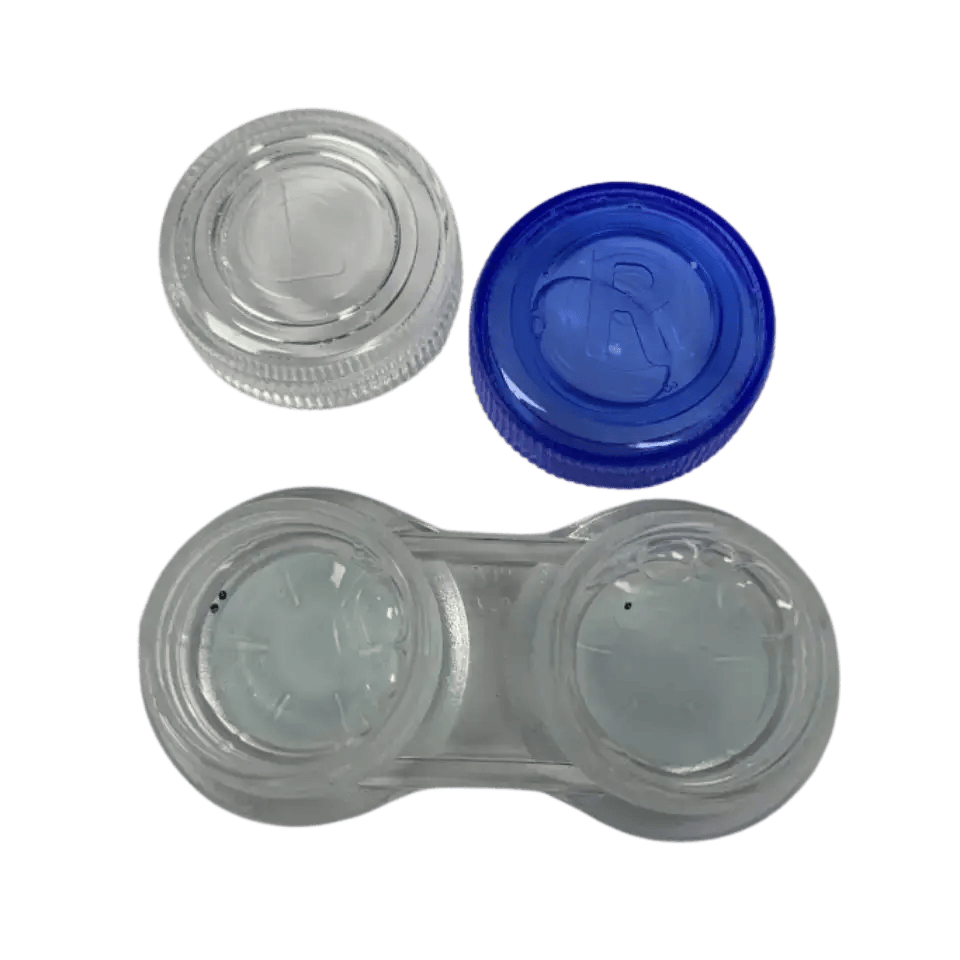
The simplest and safest choice is to take your lenses out before getting in the pool. Wear glasses up to the water's edge, set them safely aside, and swim without vision correction for the duration. Pack a small lens case and a travel-size bottle of solution in your bag so lenses can be stored cleanly while you swim. A short stretch of blurry vision is a worthwhile trade for a significantly lower risk of infection.
For swimmers who need to see clearly in the water, prescription swim goggles are the best solution available. They come in off-the-shelf powers from many manufacturers, and custom pairs can be ordered for more complex prescriptions. These goggles form a seal around the eye that keeps pool water out completely. Our team can help match your goggle correction to your glasses prescription, whether you swim recreationally or competitively.
Wearing swim goggles over contact lenses is a second-best option. The CDC notes that this approach reduces but does not fully eliminate risk, because goggles can leak, fog, or shift during swimming. A single drop of pool water reaching the eye is enough to carry harmful organisms to the lens surface. If you do swim with goggles over lenses, keep your eyes closed during any goggle adjustment, check the seal before pushing off, and treat daily disposable lenses as single-use even when they were worn inside the goggles.
If you plan to be at the pool but not in the water, glasses remain a reliable and safe choice. Watching swim practice, relaxing poolside, or supervising children in the water are all situations where glasses carry no meaningful splash risk. An anti-fog lens treatment helps in humid environments like indoor pools, locker rooms, or saunas.

Eye infections linked to pool water exposure can develop hours or even days after the swim, which is why it is important to know what warning signs to watch for. Acting quickly gives you a much better chance of protecting your vision.
Pain, redness, blurred vision, and significant sensitivity to light in the hours or days following a pool swim are warning signs that something may be wrong. Your eye may feel like there is a grain of sand stuck under the lid, or it may feel heavier than normal. Tearing and aching that gets worse rather than better are also early signs that warrant prompt attention.
The CDC advises seeking urgent eye care after any of these symptoms follow a swim in contacts. Do not wait to see if the discomfort passes on its own.
Acanthamoeba keratitis is often mistaken for pink eye (conjunctivitis) in its early stages, because both conditions can cause redness, watering, and eye soreness. The key difference is the character of the pain. Acanthamoeba pain tends to feel deeper, grows stronger over several days, and is accompanied by more intense light sensitivity than a typical case of pink eye. If you recently swam in contacts and then develop any of these symptoms, make sure to share your swimming history when you seek care so your provider can consider the right diagnosis from the start.
Remove the lens from the affected eye as soon as you notice symptoms following a swim. Daily disposables should be discarded immediately. Reusable lenses should be cleaned and disinfected thoroughly, though many eye care providers recommend discarding them entirely after any water exposure, because cleaning cannot guarantee that Acanthamoeba has been removed.
Bring your lens case to your appointment if possible. In some situations, the case can be cultured in a lab to identify the organism involved, which helps guide treatment. Starting with a fresh case and a new bottle of solution after any water-related episode is always the right move.
Seek same-day care for any pain, blurred vision, or significant light sensitivity that follows swimming in contact lenses. Seek care within 24 hours for ongoing redness, watering, or a persistent sensation that something is under the lid. Over-the-counter eye drops are not a substitute for a proper examination in these situations. Early treatment of a water-linked eye infection consistently leads to better outcomes and may prevent lasting vision damage.

If pool water does contact your lenses, taking the right steps quickly helps protect your eyes from a more serious problem. The actions you take in the first few hours matter more than most people realize.
Any daily disposable lens that came into contact with pool water should be thrown out right away. Do not try to rinse it with solution and reinsert it. The lens material can hold onto harmful organisms even after soaking. Keep a spare blister pack in your swim bag so you always have a clean pair available and are never tempted to reuse an exposed lens.
If a reusable lens is exposed to pool water, remove it promptly and place it in fresh multipurpose solution. Use a rub-and-rinse cleaning cycle and allow a full overnight soak as directed on the solution label. Even after thorough cleaning, many eye care providers advise discarding the lens rather than reinserting it, because no cleaning method can guarantee complete removal of certain organisms. If you plan to continue wearing the lens, a brief check-up is a sensible precaution.
A case that was opened on a wet pool deck, stored next to damp swimwear, or rinsed with anything other than fresh solution should be replaced. Lens cases should be replaced at least every three months under normal conditions, and a pool-day exposure is a clear reason to start fresh immediately. A new case paired with a new bottle of solution removes any residue that may have picked up harmful organisms during the exposure.
Building a consistent routine for pool days is one of the most effective ways to protect your eyes long term. Bring a glasses case, a clean contact lens case, and a small bottle of solution so the switch at the pool entrance is easy and automatic. Patients who swim several times a week may find that daily disposable lenses work well for non-pool days, since each lens is fresh and a pool-day accident becomes much less costly to manage.
These answers address practical questions about specific situations that come up for lens wearers who spend time around water.
A swim cap is designed to keep hair out of the pool filter and reduce drag, not to protect the eyes. Water flows freely around the forehead and into the eye socket regardless of how snugly the cap fits. If clear vision in the water is important to you, prescription swim goggles are the only reliable solution. A cap and goggles together are a practical combination for active swimmers.
Closed eyes reduce the amount of water that reaches the lens, but they do not fully seal the eyelids during dynamic movement. Turns, push-offs, lane changes, and unexpected contact with the water can all cause the eye to open briefly, and that is enough for pool water to reach the lens. The CDC guidance does not make an exception for closed-eye swimming. Prescription goggles or going without lenses remain the safer choices.
Saltwater pools still use chlorine, just at a lower concentration generated through a salt-chlorination system. The same organisms that pose a risk in traditional pools, including Acanthamoeba, can survive in saltwater pool environments. A lower chlorine level does not meaningfully reduce the infection risk for contact lens wearers. The recommendation to keep lenses out of the water applies equally to both pool types.
The volume and intensity of water exposure during a full swim team practice makes contact lens wear genuinely risky, even with goggles. Prescription swim goggles are the recommended solution for young competitive swimmers. Our team can help match a goggle prescription to your child's glasses correction. Keeping a backup pair of goggles in the swim bag is a good habit, since a broken strap on meet day is a common and inconvenient problem.
A thorough shower and a complete dry-off are the minimum steps before reinserting lenses after a swim. Allowing at least one hour gives residual pool water time to clear from your lashes, brows, and the area around your eyes. If you felt any burning, stinging, or redness during or immediately after the swim, hold off on lens wear until your eyes feel completely normal. When in doubt, spending a day in glasses is always the safer choice.
Staying dry near a pool is considerably lower risk than swimming, and most lens wearers can safely keep their lenses in for a poolside event. The practical concern is the unpredictability of splashes during group activities, water games, or moments when someone unexpectedly ends up in the pool. If your eye is exposed to pool water, follow the same care steps as you would after any water contact: remove the lens, inspect your eye, and monitor for symptoms over the following days.
Our team at Insight Vision Optometry, Las Vegas is here to help you find a vision solution that fits your lifestyle and keeps your eyes safe throughout pool season and beyond. Whether you are looking into prescription swim goggles, evaluating your contact lens routine, or concerned about a recent water exposure, we are ready to help. Patients across Las Vegas trust us for thorough, personalized eye care, and we look forward to helping you protect your vision for the long term.


