
Contact lens prescriptions are not the same as glasses prescriptions, and they do not stay valid indefinitely. Federal rules and sound eye care practice both require that a current, valid prescription exist before any seller can fill a contact lens order.
The FDA classifies contact lenses as medical devices because they rest directly on the cornea, the clear front surface of the eye. This direct contact means lenses can affect eye health in ways that glasses never will. A licensed eye care provider must examine the eye and issue a valid prescription before any lens order can be filled, whether in our office or through an online retailer.
Most contact lens prescriptions expire after one year. This end date is not a billing policy or a sales tactic. It is a built-in safety checkpoint designed to make sure your eyes are not drifting too far from the last verified baseline. Once that date passes, the prescription is no longer legally valid, and no seller is permitted to fill an order against it.
A contact lens prescription contains different information from a glasses prescription, even when both are written at the same visit. Because the lens sits on the eye rather than in front of it, the prescription must specify details that a glasses script would never need.
Patients often wonder whether an updated glasses prescription can carry over to contacts without a separate exam. It cannot. Two people with identical glasses powers can have very different corneal shapes, tear film quality, and tolerance for different lens materials. A brand that works perfectly for one eye may trap debris or restrict oxygen flow on another. A contact lens fitting confirms that a specific lens on your specific eye provides both clear vision and safe all-day wear.
The one-year renewal schedule is a minimum, not a ceiling. Several changes in your daily experience with lenses are worth addressing right away, even if your prescription is still technically current.
If your glasses still feel sharp but your contacts seem slightly blurry or soft, the lens prescription may have drifted out of alignment with your eye. Corneal shape can shift gradually with age or with years of lens wear. A lens that centered and corrected well last year may no longer sit the same way. A new evaluation catches that drift and rebuilds your correction from a current measurement.
Eyes that once handled a full workday comfortably now feeling dry or gritty by afternoon is an early sign that something has changed. The tear film can shift over time, and the current lens material or wear schedule may no longer be the right match. A visit lets our team evaluate whether a different material, a different replacement schedule, or a daily lens would restore comfort.
Comfortable wear time is one of the most useful things you can track. If you used to wear lenses comfortably for twelve or more hours and now feel ready to take them out by mid-afternoon, something has shifted. The change is often gradual enough that wearers adjust without realizing it, removing lenses earlier and earlier until daily life starts to feel limited. Our team can determine whether the cause is lens-related, tear-related, or both, and then adjust your plan accordingly.
Certain medications, including some antihistamines, blood pressure drugs, and antidepressants, can reduce tear production or change how the eye surface responds to lenses. Hormonal shifts during pregnancy or menopause can have the same effect. New or worsening allergies can also make a previously comfortable lens feel irritating for weeks at a time. When any of these changes occur, a prescription check is worth scheduling even if your current prescription has not yet expired.
A contact lens re-evaluation is a thorough visit, not just a quick power check. Our team uses the appointment to confirm that your eyes are healthy, that your fit is accurate, and that your lens plan still matches your lifestyle.
The visit begins with an eye health assessment covering the cornea, eyelids, and tear film. Our doctors look at the cornea under magnification for any early signs of blood vessel growth, surface irregularity, or lens-related stress. Tear flow and tear quality are also measured. Many of these changes cause no symptoms in the early stages, which is exactly why the yearly check matters.
Once the health check is complete, fresh measurements of the cornea are taken. These include the curve of the corneal surface, how the current lens sits and centers on the eye, and how the tear film behaves under the lens. Small shifts in any of these values can change which lens fits best. A lens that centered well twelve months ago but rides high today will create lid friction over time and eventually cause problems.
The refraction step identifies the clearest correction for your eye as it is today. Our doctors may confirm this by checking your vision through a trial lens that is actually resting on the cornea, a step called over-refraction. This reveals how the eye sees through a lens in real time and catches any gap between your glasses power and your contact lens power. The result of this step forms the basis of your renewed prescription.
One of the most valuable reasons for the yearly re-evaluation is catching changes that produce no discomfort yet. Oxygen-related stress on the cornea, early growth of blood vessels into the clear corneal tissue, and small surface breakdown can all develop quietly over months of wear. These changes are visible to a trained clinician with the right equipment well before a wearer feels anything. Identifying them early keeps small issues from becoming complicated ones.
A thorough re-evaluation ends with more than a renewed prescription. Our team may recommend a different lens material if dryness has increased, a daily replacement schedule if cleaning has become difficult to maintain consistently, or a reduced wear schedule if the cornea is showing early signs of oxygen stress. The prescription and plan that come from the visit are built around where your eyes are right now, not where they were a year ago.
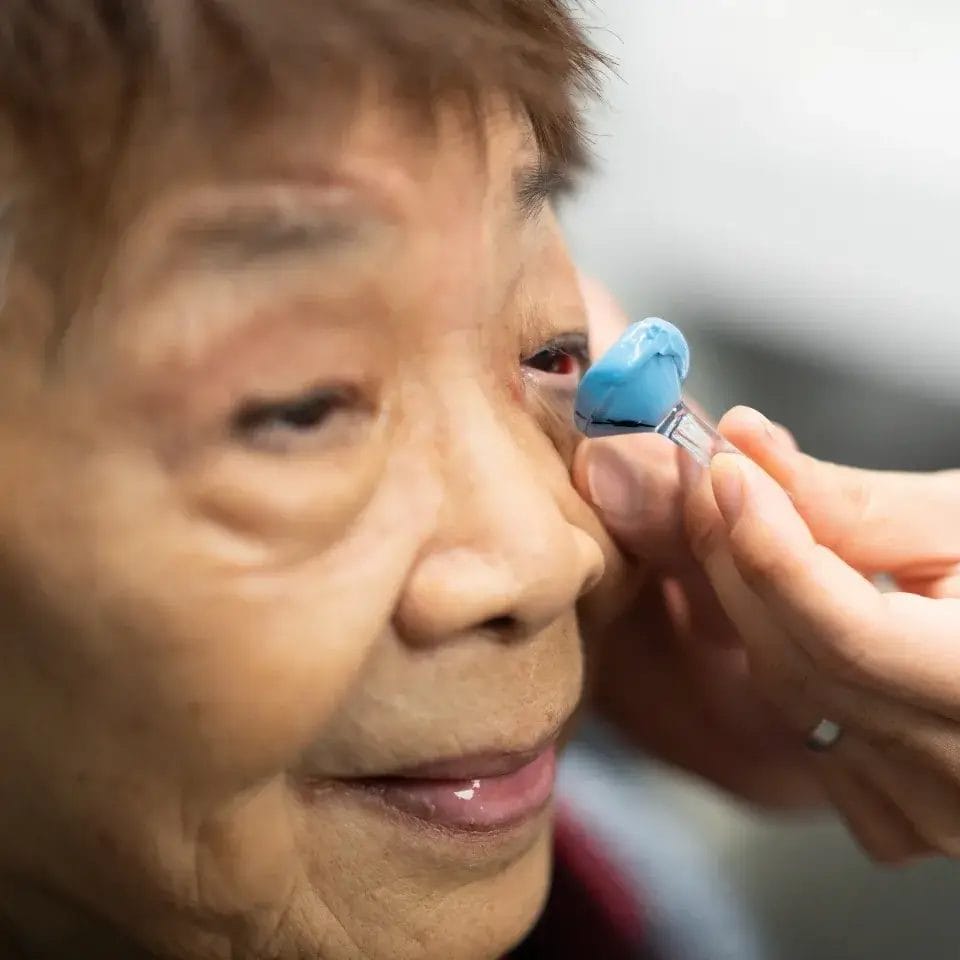
Some symptoms during lens wear should not wait for the next scheduled exam. Acting quickly on the warning signs below can protect your vision and prevent complications from becoming permanent.
Eye pain, persistent redness, light sensitivity, and unusual discharge are warning signs that may indicate a contact lens related infection of the cornea, a condition called bacterial keratitis. This type of infection can move quickly and cause serious damage. The Centers for Disease Control and Prevention identifies these symptoms as reasons to seek same-day eye care rather than waiting.
If any of these symptoms appear, remove your lenses immediately and leave them out. Contact our office the same day, even if the discomfort eases once the lens is out. Symptoms that improve briefly after lens removal do not mean the problem has resolved. Save the lens and the lens case if you can, as our team may want to examine or culture them to identify the source of the problem.
Sudden or worsening blur that persists after your lenses are out is another urgent sign, especially if one eye is significantly worse than the other. A gray or white spot visible on the cornea when you look in a mirror is also a reason to seek care that day. These signs can point to a corneal infection, a corneal abrasion, or a deeper concern that needs prompt evaluation.
The cornea has no blood supply of its own. Infections in corneal tissue can progress and scar the cornea quickly, and corneal scars are often permanent. Only surgical procedures can address significant corneal scarring after the fact. The sooner treatment begins, the less tissue damage occurs. Same-day care is always the safer choice when pain, persistent redness, or light sensitivity appear during or after lens wear.
The questions below cover situations and decisions that often come up between exams or at the time of renewal.
No seller, including online retailers, is permitted to fill a contact lens order against an expired prescription. This applies even if you have worn the same brand and power for many years without any problems. The expiration also means your cornea and overall eye health have not been assessed recently, which is the deeper reason the rule exists beyond the legal requirement.
The yearly re-evaluation is based on protecting eye health, not on how many hours per day you wear lenses. Part-time wear can still cause gradual surface changes, subtle fit issues, and dryness over time. Some clinicians may adjust the schedule for very light wearers, but that is a decision made by the examining doctor based on what they see, not something to assume in advance.
In the United States, only an optometrist or an ophthalmologist is qualified to write or renew a contact lens prescription. Primary care physicians are not trained to examine the cornea for lens fit, measure the parameters a contact lens prescription requires, or assess lens-related eye health changes. If a full exam is hard to schedule, ask our office about focused renewal visit options for established contact lens wearers, which are often shorter and easier to fit into a busy schedule.
Yes. A contact lens prescription lists the exact brand and material that was fit and verified on your eye. A different brand has a different shape, a different oxygen profile, and a different feel against the tear film. Even if the power is identical, a new fitting visit is needed. In many cases, an established wearer with recent records on file can complete this in a single visit.
A valid contact lens prescription is portable. A new provider can honor it for the remainder of its validity or perform a fresh evaluation if they have any concerns. Bring the original prescription and the packaging from your current lenses to the first visit with a new doctor. This gives them a useful baseline without requiring them to start completely from scratch.
No. The expiration date printed on a lens blister pack is separate from the prescription expiration date, and it should not be ignored. The manufacturer only guarantees the sterile seal and lens stability up to that printed date. Using a lens past that date introduces the risk of contamination and unpredictable lens behavior on the eye, neither of which is worth the small cost of the unused pack.
Our team is here to make sure your contact lens prescription reflects your eyes as they are today, not as they were a year ago. Whether your prescription is approaching its end date, your lenses have started feeling different, or you have noticed any of the warning signs described above, we encourage you to book an exam with us. We are proud to serve contact lens wearers across Las Vegas with thorough, personalized care from a team with deep specialty expertise in contact lens fitting. Your long-term vision and comfort are always our priority.


