
Fuchs corneal dystrophy is not a rare condition. It is one of the most widespread corneal diseases in the country, and yet most people have not heard of it until they or a family member receive a diagnosis. The condition affects the endothelial cells, the thin layer of pump-like cells on the inner surface of the cornea that keep it clear by removing excess fluid. When these cells gradually deteriorate, the cornea swells and vision becomes cloudy.
What surprises many patients is just how many Americans are living with some form of this condition. Understanding its prevalence helps put a diagnosis into perspective and underscores why early detection matters.
According to a 2023 peer-reviewed study, Fuchs dystrophy affects 4 percent of adults over age 40 in the United States. Among Medicare beneficiaries over age 65, the diagnosed prevalence is 1 percent, translating to hundreds of thousands of older Americans living with this condition. Many more may have early-stage changes that have not yet been detected because they have not caused noticeable symptoms.
The early stages of Fuchs dystrophy often produce no symptoms at all. The condition develops slowly, sometimes over decades, and the remaining healthy endothelial cells compensate for the ones that have been lost. This means a person can have measurable corneal changes during a comprehensive eye exam without feeling any difference in their vision. Regular exams are the most reliable way to catch these early changes before they progress.
Fuchs dystrophy typically becomes clinically significant in a person's 50s or 60s, though the cellular changes may begin much earlier. Women are diagnosed more frequently than men, though researchers are still working to understand why. The condition tends to worsen gradually with age, which is why routine corneal evaluation becomes increasingly important as patients get older.
One of the strongest risk factors for Fuchs dystrophy is having a close family member with the condition. The disease follows an autosomal dominant pattern in many families, meaning that if one parent is affected, each child has a meaningful chance of developing it as well. If you know that a parent, sibling, or grandparent has been diagnosed, mentioning this during your eye exam can prompt your doctor to look more closely at your endothelial cells.
While Fuchs dystrophy itself is genetic, the Las Vegas desert environment can affect how the condition feels day to day. Low humidity and dry air may contribute to corneal surface irritation, which can overlap with and worsen the symptoms of corneal swelling. Patients in Spring Valley, Henderson, and surrounding communities often benefit from combining corneal management with strategies that address the desert climate's effects on tear film quality.

According to a 2023 peer-reviewed analysis, Fuchs dystrophy is the single leading reason Americans need a corneal transplant, accounting for more than one-third of all 47,000 corneal transplants performed in the United States each year. That number reflects how many patients eventually progress to a stage where the cornea can no longer maintain clarity on its own, even with conservative management.
The cornea needs a minimum number of functioning endothelial cells to stay clear. When the cell count drops too low, the pumping mechanism cannot keep up with fluid entering the cornea, and persistent swelling develops. At this point, the cornea becomes hazy, vision is significantly impaired, and surgical replacement of the damaged inner layer becomes the most effective path forward. Modern partial-thickness transplant techniques have made this surgery safer and more successful than it was even a decade ago.
Catching Fuchs dystrophy early does not prevent it from progressing, but it gives patients and their doctors more time to plan. Early-stage patients can often manage symptoms with salt solution drops and environmental strategies for years. When the condition does advance to the point where surgery is discussed, having a documented baseline of corneal thickness and cell counts helps the surgical team plan the best approach.
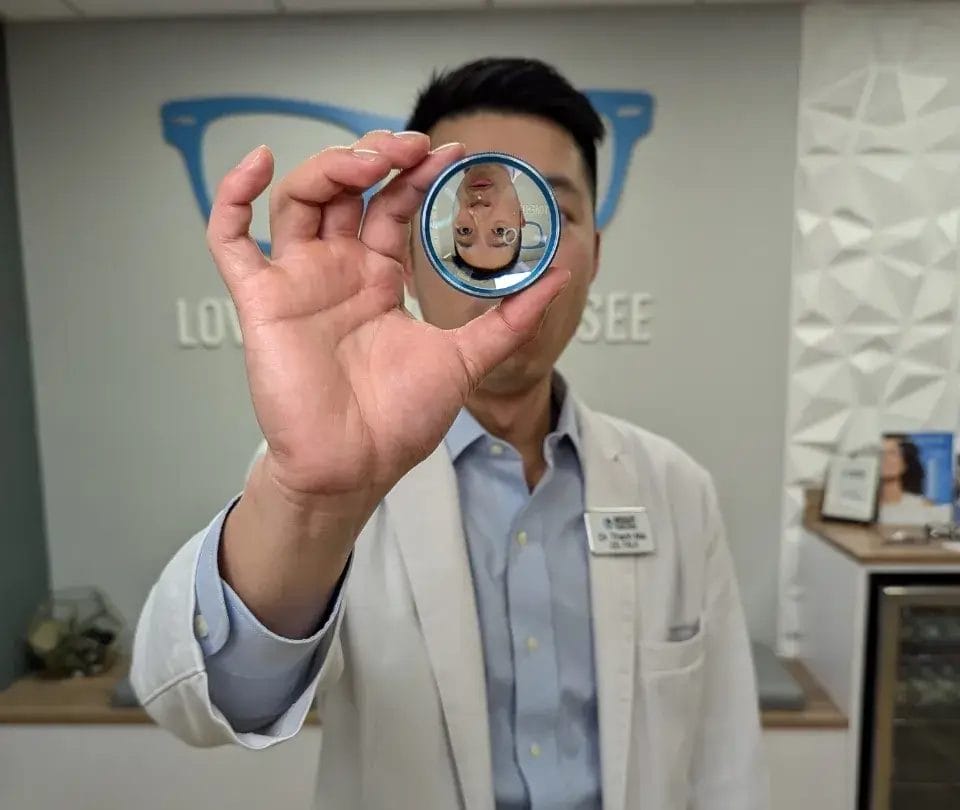
As corneal imaging technology has become more accessible, eye doctors are identifying Fuchs dystrophy at earlier stages and in more patients. Specular microscopy, which allows your doctor to photograph and count individual endothelial cells, has made it possible to detect subtle changes that would have been missed with older examination techniques. This means the true prevalence of Fuchs dystrophy may be even higher than current estimates suggest.
Because Fuchs dystrophy is closely tied to age, the number of affected individuals is expected to grow as the population ages. This has implications for eye care planning, surgical capacity, and patient education. For patients in the Las Vegas area, having access to an eye care team experienced in corneal evaluation and co-management of corneal surgery is increasingly valuable.
The first step in detecting Fuchs dystrophy is a careful slit lamp examination. Your eye doctor uses a focused beam of light and magnification to look at the inner surface of the cornea. In Fuchs dystrophy, the characteristic finding is the presence of guttae, which are small bump-like deposits on the endothelial layer. Think of them as tiny blisters forming on the floor of the cornea. In early stages, these may be scattered and few. In advanced stages, they may cover the entire inner surface.
At Insight Vision Optometry, Las Vegas, our optometrists use advanced corneal imaging to measure corneal thickness with pachymetry and evaluate endothelial cell density with specular microscopy. These measurements provide a clear picture of how the condition is progressing. A thickening cornea combined with a declining cell count signals that the pumping function is being compromised. These numbers become your baseline for tracking change over time.
Our team monitors your cornea at regular intervals and coordinates with corneal surgeons when the time comes to discuss surgical options. Insight Vision Optometry, Las Vegas provides the pre-surgical evaluation, imaging, and post-operative care through a co-management model. This means you receive continuous care from a local team while benefiting from the surgical expertise of a corneal specialist. Patients from Enterprise, Paradise, Southwest Las Vegas, and surrounding areas work with our team through every stage of the process.
The classic symptom of Fuchs dystrophy, blurry vision that is worse in the morning, can be managed with hypertonic saline drops and ointments. In the Las Vegas desert, where indoor heating and air conditioning further reduce humidity, some patients find that a small humidifier in the bedroom helps reduce overnight corneal swelling. Using the drops in the morning and the ointment at bedtime gives the most consistent protection throughout the day and night cycle.
While Fuchs dystrophy itself is not caused by the environment, dry conditions can add to overall corneal stress. Wearing wraparound sunglasses outdoors, using preservative-free artificial tears during the day, and staying well hydrated all support corneal health. These steps do not slow the disease itself, but they can make daily vision more comfortable as you manage the condition over time.
No. Fuchs dystrophy is one of the most common corneal conditions in the United States. It affects a significant percentage of adults over age 40, and it is the leading reason Americans receive corneal transplants. Many people with early-stage changes are unaware they have it because symptoms develop gradually.
If you have a family history of Fuchs dystrophy or corneal problems, screening can begin as early as your 30s or 40s. For patients without known risk factors, routine comprehensive eye exams starting at age 40 typically include the corneal evaluation needed to detect early changes. Your eye doctor can adjust the screening frequency based on your individual risk profile.
There are no proven lifestyle changes that slow the underlying cellular deterioration in Fuchs dystrophy, because the condition is primarily genetic. However, managing symptoms with salt solution drops, controlling indoor humidity, and protecting your eyes from excessive dryness can help maintain comfortable vision for longer. These strategies support your cornea's ability to manage fluid while endothelial function is still adequate.
The most common surgical approaches today are partial-thickness transplants called DSAEK and DMEK. These procedures replace only the damaged inner layer of the cornea, leaving the front surface intact. Recovery is typically faster and rejection rates are lower compared to full-thickness transplants. Your eye care team will coordinate with a corneal surgeon to determine which approach is best for your situation.
Fuchs dystrophy usually affects both eyes, but one eye often progresses faster than the other. Treatment decisions are made for each eye individually based on its current condition. Some patients may need surgical intervention in one eye while the other is still manageable with drops. Both eyes should be monitored regularly even if only one is causing symptoms.


