
Understanding how an FSA works helps you plan smarter and avoid losing money at the end of the year. FSAs have specific rules around enrollment, spending limits, and deadlines that are worth knowing before you schedule your next eye care appointment.
A health care FSA lets you set aside a portion of your paycheck before income taxes are calculated. That pre-tax money goes into a dedicated account you can use to pay for qualified medical expenses, including most vision care costs. Because you are using pre-tax dollars, you effectively pay less for eye care than you would with regular income.
Some patients who also contribute to a Health Savings Account may have a limited-purpose FSA instead. A limited-purpose FSA covers only dental and vision expenses, allowing you to preserve your HSA funds for other medical costs. Check with your employer or benefits administrator to confirm which type of FSA you have.
The IRS sets annual contribution limits for health care FSAs, and those limits are adjusted periodically. Your employer may set a lower maximum than the IRS allows. Most employers only permit FSA enrollment or contribution changes once a year during open enrollment, though qualifying life events such as marriage, the birth of a child, or a change in employment status may allow you to make mid-year adjustments.
We recommend reviewing your expected vision care costs for the coming year before you set your contribution so you can make the most of your pre-tax savings without setting aside more than you can spend.
FSA funds generally must be spent within your plan year or they are forfeited. Some employers offer a grace period of up to two and a half months into the following year, while others allow a limited carryover amount to roll into the next plan year. Most plans offer one option or the other, not both, and the carryover maximum is set by the IRS and subject to annual adjustment.
Contact your FSA administrator directly to confirm your specific plan rules, since deadlines and carryover amounts vary by employer.
Setting the right FSA contribution starts with estimating your likely vision care costs for the year ahead. Think about whether you or your family members need new glasses, contact lenses, a contact lens fitting, or upcoming treatments.
Our team can provide cost estimates for exams, eyewear, and any services we may recommend during your visit. Having those numbers in hand before open enrollment helps you choose a contribution amount that matches your actual needs.
Eyeglasses are among the most common FSA purchases, and most prescription eyewear qualifies. Knowing exactly what is covered helps you shop confidently and keep the right documentation.
Prescription eyeglasses generally qualify as an FSA expense because they correct a diagnosed vision condition. Single-vision lenses, bifocals, and progressive lenses all typically qualify. The requirement is that a licensed eye care provider has examined your eyes and written a prescription confirming your need for correction.
When you purchase glasses through our office, we provide itemized receipts that include everything your FSA administrator needs to process the claim. Keep complete documentation for all eyewear purchases in case your administrator requests verification.
Prescription sunglasses are generally FSA-eligible because they serve a medical purpose by correcting your vision while protecting your eyes from ultraviolet light. Any frame style qualifies as long as the lenses include your prescription.
You can typically purchase more than one pair of prescription sunglasses in a single plan year as long as you have a current prescription and proper documentation for each purchase.
Your FSA typically covers the full cost of prescription eyeglasses, including the frames and all lens features. Lens enhancements such as anti-reflective coating, scratch-resistant treatment, high-index thin lenses, and progressive designs generally qualify because they improve the performance and durability of a medically necessary product.
Our optical team can walk you through lens options and explain which upgrades may benefit your vision and comfort. Keep itemized receipts that separately list each product and feature so your FSA administrator can verify the medical purpose of your purchase.
FSA funds can generally be used to repair prescription eyeglasses, including replacing nose pads, temples, or hinges. If your prescription changes or your lenses become damaged, replacement lenses for existing frames typically qualify as well.
Our office offers repair services and can provide documentation if you need it for your FSA claim. Keep in mind that repairs must be for prescription glasses to qualify for reimbursement.
Prescription contact lenses and the supplies needed to wear them safely are generally covered by FSAs. This section covers the full range of contact lens expenses you can pay for with your pre-tax funds.
Most types of prescription contact lenses qualify as FSA-eligible expenses, including daily disposables, monthly lenses, lenses for astigmatism, multifocal designs, rigid gas permeable lenses, and specialty lenses. The lenses must be prescribed by an eye care provider based on your specific visual needs.
Many patients use FSA funds to purchase both glasses and contact lenses in the same year. Our team can help you determine which combination works best for your lifestyle and vision goals.
Contact lens care products are generally FSA-eligible because they are medically necessary for the safe use of prescription lenses. Most lens care items qualify, including daily multipurpose solutions, hydrogen peroxide disinfecting systems, saline rinse, and lubricating drops formulated for contact lens wearers.
Documentation requirements for these items may vary by FSA administrator, so save your receipts and confirm eligibility with your plan if you have any questions.
Purchasing a full year's supply of contact lenses is a smart way to use remaining FSA funds before your plan year ends. Buying in larger quantities often lowers the cost per box and ensures you have lenses on hand without interruption.
Our team can calculate exactly how many boxes you need based on your wearing schedule and lens type, and help you coordinate the order to align with your FSA deadline. Your prescription must be current at the time of purchase, which is a standard requirement for all contact lens orders.
The professional services required to fit you with contact lenses are FSA-eligible separately from the lenses themselves. A contact lens fitting includes precise measurements, trial lenses, and follow-up visits to confirm that your lenses fit safely and provide clear, comfortable vision. These services require specialized training and equipment that go beyond a routine eye exam.
If we recommend additional follow-up visits after your initial fitting, those evaluation fees are also typically eligible for FSA reimbursement. Make sure to request itemized documentation for your fitting fees so they can be submitted separately from your lens purchases.
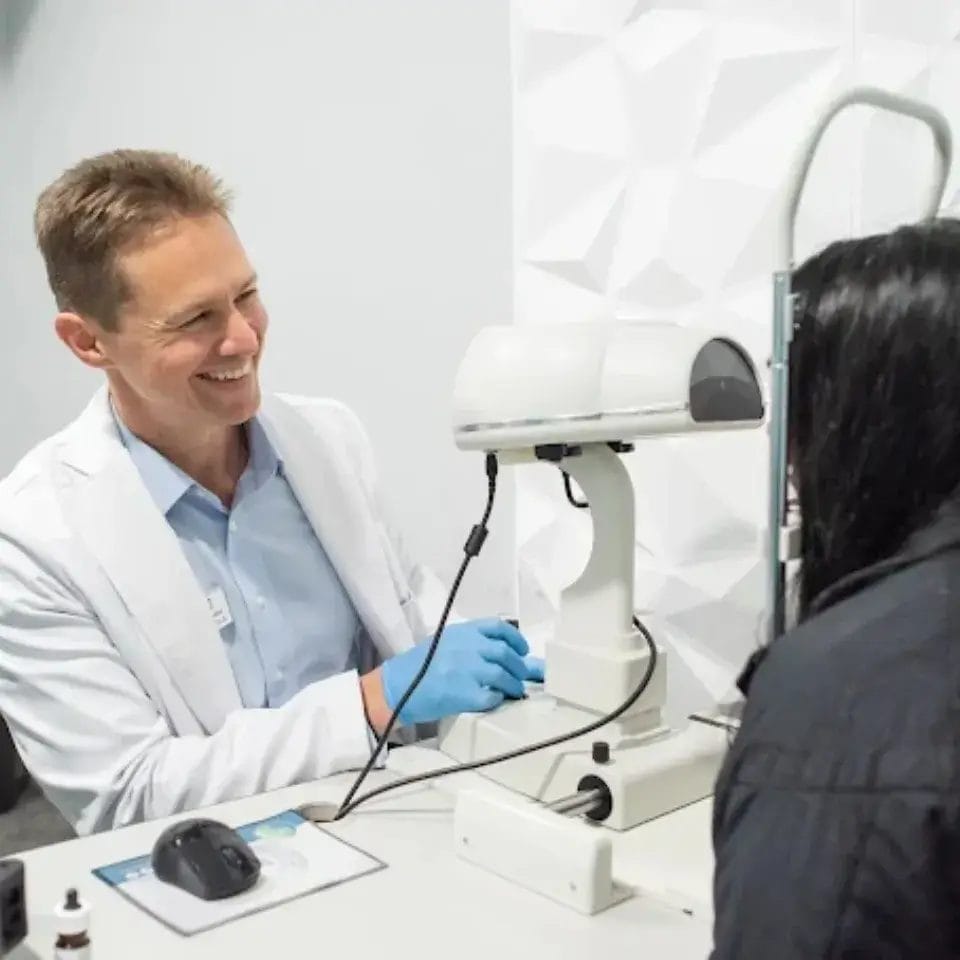
Many vision correction procedures qualify as FSA-eligible expenses because they treat diagnosed refractive or medical conditions of the eye. The rules vary depending on the type of procedure and whether it is considered medically necessary or cosmetic.
Laser vision correction procedures such as LASIK and PRK are generally FSA-eligible because they treat refractive conditions including nearsightedness, farsightedness, and astigmatism. The eligible costs typically include pre-operative exams, the procedure itself, and post-operative follow-up care.
Candidacy for laser vision correction depends on several factors, including corneal thickness, the stability of your prescription, overall eye health, and the condition of your ocular surface. A thorough evaluation is necessary before any procedure can be recommended. If you experience worsening pain, sudden vision loss, increasing redness, or discharge after surgery, contact your eye care provider promptly, as these symptoms may require urgent attention. If your surgery cost exceeds your FSA balance, you can combine FSA funds with other payment methods to cover the remainder.
Cataract surgery is a medically necessary procedure, and your FSA can be used to pay your out-of-pocket costs such as copays, deductibles, and coinsurance after your medical insurance has been applied. Premium intraocular lens implants, which may correct astigmatism or provide multifocal vision, often involve additional out-of-pocket costs that FSA funds can cover.
Our team co-manages cataract surgery patients and can provide detailed cost estimates so you can plan your FSA contribution to cover your expected out-of-pocket expenses.
Beyond LASIK and PRK, other established vision correction procedures may be FSA-eligible, including SMILE, implantable collamer lens surgery, and refractive lens exchange. Eligibility depends on the medical purpose of the procedure, proper documentation, and your specific plan rules.
We offer consultations and co-management for several refractive surgery options and can provide detailed cost information to help you plan your FSA contribution. Always confirm eligibility and required documentation with your FSA administrator before scheduling any procedure to avoid unexpected claim denials.
Procedures performed purely for cosmetic reasons do not qualify as FSA-eligible expenses. This includes eyelid surgery done solely to improve appearance, cosmetic iris color changes, and similar elective enhancements with no medical necessity.
However, if an eyelid procedure is medically necessary because drooping lids obstruct your vision, it may qualify for FSA reimbursement. Our doctors can document medical necessity if your condition interferes with your functional vision and daily activities.
FSA benefits extend beyond glasses, contacts, and surgery. Several other vision care expenses are generally eligible, and knowing about them helps you make full use of your account throughout the year.
Eye examinations performed by a licensed eye care provider are typically FSA-eligible, whether you are coming in for a routine vision check or a comprehensive medical eye exam. These exams detect refractive errors, monitor eye health, and identify conditions that can affect both your vision and your overall wellbeing.
We recommend scheduling your annual exam early in the plan year so that any needed eyewear, treatment, or follow-up care can be completed while your full FSA balance is available. The exam fee can generally be paid with your FSA at the time of service.
Advanced diagnostic tests that our doctors recommend during your exam generally qualify for FSA coverage when they are medically necessary. These tests provide detailed information about the health of your eyes and help us detect or monitor conditions before they progress.
Each diagnostic service is billed separately, so request itemized receipts that identify each test individually to support your FSA claim.
Eye drops and medications prescribed by our doctors to treat a diagnosed eye condition are FSA-eligible. This includes prescription drops for dry eye disease, glaucoma, infections, inflammation, and allergies. A written prescription from a licensed provider confirms the medical necessity of the treatment.
Some over-the-counter eye drops and artificial tears may also be FSA-eligible, though documentation requirements vary by plan. If we diagnose a condition that requires regular use of lubricating drops or other over-the-counter products, we can provide supporting documentation to help your claim succeed.
Reading glasses obtained with a prescription from our office qualify for FSA reimbursement. Low vision aids prescribed for patients with significant vision loss that cannot be fully corrected with standard glasses or contacts also typically qualify. These aids include magnifiers and other adaptive devices that help patients perform daily tasks more effectively.
If you need low vision services, we can connect you with appropriate specialists and provide documentation to support your FSA reimbursement for prescribed devices and evaluations.
Paying with FSA funds is designed to be straightforward, but knowing your options and keeping good records protects you if a claim is ever questioned. Here is what to expect at each step of the process.
Most FSA plans issue a debit card that you can use directly at our office when paying for eligible services and products. The funds are deducted from your FSA balance immediately, so there is no need to pay out of pocket and wait for reimbursement.
Our front desk team can process FSA debit cards for exams, eyeglasses, contact lenses, fitting fees, and other eligible services. Bringing your card to appointments allows you to use your pre-tax funds at the time of service without any extra steps.
If you pay for vision care with a personal credit card or cash, you can submit a reimbursement claim to your FSA administrator. Most administrators accept claims through an online portal, mobile app, or by mail. The claim typically requires an itemized receipt showing the date of service, a description of what was purchased, and the total amount paid.
We provide detailed receipts that meet standard FSA documentation requirements. Submit your claim as soon as possible after your visit to receive reimbursement promptly and keep your records current.
Maintaining complete records of your FSA expenses protects you in the event of an audit and helps you track your remaining balance throughout the year. Save all receipts from vision care purchases and make sure each one shows the service date, provider name, description of services or products, and amount paid.
Scheduling eye exams early in the plan year gives you time to identify vision needs while your full FSA balance is available. If you have funds remaining near the end of your plan year, consider ordering an extra pair of glasses, stocking up on contact lenses, or scheduling exams for other family members.
Expenses must generally be incurred during the plan year to qualify for reimbursement from that year's funds. You typically cannot prepay for services or products you plan to receive in a future plan year. Our team can help you plan purchases around your deadline so that nothing is left on the table.
If your FSA administrator denies a vision care claim, start by reviewing the denial reason carefully. Common issues include missing information on receipts, claims for non-eligible items, or submission errors that can be corrected with updated documentation.
Our office can provide revised or supplemental receipts if needed to support your appeal. Contact your FSA administrator's customer service team to find out exactly what documentation is required, and reach out to us if you need help gathering the correct paperwork.
These answers address specific situations and decisions that often come up when patients are navigating FSA rules for vision care.
Blue light blocking glasses qualify for FSA reimbursement when they include a prescription for vision correction, because the glasses are then correcting a diagnosed medical condition. Non-prescription blue light glasses that serve only as a filter without correcting nearsightedness, farsightedness, or astigmatism are typically not eligible. If you want blue light filtering, the most straightforward path to FSA eligibility is adding a blue light blocking coating to prescription lenses you already need. Request an itemized receipt that shows the prescription component separately from any add-on coatings.
Over-the-counter reading glasses may be eligible under some FSA plans, but administrators often require documentation to verify the medical purpose. The safest approach is to have an eye exam first so that our doctors can assess your near vision needs and write a recommendation or prescription. When reading glasses are prescribed based on a formal evaluation, the expense is clearly documented as medically necessary, which significantly reduces the risk of a denied claim.
FSA funds can generally be used to pay for vision care for yourself, your spouse, and eligible dependents, often including children through age 26 regardless of whether they are claimed as tax dependents, subject to your specific plan rules. You do not need a separate FSA account for each family member. For situations involving shared custody, domestic partner coverage, or other family arrangements, verify eligible persons directly with your FSA administrator before submitting claims to avoid complications.
FSA funds and vision insurance complement each other well. Your vision insurance covers or discounts certain services and products, and your FSA can then be used to pay any remaining out-of-pocket amounts such as copays, deductibles, or upgrades not included in your insurance benefit. For example, if your insurance covers a standard frame allowance but you choose a frame above that allowance, FSA funds can cover the difference. You cannot be reimbursed twice for the same expense, so only use FSA funds for amounts you actually paid yourself after insurance has been applied.
Funds that are not spent by your plan year deadline are generally forfeited unless your employer provides a grace period or a carryover option. If your balance is running low on time rather than low on funds, consider scheduling additional family member exams, ordering a larger supply of contact lenses, or purchasing a second pair of prescription glasses. Planning ahead by a few weeks gives our team time to order products and complete any needed services before your account deadline passes.
Purchasing a larger supply of contact lenses before your FSA deadline is a practical way to use remaining funds while securing lenses you will need in the coming months. There is no set limit on how many boxes you can buy as long as you have a current, valid prescription and sufficient FSA balance. Our team can verify your prescription status and help coordinate a bulk order efficiently so that everything is processed well before your deadline.


