
Most cases of morning blur trace back to things that happen while you sleep. Your eyes go without blinking for hours, which changes the moisture and surface of your eyes in ways that temporarily affect your vision.
Tear production slows during sleep, and your eyelids may not seal perfectly shut throughout the night. Without the steady spread of fresh tears, the surface of your cornea, which is the clear front layer of your eye, can dry out. This causes a temporary haze that usually clears within a few minutes of blinking after you wake up.
Sleeping in a room with a fan, air conditioning, or low humidity speeds up this drying process. People who already have chronic dry eye often notice morning blurriness more often and more severely than others.
Overnight, your eyes naturally release a mix of mucus, oils, and dead skin cells that collect along the lash line. This crusty material, often called sleep crust or eye discharge, can form a thin film over the surface of the eye that scatters light and blurs vision when you first open your eyes. Gently wiping the area with a clean, damp cloth usually clears this up quickly.
Heavier discharge that mats your lashes together, or discharge with a yellow or green color, may point to blepharitis (inflammation of the eyelid margins) or conjunctivitis (pink eye). If this pattern repeats regularly, it is worth having your eyes examined.
Your cornea naturally absorbs a small amount of fluid while your eyes are closed overnight. In healthy eyes, specialized pump cells on the inner surface of the cornea clear that fluid quickly once you wake up and start blinking. When those pump cells are not working as well as they should, the cornea stays swollen longer, which causes blurry, hazy vision in the morning.
This type of morning blur tends to take longer to clear than blur caused by dryness alone. If your vision is still hazy 30 minutes or more after waking, corneal swelling may be a factor worth discussing with your eye doctor.
Sleeping in contact lenses reduces the amount of oxygen reaching your cornea, which can lead to corneal swelling and halos around lights when you wake up. This applies even to lenses that are labeled for extended or overnight wear. Overnight lens wear also raises the risk of corneal infection, which is a serious concern.
If you use orthokeratology lenses, which are rigid lenses worn overnight to gently reshape the cornea and reduce daytime nearsightedness, some mild morning blur during the early adjustment period is expected. Persistent or worsening blur with orthokeratology should always be reported to your eye care provider.
Some causes of morning blurry vision go beyond normal overnight dryness. These conditions are less common but are important to identify early, since they can progress and affect your vision more significantly over time.
Fuchs dystrophy is a condition where the cells responsible for pumping fluid out of the cornea gradually break down. Because the eyes are closed overnight and fluid accumulates, morning is when the swelling and blurriness from this condition are at their worst. As the day goes on and you blink, the excess fluid evaporates and vision often improves.
As Fuchs dystrophy advances, morning blurriness takes longer and longer to clear. Eventually, vision may stay hazy throughout the day. Hyperosmotic saline drops, used at bedtime and in the morning, can help draw fluid out of the cornea. In more advanced cases, a corneal transplant procedure may be needed to restore comfortable, clear vision.
Eye pressure can rise during the night, particularly in people with glaucoma or those who are at higher risk for it. This temporary increase in pressure can produce morning blur and halos around light sources. The blurriness usually settles as the pressure normalizes, but it is a pattern worth bringing up with your eye doctor.
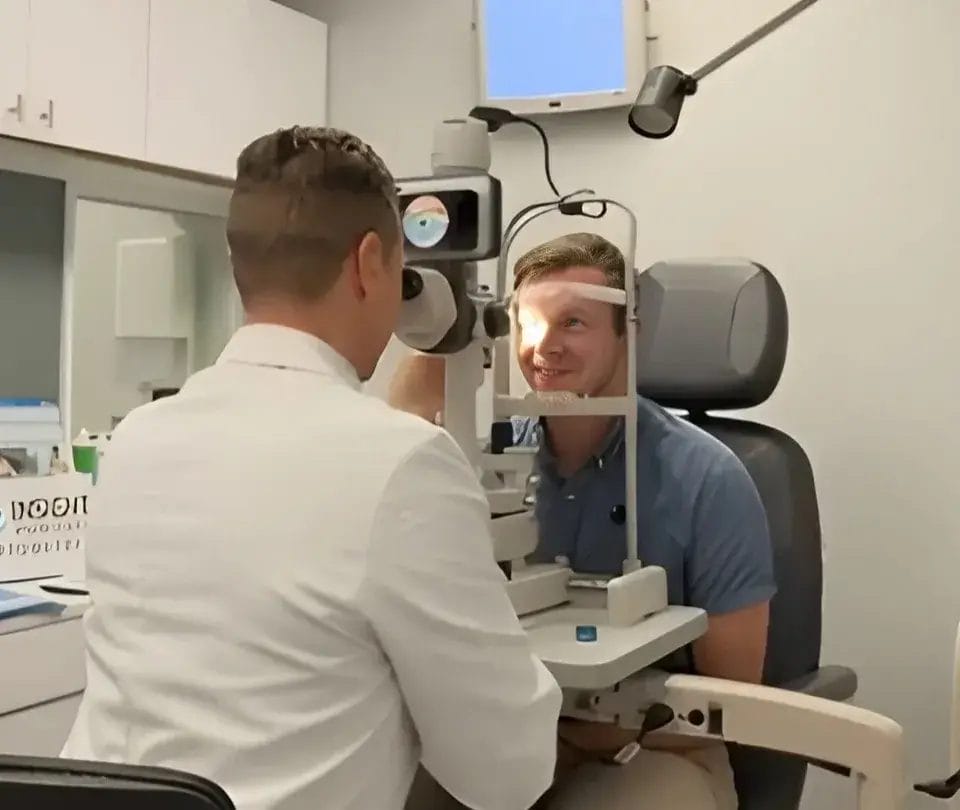
A comprehensive eye exam includes measurement of your eye pressure and evaluation of your optic nerve, which is the nerve that carries visual information from your eye to your brain. These findings can reveal early signs of glaucoma that you would not notice on your own.
Some people do not fully close their eyelids while sleeping, a condition called lagophthalmos. When part of the cornea is left exposed overnight, that area dries out and may become irritated, red, and blurry by morning. Lubricating eye ointments applied before bed can protect the corneal surface and reduce morning symptoms.
Signs that this may apply to you include waking up with one eye consistently more irritated than the other, or being told by a partner that your eyes appear open during sleep. Your eye doctor can assess how well your eyelids close and recommend appropriate treatment.

Morning blurriness is not always harmless. Certain patterns and accompanying symptoms can signal a condition that needs professional evaluation. Knowing what to watch for helps you decide when to seek care.
Vision that clears within a few minutes of blinking and moving around is usually related to normal overnight dryness and is not a cause for concern. When morning blur takes 30 minutes or more to resolve, or when it has been getting worse over several weeks, an eye exam is appropriate.
Tracking how long your blur lasts on a daily basis can be very useful. Sharing this information with your eye doctor helps narrow down the likely cause much more quickly.
Morning blurriness that comes with eye pain, halos around lights, persistent redness, or unusual discharge should be evaluated by an eye care professional. These combinations can point to corneal disease, elevated eye pressure, or an active eye infection, none of which should be left unaddressed.
Blurriness that consistently affects one eye more than the other also deserves attention. This pattern often suggests a localized problem rather than a general dryness issue that would affect both eyes equally.
Certain people are at higher risk for vision-related conditions that can show up as morning blurriness. If any of the following apply to you, changes in your morning vision are worth mentioning at your next eye exam.
Early detection of these conditions leads to better outcomes, so routine monitoring matters.
These answers address specific questions patients often have about morning blurry vision, including situations where extra caution is needed.
Lubricating eye ointments and gels applied at bedtime are specifically designed for overnight use. They are thicker than standard artificial tears and provide longer-lasting moisture on the corneal surface. Regular daytime eye drops evaporate too quickly to be as effective overnight. Your eye doctor can recommend the right product based on how severe your dryness is and whether any underlying condition is contributing.
Yes. A fan pointed toward your face speeds up tear evaporation, even when your eyelids are closed. Over the course of a night, this can significantly dry out the front surface of your eyes. Redirecting the fan away from the bed, using a humidifier, or wearing a sleep mask are practical steps that can make a real difference in morning eye comfort.
Rubbing your eyes is a common reflex but it is not a safe habit. Repeated rubbing can worsen irritation, introduce bacteria from your fingers, and over time may contribute to corneal thinning in people who are already susceptible. Blinking several times, using a clean damp cloth to gently clear any discharge, or applying artificial tears are all better alternatives for clearing morning haziness.
Allergic conjunctivitis can cause morning symptoms including itching, puffiness, watery discharge, and blurred vision. This tends to be more noticeable in allergy season, but indoor allergens like dust mites can cause symptoms year-round. If your morning blur comes with itching and lid swelling rather than dryness and discharge, an antihistamine eye drop or a visit to your eye doctor can help clarify whether allergies are the driving factor.
A mild increase in morning dryness is common with age because tear production naturally decreases over time. However, if your morning blur has become notably worse, takes much longer to clear than it used to, or is now accompanied by halos or distortion, that progression is not something to brush off as normal aging. These changes are worth mentioning at your next eye exam so an underlying cause can be ruled out.
If you wake up with sudden severe vision loss in one eye, eye pain that does not resolve, a cloudy or white spot on the colored part of your eye, or blurred vision after a chemical splash or injury, seek same-day eye care rather than waiting. These situations can involve corneal infection, sudden pressure changes, or injury to the eye that need prompt evaluation and treatment.
At Insight Vision Optometry, Las Vegas, our doctors are experienced in evaluating all aspects of eye health, including the everyday symptoms that affect your comfort and quality of life. If morning blurriness is affecting your mornings regularly, we can examine your tear film, corneal health, eye pressure, and eyelid function to find the cause and guide you toward the right solution. We welcome you to schedule a visit and get the answers you deserve.


